Your UST contractor is the most consequential hire a newly certified operator will make. The certificate proves you can supervise a tank system, but it does not authorize field work. The two roles share fuel and dirt but live in different parts of a state agency's regulatory file.
Operator training and contractor licensing are separate credential tracks at the agency level. A Class A operator handles facility wide compliance. A Class B operator runs the day to day operation. A licensed UST contractor performs the physical work: cutting concrete, exposing tanks, pulling product lines, and signing the closure paperwork your state agency will eventually file. The two roles overlap on paper and never overlap in the field.
Most of what follows applies whether you operate a single retail station, a fleet yard, or a portfolio of inherited gas stations from a recent acquisition. The hiring playbook is the same; only the size of the bid changes. If you just sat through 40 CFR 280.240 operator training, finalized in the 2015 federal UST rule revision, and now have a tank that needs work, here is what changes. This is who you hire and what to confirm before signing any contract.
Why Operator Certification Does Not Cover the Work Itself
UST operator training teaches you to read a tank gauge, manage an inspection binder, follow release reporting timelines, and recognize alarms at the dispenser. It does not train you to do anything physical to the tank itself. Federal training rules under 40 CFR 280.240 explicitly distinguish the operator role from the contractor role. State regulators reinforce that separation through their own licensing systems with separate applications, exams, and renewal cycles that typically run on a two-year cadence. Walking into an agency office with an operator certificate and asking to file an installation permit is a wasted trip.
The line matters when a state notification form lands on your desk. A Class A operator who tries to sign their own tank installation permit without a licensed contractor will fail the agency intake check at line one. State regulators want the licensed installer's number, not the operator's certification number, before any regulated work proceeds. A few states will not even accept the permit submission electronically without a verified contractor identifier on the form.
Certification proves you can supervise a tank, not dig one out.
What a Licensed UST Contractor Actually Handles
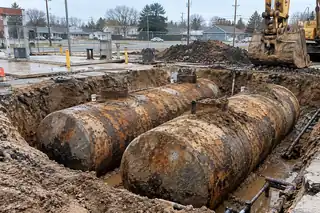
A contractor with a current state license performs the regulated field work that touches the tank, the piping, the secondary containment, or the soil beneath them. Tank removal, tank installation, leak detection equipment installation, cathodic protection installation and testing, line tightness testing, and closure assessments all fall here. The licensed firm signs the work, files state forms, and carries the bonding and insurance regulators require before any of that paperwork has legal weight. The operator who hires them inherits responsibility for the result, not the legal status of the work itself.
Not every licensed contractor covers every category. State regulators break licensing into sub categories: installer, remover, tester, corrosion specialist, and sometimes a separate closure assessor. A firm licensed only for installation cannot legally remove a tank in your state, even one they installed themselves a decade earlier. Ask which sub categories their license covers before signing a contract, and ask for the exact category code, not just the label. Some agencies post that sub category list publicly; others require a written request to confirm what a specific license number actually covers.
Service overlap with the operator role is small but real. Some contractors offer designated operator services on top of field work, meaning they assign one of their own Class B operators as the official designated person at your facility. This is common at unstaffed sites, small fleet yards, and properties owned by absentee landlords. It does not absolve the property owner from knowing the operator role personally when a state inspector calls. Treating the designated operator service as a complete handoff is a documented audit failure pattern in several jurisdictions.
Contractor Licensing Versus Contractor Certification
UST contractor licensing and contractor certification get used interchangeably in casual conversation, and the conflation causes real hiring mistakes. Licensing is legal authority to perform regulated work, granted by a specific state agency, time bound and revocable. Contractor certification usually refers to a third party trade credential. Examples include a NACE or AMPP cathodic protection certification, an ICC tank installer credential, or manufacturer specific training on a particular tank brand.
Most states require both UST contractor licensing and a recognized third party certification. You will not get on the agency's installer list without that certification documented from a recognized body. The license is the legal permit; the certification is the technical proof of competence regulators rely on when granting that permit. The certification often expires before the license does, which is a quiet source of contractor disqualification mid project.
Reading a contractor's qualifications correctly means separating the two. A firm that lists three certifications but no state license cannot legally perform regulated UST work in your state. A firm with a state license but no listed certifications may be relying on grandfathered credentials, which is worth verifying before you sign. Both situations are common; both are fixable with five minutes on an agency website. A state license number is the only credential that survives every audit cycle.

How to Choose a UST Contractor as a Newly Certified Operator
How to choose a UST contractor changes when you are doing it for the first time as a newly designated operator. You are not just buying a service. You are taking responsibility for the documentation that contractor produces, because that documentation lives in your inspection binder from the day it is delivered. The closure report you receive is the closure report a state inspector will read three years from now, and your name will be in the operator field.
Start with scope. A removal is a different hire than an annual line tightness test. Tank installations involve permits, soil surveys, and corrosion considerations that an installer led contract should cover end to end. Repeat compliance testing usually goes to a smaller specialist firm with lower overhead. Hiring a full service installation contractor for a $400 line test wastes money; using a low end testing firm for a $90,000 installation creates a different category of problem entirely.
Verify the license number against your state agency's public roster directly. Do not trust a contractor's own claim of being current. Many lapsed firms linger on third party directories long after their state status changed. Ask for the license expiration date, not just the number, and confirm the sub categories match the work you actually need done. The exception is if your project is small enough that a state license category does not legally bind to the work scope; in most states this exception is narrow.
The Documentation Trap That Sinks New Class A Operators
The most common compliance failure for newly certified operators is not the tank itself. It is the contractor paperwork, plus a federal 30-day pre-closure notification under 40 CFR 280.71 the operator must file. State inspectors expect closure reports, line test results, cathodic protection survey reports, and installation as built drawings on site, signed, and dated. The licensed firm produces the field documents; the operator owns them from the moment final payment clears. State regulators treat the operator as the responsible party regardless of who authored the page.
Operators who treat the contractor as a vendor and the paperwork as something to file later usually lose the documentation argument with state regulators. Six months after the work, the crew is on three other projects and the inspector is on your doorstep with a clipboard. The fix is procedural. Tie final payment to document delivery, file digital and printed copies in your facility's UST binder the day they arrive, and confirm their license number appears on every report. This single workflow change prevents most operator caused violations in the first two years after a tank job.
Regulators will not care which step failed.
State Variations That Change Who You Can Hire
State agency rules vary widely on who can perform tank work and which credentials count. Florida requires a state licensed contractor for any UST installation, modification, or closure, with the installer roster maintained by the Florida Department of Environmental Protection. Texas requires Texas Commission on Environmental Quality registration plus separate corrosion protection tester credentials for cathodic work, renewable on a two-year cycle. A firm competent in one state will not automatically be competent under the credentialing rules of another. Verify with each agency before treating a contractor roster as portfolio wide.
California is the strictest of the large states. Its Water Resources Control Board requires an ICC certified tank installer and a separately certified Designated UST Operator on file at the facility level. New Jersey requires a specific UST closure certification beyond general environmental contractor licensing, layered on top of the standard environmental contractor permit. A firm licensed in one state loses its legal authority the moment it crosses into another. A competitive bid from an out of state firm should be checked against the local agency before serious negotiation.
These differences matter when a facility owner runs multiple sites across state lines. The installer covering your fleet yard in one state cannot legally touch a site in the next state without separate licensing there. Confirm jurisdiction and license category before scoping any multi state contract, particularly when one corporate environmental manager is expected to oversee the whole portfolio. The headquarters team rarely catches this mismatch in time. Building a state by state contractor map before the next compliance cycle saves a lot of last minute scrambling.
Where to Start Hiring Once You Are Certified
Pull your state agency's licensed installer list as the first step. Most regulators publish a public roster of registered installers, removers, and testers, updated quarterly. Compare candidates against this list before requesting any bids. The contractor directory is filtered by state and license category to shortcut that step, especially when you do not know the exact contractor sub category your project requires. Adding two or three credible names from the public roster to your bid pool prevents an underqualified low bidder from anchoring your budget early in negotiations.
Match the scope to the right specialist. For removals or full closures, pull bids from contractors with documented closure experience and a track record of completed No Further Action letters in your state. For testing only, smaller specialist firms usually beat full service contractors on price by a wide margin. The how to choose a UST contractor guide gives an interview checklist that holds up under inspector scrutiny. Use it before you put any firm on a long term services agreement.
Lock the paperwork pipeline before signing anything. Build payment milestones around document delivery, not just field work completion, and put that sequence in writing in the contract itself. Then file a project description through the quote form to get matched with contractors who hold the right licensing in your state. Reference the licensed contractor role overview before your first call so the vocabulary on both sides of the table matches.