Find contractors in Pennsylvania for underground storage tank installation, fuel system installation, dispenser installation, and piping upgrades. Serving Philadelphia, Pittsburgh, Allentown, Erie, and communities statewide.
How Tank Installation Works in Pennsylvania
Two major corridors drive most tank installation demand across Pennsylvania. The Philadelphia metro area, including Chester, Delaware, and Montgomery Counties, produces the largest share of commercial fuel system projects from convenience store chains and fleet operators along I-76 and I-95. Pittsburgh and the western Pennsylvania market generates steady work from industrial fueling facilities, transit agencies, and regional fuel distributors. Mid-state markets like Allentown, Harrisburg, and Scranton see a mix of gas station replacements and new construction at truck stops along I-78, I-81, and the Pennsylvania Turnpike. Rural areas across the northern tier have fewer projects but often involve agricultural fueling operations where access roads and remote locations increase mobilization costs.
The state environmental protection program oversees permitting, construction standards, and release detection for all new underground fuel storage systems through its Storage Tank Program under Act 32. Contractors must hold current certified tank handler credentials before performing any installation, modification, or closure work. Both the installing company and individual technicians carry separate certifications, and the state maintains a public registration system for owners and distributors to verify before signing contracts. Any new system must meet federal double-wall containment and interstitial monitoring requirements, and a DEP-certified installer must perform or directly supervise the tank handling work on site under 25 Pa. Code 245.21.
A single tank installation in Pennsylvania typically costs $55,000 to $150,000 depending on tank size, site conditions, and whether the location is urban or rural. Multi-tank gas station build-outs with dispensers, canopy work, piping, and monitoring systems run $250,000 to $500,000 or more. Monitoring equipment adds $5,000 to $15,000 on top of the base system cost. If the site previously held fuel tanks, expect soil sampling costs of $500 to $2,000 per boring and remediation costs of $10,000 to $50,000 for legacy contamination. Pennsylvania's Underground Storage Tank Indemnification Fund may cover eligible cleanup costs from prior releases found during site preparation, though it reimburses after completion rather than paying upfront.
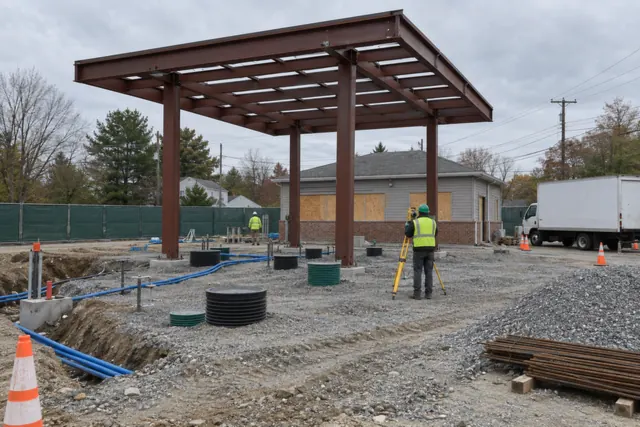
A typical project runs 8 to 14 weeks from permit application to final inspection. Excavation and bedding come first, followed by tank setting, piping installation, dispenser pads, and electrical hookups, with a DEP-certified installer performing or directly supervising the tank work. Winter projects in northern Pennsylvania face potential delays from frozen ground conditions between December and March, which can add two to four weeks to the schedule. Before selecting a contractor, confirm their certified tank handler credentials through the state's online lookup tool and request references from at least two recent Pennsylvania installations. Get an itemized bid covering permitting, excavation, backfill, paving restoration, monitoring setup, and state registration so you can compare proposals on equal terms.
What credentials do contractors need for UST installation in Pennsylvania?
Pennsylvania requires both the company and individual technicians to hold certified tank handler credentials issued through the state's Storage Tank Program under Act 32. General contractors or excavation firms without these specific credentials cannot legally install fuel storage systems. The certification covers installation, modification, and closure activities, and the state maintains a public lookup tool where you can verify a contractor's status. Hiring an uncertified installer can void equipment warranties and create permitting complications that delay your fuel delivery timeline by months.
How much does underground storage tank installation cost in Pennsylvania?
A single UST installation in Pennsylvania typically runs $55,000 to $150,000 for the tank, excavation, piping, and monitoring equipment. Full gas station build-outs with multiple tanks, dispensers, and canopy work range from $250,000 to $500,000 depending on the number of product lines and site complexity. Philadelphia metro projects tend to run 10 to 15 percent higher than western or central Pennsylvania due to tighter lot access and higher labor rates. Sites replacing old tanks may face additional costs of $10,000 to $50,000 if legacy soil contamination is discovered during excavation. Request itemized bids from at least two contractors so you can compare line items directly.
How long does a tank installation take in Pennsylvania?
Most Pennsylvania tank installation projects take 8 to 14 weeks from permit submission through system testing and DEP's operating permit approval. Greenfield sites with clean soil and good access can finish in as few as six weeks if permit review moves quickly. Brownfield replacements where old tanks must be removed first often stretch past five months, particularly when unexpected contamination triggers remediation requirements. Winter scheduling in the northern half of the state adds risk because frozen ground between December and March can delay excavation work by several weeks.
Does Pennsylvania's USTIF fund help pay for tank installation projects?
The Underground Storage Tank Indemnification Fund does not cover new tank installation costs but does cover eligible cleanup and remediation from releases at registered tank sites. Where it becomes relevant to installation projects is when legacy contamination from a previous tank is discovered during excavation for the new system. In those cases, USTIF may reimburse remediation expenses after the work is completed and documentation is submitted. The fund operates on a reimbursement basis, so you pay upfront and file for recovery afterward. Eligibility requires that the tank site was properly registered and fees were current at the time of the release.
What happens if my site has old contamination when excavating for a new tank?
Discovering contamination during excavation is common on sites replacing older single-wall fuel systems that leaked undetected for years. Work pauses until the state environmental program is notified and soil characterization determines the extent of the impact. Cleanup costs range from $10,000 for localized soil contamination to $50,000 or more if groundwater is affected. Pennsylvania's USTIF may cover eligible remediation costs if the site meets registration and fee requirements, which can offset a significant portion of the unexpected expense. Build a contamination contingency of 15 to 20 percent into your project budget, because the only way to confirm whether old contamination exists is to dig.