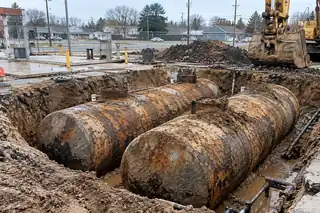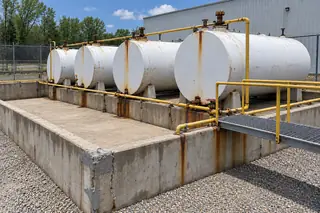
HAZWOPER training runs $150 to $900 depending on format and training tier. The 40-hour course for full-time site workers costs the most. The 8-hour annual refresher costs the least. Every worker involved in hazardous waste cleanup, emergency response, or operations at contaminated sites needs some level of HAZWOPER certification before setting foot on a job site.
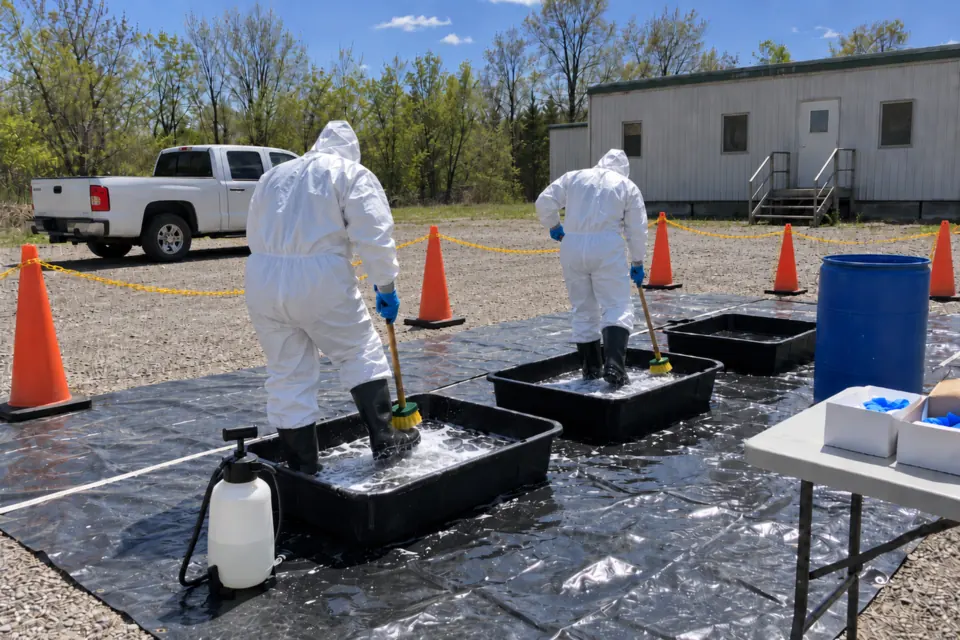
HAZWOPER stands for Hazardous Waste Operations and Emergency Response. It is not optional. OSHA published the final standard on March 6, 1989, at 29 CFR 1910.120, with a construction version at 29 CFR 1926.65. It applies to anyone who handles hazardous substances during cleanup operations, works at treatment, storage, and disposal facilities, or responds to chemical spills and releases. If you work on cleanups of leaking underground storage tanks, soil remediation projects, or environmental site assessments involving contaminated soil or groundwater, you may need OSHA HAZWOPER training.
The standard is one of the most frequently misunderstood in all of OSHA regulation. Employers confuse who needs 40 hours versus 24 hours. Workers let their annual refresher lapse without realizing the consequences. And online training providers make promises about certification that do not match what OSHA actually requires.
This guide covers each training level, what they cost, how to maintain your certification, and the specific mistakes that get companies cited. Whether you are an employer determining which workers need training or a technician checking whether your certification is current, the information below will save you time and money.

What HAZWOPER Means and Why OSHA Requires It
OSHA created the HAZWOPER standard after a series of incidents in the 1980s where workers were injured or killed during hazardous waste cleanup operations. The regulation covers five distinct groups. These include cleanup crews at uncontrolled waste sites, corrective action teams at RCRA facilities, treatment storage and disposal workers, hazardous waste generators, and emergency responders.
The HAZWOPER meaning is straightforward once you break down the acronym, but the scope of the regulation catches many employers off guard. A tank removal contractor pulling a leaking underground storage tank falls under the standard. So does the fire department responding to a chemical spill on a highway. So does the maintenance worker at a refinery who might encounter residual hazardous materials during routine repairs. The common thread is exposure to hazardous substances, not job title. Even workers who are only occasionally present at contaminated sites may fall under the standard depending on their potential exposure level.
Three categories of workers need initial HAZWOPER training followed by annual refreshers. The first is cleanup and remediation technicians at uncontrolled hazardous waste sites. The second is personnel at treatment storage and disposal facilities. The third is emergency responders to hazardous material incidents, including fire departments, railroad emergency crews, and facility response teams.
Getting the training level wrong does not just trigger OSHA fines; it gets people hurt.
40-Hour vs 24-Hour: Which Training Level You Actually Need
The OSHA 40-hour HAZWOPER course is the full certification required for workers who perform hands-on activities at uncontrolled hazardous waste sites. If you are doing the actual cleanup, operating in exclusion zones, or supervising workers who are, you need the 40-hour training. OSHA also requires three days of supervised field experience under a qualified site supervisor before the worker can operate independently. Most people overlook this requirement.
The 24-hour course is for workers with occasional site access who do not perform cleanup. If you visit contaminated sites periodically but do not handle hazardous materials, the 24-hour level is appropriate. This includes certain project managers, site inspectors, and regulatory personnel who enter work zones without performing remediation tasks. The 24-hour course also requires one day of supervised field experience.
Choosing the wrong level is one of the most common HAZWOPER compliance failures. An employer who sends a remediation technician through 24-hour training instead of 40-hour training has not met the standard, even though the worker technically completed a HAZWOPER course. The distinction is based on the nature and duration of exposure, not on budget or convenience. OSHA has cited employers for exactly this mistake, and the penalty applies even when the worker experienced no actual injury on the job.
Supervisors face an additional requirement. Any on-site manager at a hazardous waste operation must complete 8 extra hours of supervisor training on top of their initial 40-hour or 24-hour course. This covers management of worker safety, hazard recognition from a supervisory perspective, and incident command system protocols.
The Annual Refresher Requirement That Catches People Off Guard
Every worker who completes either the 40-hour or 24-hour HAZWOPER training must take an 8-hour HAZWOPER refresher course every 12 months. The refresher covers updated regulations, new hazard recognition techniques, decontamination procedures, and emergency response protocols. It is required annually regardless of how much hazardous waste work the employee actually performed during the year.
The 12-month clock starts on the date of your most recent training completion, whether that was your initial course or your last refresher. Miss the deadline and you have a problem. OSHA does not have a grace period written into the standard. If your anniversary date passes without a completed refresher, your employer must evaluate whether you need the full initial training again.
Most employers treat a lapsed certification as requiring full retraining. That means a six-month lapse could force you to retake the entire 40-hour course instead of spending one day on the 8-hour refresher. One day of refresher training costs $50 to $100. Retaking the 40-hour course costs $200 to $900 and takes a full week.
OSHA allows refresher training to be completed in segments throughout the year. All 8 hours must be finished by the anniversary date. Some employers split it into quarterly two-hour sessions. This approach works for teams that cannot take a full day off, but it requires careful tracking to ensure every worker completes all segments before their deadline.

How Much HAZWOPER Training Costs in 2026
Online 40-hour HAZWOPER training ranges from $150 to $300. The total HAZWOPER cost depends on format, provider quality, and whether hands-on training is bundled or separate. Providers in the $200 to $250 range typically offer interactive courses with instructor support. California-specific versions run higher because Cal-OSHA adds state requirements on top of the federal standard.
In-person 40-hour training costs $500 to $900 for the full five-day course. This includes hands-on equipment practice with actual PPE, air monitoring devices, and decontamination setups. Some providers offer hybrid formats where you complete 32 hours online and attend 8 hours of in-person hands-on instruction, typically priced between $300 and $500. The hybrid approach is increasingly popular because it reduces time away from job sites while still meeting the hands-on requirement.
The 24-hour course costs roughly 60 percent of the 40-hour price at the same provider. Online versions run $100 to $200. In-person versions run $350 to $600. The 8-hour annual refresher is the cheapest at $50 to $100 online and $150 to $300 in person.
Group discounts are common and can reduce per-student costs by 20 to 40 percent when enrolling five or more workers. For a UST removal company with a crew of six, that is the difference between $1,500 individually and $1,000 as a group. Most providers also offer volume pricing for the annual refresher, which matters more over time since every employee needs it every single year.
Online HAZWOPER Training: What OSHA Will and Won't Accept
OSHA has stated that online training alone is not sufficient to meet all HAZWOPER requirements. That catches a lot of people off guard. The standard requires hands-on experience with respirators, chemical protective clothing, and air monitoring instruments. You cannot learn to properly don and doff a Level A suit from a video.
Online HAZWOPER courses are widely used and accepted as the knowledge component of training. The standard approach is to complete classroom instruction online, then receive hands-on equipment training and supervised field experience from the employer at the job site. OSHA does not maintain a list of approved providers and does not certify or endorse any specific training program. This means the burden falls on the employer to verify that the training provider delivers content that meets the standard's requirements.
The quality gap between providers is enormous. You can compare HAZWOPER training providers in our detailed breakdown. Some offer genuinely interactive courses with quizzes, instructor access, and downloadable reference materials. Others are slide decks that you click through. Both produce a certificate that looks identical. The difference shows up on a job site when a worker cannot properly use an air monitoring device because their entire training was multiple-choice questions.
When evaluating providers, check three things. First, do they offer live instructor support? Second, how recently was the content updated? Third, do they include guidance on the hands-on components your employer still needs to deliver? A cheap course that leaves your employer guessing about hands-on requirements is not actually cheaper.
What Happens When Your HAZWOPER Certification Lapses
Your HAZWOPER certification expires exactly 12 months after your last training date, with no grace period.
OSHA leaves the lapse decision to the employer, which sounds flexible but creates more uncertainty. The employer must determine whether the worker's skills have degraded enough to require full retraining. Most safety directors default to requiring full retraining after a lapse of three months or more, because guessing wrong carries too much liability.
The cost of a lapse goes beyond retraining fees. A worker with an expired certification cannot enter a hazardous waste site. Period. If that worker is your lead technician on a UST removal project, the project stops until recertification is complete. For a small environmental contractor, one lapsed certification can cost tens of thousands in project delays and damaged client relationships.
Set calendar alerts at 90 days, 60 days, and 30 days before every worker's anniversary date because a $75 refresher beats a $500 retraining bill every time.
Common HAZWOPER Mistakes That Lead to OSHA Citations
The most frequent HAZWOPER citation is inadequate training documentation. OSHA inspectors do not just ask whether your workers are trained. They ask to see the records. The certificate must show the worker's name, the training provider, the specific course completed, and the completion date. No documentation means no proof of training. Keep every certificate backed up to cloud storage.
The second most common failure is assigning 24-hour trained workers to 40-hour tasks. This happens constantly. A company hires someone with a valid HAZWOPER certificate at the wrong level, nobody checks the details, and the worker shows up at a contaminated site without adequate training. The certificate says HAZWOPER. It does not specify which tasks the holder is qualified to perform. Employers must verify the training level before making site assignments.
Skipping the supervised field experience is the third major failure. The 40-hour course requires three days of supervised field work. The 24-hour course requires one day. Online providers issue certificates after the classroom portion, but the OSHA requirement is not fully met until field experience is documented separately. Many employers do not realize this component exists.
A current HAZWOPER certificate does not mean a worker is trained for your specific site. OSHA expects employers to provide site-specific instruction covering the actual chemicals, PPE, and emergency procedures at your facility.
How to Get Certified
If you or your employees need HAZWOPER training, start by matching the training level to actual job duties. General site workers doing hands-on cleanup at an operation covered by the HAZWOPER standard need the 40-hour course. Workers who visit sites without performing cleanup need the 24-hour course. Both groups need 8 hours of refresher training every 12 months under 29 CFR 1910.120(e)(8). If you are at the hiring stage, our directory lists oil tank removal contractors.
For employers managing environmental remediation teams, the annual refresher is a recurring cost that belongs in your operating budget alongside insurance and equipment maintenance. Keeping five workers current costs roughly $375 to $500 per year in refresher fees. The cost of one lapsed certification that delays a project is orders of magnitude higher.
If your project involves UST removals, soil remediation, or contaminated site work, you can find environmental contractors through our directory. Browse contractors in your state or request a free quote, and ask each firm for current HAZWOPER certificates before work starts.
The full OSHA HAZWOPER standard is detailed in 29 CFR 1910.120 for general industry and 29 CFR 1926.65 for construction. Questions about training requirements, lapsed certifications, and provider qualifications are answered on OSHA's hazardous waste operations FAQ page.