Online HAZWOPER training providers charge $210 to $390 for the 40 hour course. In-person programs at community colleges and regional training centers run $750 to $900. The hard part is picking one your employer will actually accept.
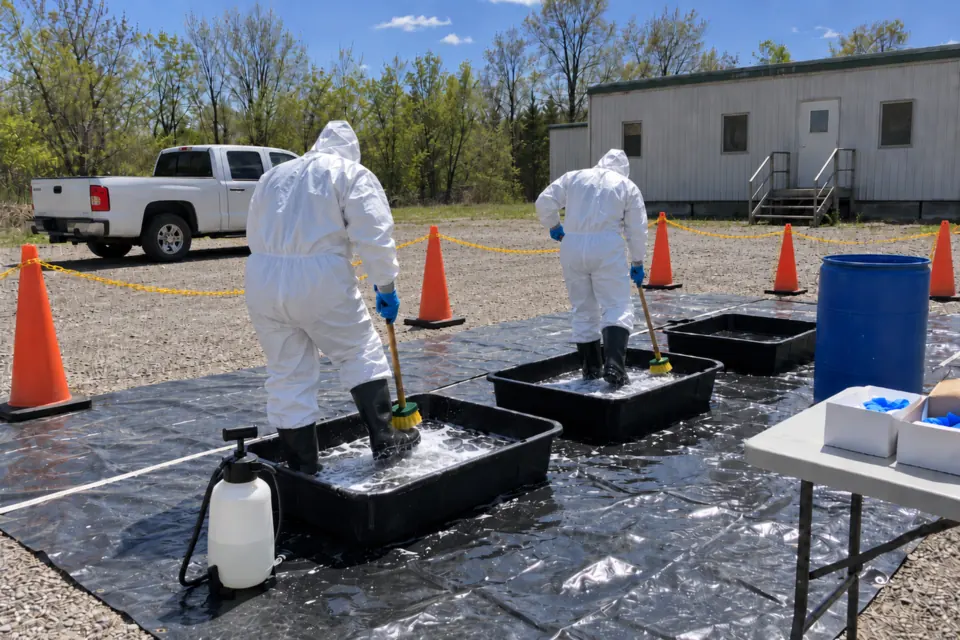
Dozens of companies sell HAZWOPER courses online, and most of them will happily take your money. The real question is whether the certificate you get at the end holds up. Will it satisfy an OSHA inspector reviewing your training records? Will a new employer accept it as proof you completed the right course? If you already understand what HAZWOPER training covers and who needs it, our HAZWOPER training guide has the full breakdown. This page is about where to buy it and what separates a solid program from one that wastes your time.
Disclosure: some providers listed on this page offer referral programs. Our coverage is based on course quality, accreditation, and pricing, not commission rates.
Most HAZWOPER training providers check the basic regulatory boxes. The differences that actually matter show up after you enroll.
Start with accreditation. Providers accredited by IACET (International Accreditors for Continuing Education and Training) have been independently evaluated for instructional quality. That accreditation also means the course awards CEUs, which matters if your workers hold professional certifications that require continuing education credits. Not every provider carries it.
Instructor access is the second thing to check. OSHA expects trainees to have direct access to a qualified trainer who can answer questions during the course. Some online providers offer email support with 24 hour response times. Others give you a phone number and nothing else. A few provide live chat with working safety professionals. The difference matters less for experienced workers doing an annual refresher and more for someone taking the 40 hour course for the first time.

What to Look for Before You Pick a Provider
Look at what the certificate includes. A legitimate completion certificate should list the student's name, total training hours, completion date, provider name, and a unique certificate number. If a provider can't produce that, move on.
Red flags are easier to spot than you'd expect. No listed accreditation. No refund policy. No way to contact an actual instructor. Courses that advertise "OSHA HAZWOPER 40 hour" training but let you click through the material in 12 hours. OSHA has made it clear that computer-based training must include actual hands-on components and instructor access. A course that skips both is a compliance risk, not a shortcut.
HAZWOPER training cost varies more than most people expect. A 40 hour online course runs anywhere from $210 to $390 depending on the provider, and in-person options can hit $900 or more. That range exists for real reasons, not just marketing.
At the lower end, providers like HazMat Student offer the 40 hour course at $210 with self-paced online access. This is stripped-down training for workers whose employers will handle the hands-on and site-specific components separately. At $229 to $235, providers like 360training bundle in IACET accreditation, CEU credits, and long-term certificate verification. The $270 to $300 range includes HAZWOPER Center and ClickSafety, both of which have been around for over a decade and offer all three course levels.
National Environmental Trainers sits at $390 for the 40 hour course, which is the highest among the online providers we reviewed. Their courses are taught by working field professionals rather than generic safety instructors, which explains the premium. Whether that extra $150 is worth it depends on whether your workers need the regulatory knowledge or the practical field perspective. For most online students completing the educational component before employer-provided hands-on training, the lower-priced IACET-accredited options cover the same OSHA requirements.
The 24 hour course typically runs 60% to 75% of the 40 hour price. The HAZWOPER refresher course ranges from $49 to $95 across providers at the 8 hour level. Refreshers are where price differences add up fast if you're renewing a team of 15 or 20 workers every year. At $49 per person versus $95 per person, the annual difference for a 20 person crew is almost $1,000.
Choosing by Budget: What HAZWOPER Training Actually Costs
All prices on this page were verified in April 2026. Training providers change pricing frequently, so confirm current rates on their sites before purchasing.
Six providers are worth a serious look if you're buying HAZWOPER training online. Each one covers the 40 hour, 24 hour, and 8 hour refresher courses required under 29 CFR 1910.120.
360training (also known as OSHAcampus) is the largest online safety training provider in the U.S. with over 11 million students trained. Their 40 hour HAZWOPER course runs about $235, and the 8 hour refresher is $49. They carry IACET accreditation, award CEUs, and their certificate verification system lets employers confirm completion years after the course ends. For companies enrolling multiple workers, that verification infrastructure matters more than the course content itself, because content across providers is largely standardized to meet the same OSHA requirements.
ClickSafety has been in the safety training business for over 25 years and is an OSHA-authorized outreach training provider. Their 40 hour course is $300, the 24 hour is $180, and the refresher is $70. They also offer a 16 hour bridge course at $150 for workers upgrading from 24 hour to 40 hour certification, which not every provider sells. ClickSafety is a strong option for companies that need a single provider across multiple safety training categories beyond just HAZWOPER.
Learntastic offers HAZWOPER courses with CE credits and self-paced access. Their pricing is competitive with 360training, and they offer corporate enrollment packages for companies training multiple workers at once. They're newer to the market than ClickSafety or 360training, which means less of a track record but also more flexibility on group pricing negotiations.
HAZWOPER Center does exactly one thing: HAZWOPER training. Their 40 hour course is $270, the 24 hour is $200, and the refresher is $65. Being a specialist has tradeoffs. You won't find OSHA 10 or confined space courses on their platform, but everything they offer is built specifically for hazardous waste operations workers. If your team only needs HAZWOPER and nothing else, the focused approach means less clutter and a curriculum that doesn't try to be everything to everyone.
Online Providers Worth Evaluating
National Environmental Trainers charges $390 for the 40 hour course and $295 for the 24 hour, making them the most expensive online option in this group. The difference is instructor background. Their courses are developed and taught by CSPs and CIHs who work active remediation and emergency response projects. For organizations sending workers to complex cleanup sites where the 40 hour course is just the starting point before extensive field training, that real-world instructional perspective has value. For a facilities manager renewing annual refreshers for warehouse staff, it probably doesn't.
One thing none of these courses replace: the three days of supervised field experience OSHA requires after the 40 hour course. The 24 hour course requires one day.
Online HAZWOPER training covers the educational requirements. It does not cover everything OSHA expects.
OSHA's 2021 letter of interpretation clarified the HAZWOPER training requirements for hands-on work. The initial 24 or 40 hour course must include an actual hands-on training component, such as donning and doffing PPE, so workers practice with protective equipment and safe practices in a non-hazardous setting. Online courses can cover the knowledge and theory, but the physical practice has to happen somewhere with real equipment. That somewhere is either a blended course with scheduled in-person sessions, or your employer's own site-specific training program.
Blended programs combine online coursework with one or two days of in-person hands-on training. Safety Unlimited offers this model in California, Arizona, and North Carolina, with the 40 hour blended course running around $380. Compliance Solutions takes a different approach entirely, offering instructor-led classroom training in over 40 cities across the U.S. at $565 to $984 depending on location and group size. That price includes the hands-on component as part of the course itself.
For in-person training close to home, community colleges and regional training centers typically run $750 to $900 for the 40 hour course. The City College of New York charges $875 for their five-day program. These are good options for workers who prefer structured classroom environments or for employers who want their entire team trained together in one session.
When Online Training Is Not Enough
The question is not whether online or in-person training is "better." Both can satisfy OSHA requirements when combined with the appropriate hands-on and field experience components. Online is more convenient and costs less. In-person is more immersive and sometimes makes the employer's site-specific training obligation easier to fulfill because workers already have physical experience with the equipment. For annual 8 hour refreshers, online is standard practice and widely accepted. For initial 40 hour certification, talk to your employer about which format they want before you spend the money.
Your employer picks the level. Workers do not get to choose.
The 40 hour course is for general site workers, equipment operators, laborers, and supervisors at uncontrolled hazardous waste sites who face regular exposure to hazardous substances. After completing the coursework, these workers must also log three days of supervised field experience under a trained, experienced supervisor before they can work independently. This is the most common level for hazardous waste cleanup crews and UST cleanup operations.
The 24 hour course covers occasional site workers who perform limited tasks like groundwater monitoring, land surveying, or geophysical work and who are unlikely to be exposed above permissible limits. It requires one day of supervised field experience after completion. Workers who start at 24 hours and later need the 40 hour level have an upgrade path. A 16 hour bridge course plus two more days of field experience gets them there without repeating the full course.
The 8 hour refresher is required every year for site workers and supervisors trained under 29 CFR 1910.120(e), while emergency responders need yearly refresher training or a yearly demonstration of competency. Missing the annual deadline doesn't automatically mean you retake the full course. OSHA's position is that a two year absence from hazardous waste work usually doesn't require repeating initial training, while a seven year gap almost certainly does. In between, it's a case-by-case employer decision based on the worker's experience, the relevance of their past training, and changes in regulations or technology since their last course. The safest move is simple: don't let the refresher lapse.
One detail that trips up supervisors: on-site managers must complete the same 40 hour initial training as their workers plus an additional 8 hour supervisor course covering management-specific responsibilities. The supervisor add-on is separate from the annual refresher.
40-Hour vs 24-Hour vs 8-Hour Refresher: Which Level Do You Need?
OSHA does not certify, endorse, or approve any HAZWOPER training provider. That fact alone should change how you evaluate them.
When a provider says their course is "OSHA compliant," they mean it covers the topics required by 29 CFR 1910.120. OSHA has no list of approved HAZWOPER training providers and no approval process for individual courses. The OSHA Outreach Training Provider list covers OSHA 10 and OSHA 30 courses, not HAZWOPER. Confusing the two is common.
IACET accreditation is the closest thing to independent quality verification that exists for HAZWOPER training. Providers who carry it have been evaluated against standards for instructional design, instructor qualifications, and assessment practices. It's not a government requirement, but it is a meaningful signal that separates providers who invested in curriculum quality from those who just recorded someone reading slides.
Check the certificate itself. A proper completion certificate lists the student's full name, training hours, completion date, provider information, and a unique certificate number. If any of those are missing, that's a problem. If an OSHA compliance officer asks to see training documentation, this is what they're looking for. Certificates that omit the hour count or the provider information are going to raise questions.
The word "certification" is misleading in this context. HAZWOPER training produces a certificate of completion, not a federal certification. There is no government-issued HAZWOPER license or credential. The certificate proves you completed the required training hours. Your employer is still responsible for providing site-specific instruction and confirming you can do the work safely. Those are separate obligations that no online course can fulfill.
Buying the course is the easiest part. Meeting the full OSHA training requirement takes more than a certificate.
How to Verify a Provider Is OSHA-Compliant
Before HAZWOPER training begins, OSHA requires employers to provide medical surveillance for workers who will be exposed to hazardous substances above permissible limits. That means a medical examination before initial assignment, at least annually after that, and again when the worker leaves HAZWOPER-covered employment. The medical clearance has to happen before training, not after. Workers who skip this step are out of compliance before they finish the first module.
After any initial HAZWOPER course, the employer must provide site-specific training that covers the particular hazards, protective equipment, and emergency procedures for that worksite. Online and classroom courses teach general HAZWOPER principles. They cannot teach your workers about the specific contaminants, layout, and response procedures at your facility. That's your job as the employer, and OSHA expects documentation proving it happened.
Recordkeeping is the part most employers underestimate. Training certificates, medical clearance records, and documentation of site-specific instruction all need to be maintained and accessible. When OSHA conducts an inspection, they don't just ask whether training occurred. They ask to see the records. A filing cabinet with expired certificates and no medical documentation is a citation waiting to happen. To get local pricing, compare quotes from UST inspection and testing services.
Group pricing is available from most providers for five or more students. At the refresher level, the savings compound. If you're managing annual HAZWOPER renewals for a team, compare per-seat pricing across providers before committing. The difference between $49 and $95 per refresher is small for one worker and significant for twenty. Some providers also offer LMS integration for companies that track training through their own systems.
If your team works on UST removal, tank decommissioning, or soil and groundwater remediation projects, your workers almost certainly need HAZWOPER training at some level. The right provider depends on your budget, your team size, and how much of the hands-on training you plan to handle internally. Compare two or three options, verify accreditation, and confirm your employer will accept the certificate before you enroll. If you need to find an environmental contractor for a project that requires HAZWOPER-trained workers, our directory lists contractors across all 50 states.
For help identifying the right training level or finding contractors with current HAZWOPER certification, reach out through our quote form.