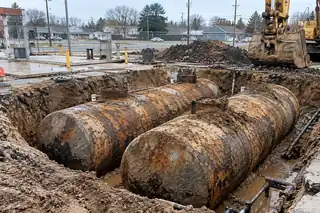
SPCC stands for Spill Prevention, Control, and Countermeasure. If your facility can store more than 1,320 gallons of oil aboveground, counting only containers of 55 gallons or larger, and a spill could reach navigable waters, federal law requires you to have an SPCC plan in place. The plan documents how your facility will prevent oil spills, contain them if they happen, and respond to them before they reach waterways.
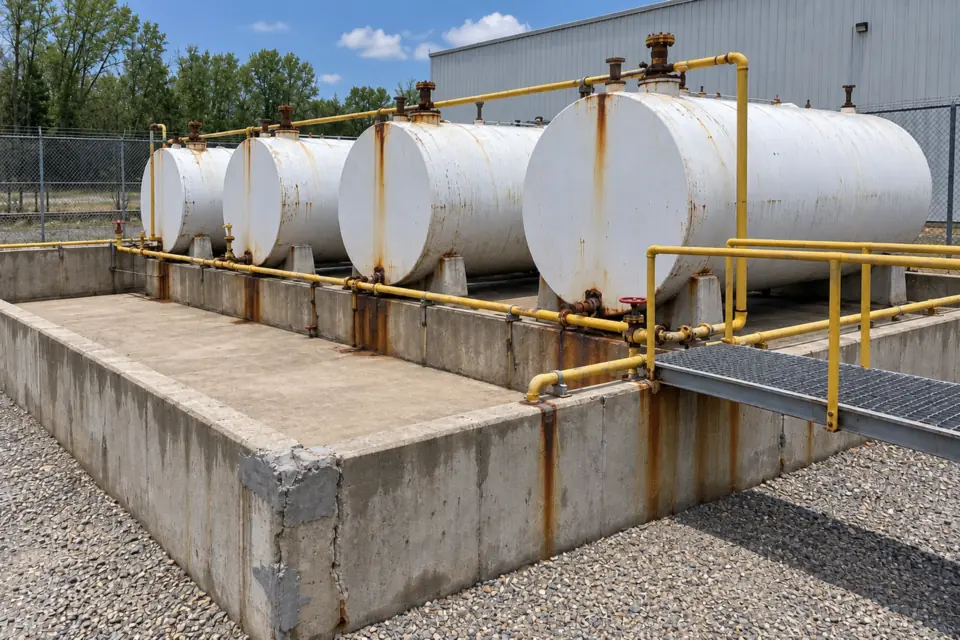
The SPCC regulations fall under 40 CFR Part 112, enforced by the EPA under the Clean Water Act. They apply to a much wider range of facilities than most people realize. Gas stations, farms, manufacturing plants, fleet yards, marinas, airports, bulk fuel distributors, and any operation storing petroleum products, hydraulic oil, vegetable oil, or animal fats can trigger the requirement.
The SPCC meaning is simple: prevent oil from reaching navigable waters. The compliance process is where it gets complicated. There are three different plan types with different certification requirements, and choosing the wrong one or failing to update your plan can result in six-figure penalties. A Kansas automotive products company recently paid over $250,000 to settle SPCC violations with EPA Region 7.
The full name is spill prevention control and countermeasure. This guide explains who needs an SPCC plan, which type applies to your facility, what the plan must contain, and what it costs to get one prepared.

What SPCC Stands For and Why It Exists
What is SPCC in practical terms? It is a federal requirement that any facility storing enough oil to threaten navigable waterways must document how it prevents, contains, and cleans up spills. SPCC plans exist to prevent oil discharges into navigable waters and adjoining shorelines. The regulation was created under the authority of the Clean Water Act after a series of major oil spills demonstrated that prevention was cheaper and more effective than cleanup. The logic is straightforward: if a facility stores enough oil to cause environmental damage, it needs a written plan for keeping that oil out of the water. If a spill contaminates soil or groundwater, our environmental remediation guide covers the cleanup process.
The EPA defines oil broadly under the SPCC rule. It includes all petroleum products like gasoline, diesel, fuel oil, and lubricants. It also includes non-petroleum oils such as vegetable oils, animal fats, and bio-based oils. Synthetic oils, hydraulic fluids, and oil mixed with waste are all covered. If it is oil of any kind, it counts toward your storage threshold.
The spill prevention part of the plan covers equipment design, containment structures, and operating procedures that reduce the likelihood of a release. The control part addresses what happens during a spill, including spill containment measures and response protocols. The countermeasure part covers cleanup procedures and notification requirements.
Each plan is facility-specific because no two operations store oil the same way.
Does Your Facility Need an SPCC Plan?
The SPCC requirements come down to three criteria your facility must meet simultaneously. First, it must be a non-transportation facility, meaning it is not solely engaged in transporting oil by pipeline, vessel, rail, or truck. Second, it must have aggregate aboveground oil storage capacity of more than 1,320 gallons, or completely buried storage capacity of more than 42,000 gallons, not counting buried tanks that meet the federal UST rules in 40 CFR 280. Third, there must be a reasonable expectation that a spill could reach navigable waters.
The 1,320-gallon threshold is cumulative across all containers of 55 gallons or larger at the facility. That includes tanks, drums, totes, and oil-filled operational equipment like transformers and large hydraulic systems. Empty tanks count at their full capacity unless they have been properly decommissioned. A maintenance shop with a 500-gallon diesel tank, a 275-gallon waste oil tank, a 275-gallon hydraulic oil tank, and a few 55-gallon drums is over the limit. Many facility operators do not realize they are subject to the rule until an inspector does the math for them.
The EPA interprets the waterway proximity requirement broadly. You do not need to be adjacent to a river or lake. If drainage pathways, storm drains, ditches, or overland flow could carry a spill to navigable waters, the requirement applies. Facilities several miles from the nearest waterway have been cited because storm drainage systems connected their property to a navigable water body.
If your only oil storage is in federally regulated underground storage tanks, SPCC does not apply to those tanks.
Three Plan Types: Tier I, Tier II, and PE Certified
Tier I plans apply to facilities with more than 1,320 and up to 10,000 gallons of aboveground storage capacity, with no single tank exceeding 5,000 gallons and a clean spill history. This is the simplest option. The owner or operator can self-certify it without a Professional Engineer. The EPA provides a free SPCC template on its website that Tier I facilities can download and complete. That template, the inspection checklists that go with it, and who may self-certify are covered on our SPCC template page.
Tier II plans apply to facilities that also store 10,000 gallons or less in total but have at least one container larger than 5,000 gallons. The plan is more detailed than Tier I but can still be self-certified by the owner or operator. The key distinction is the presence of a larger tank, which increases spill volume risk and requires more detailed containment calculations.
PE-certified plans are required for any facility storing more than 10,000 gallons of oil aboveground. A licensed Professional Engineer must review and stamp the plan. PE certification is also triggered by a spill history above the qualified facility limits, or plan deviations from standard requirements. Federal rules do not require the PE to be licensed in the facility's state, though EPA notes that state rules may bar an out of state PE from sealing it.
Choosing the wrong plan type is a compliance failure in itself. A facility that qualifies for Tier I self-certification but prepares a PE-certified plan wastes money. A facility that requires PE certification but submits a self-certified plan is out of compliance. Some states add their own requirements on top of the federal rules, so check your state regulations before assuming self-certification is available.
What a Plan Must Contain
A compliant plan must include a facility diagram showing the location of all oil storage containers, transfer areas, loading and unloading zones, drainage pathways, and secondary containment structures. The diagram needs to be detailed enough that an inspector can walk the site with the plan and identify every storage location.
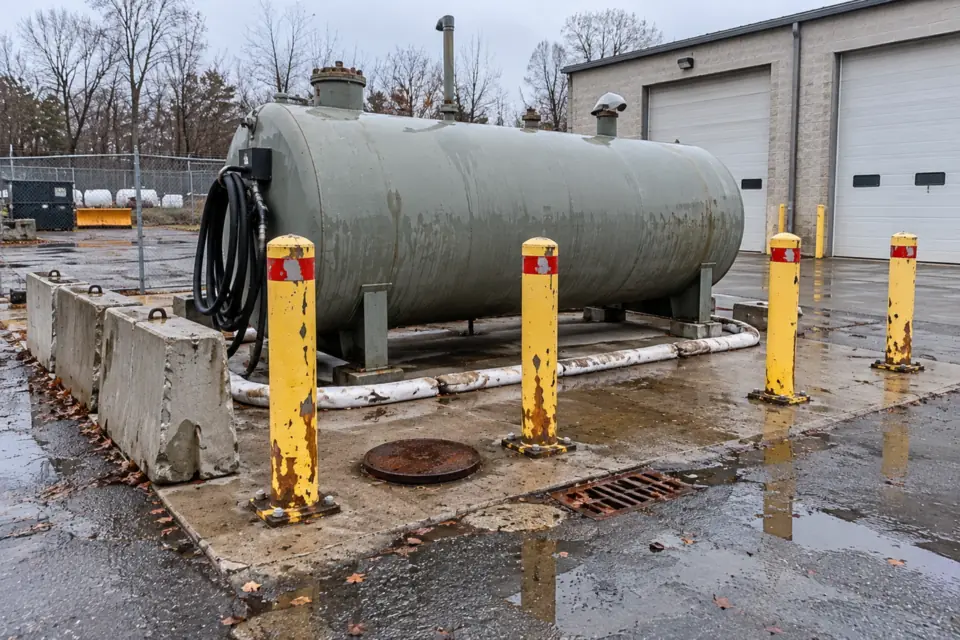
Secondary containment requirements are the most engineering-intensive element of the plan. The SPCC rule requires containment systems capable of holding the full volume of the largest container plus room for precipitation. Common methods include concrete berms, double-walled tanks, spill pallets, earthen dikes, and impermeable liners. When several containers share one containment area, it must still hold the largest single container, not the combined total of all of them. Getting this calculation wrong is one of the most common reasons plans fail regulatory review.
The spill response plan section of the SPCC documents the exact steps your facility will take during a release. The plan covers immediate actions to stop the discharge, notification protocols for internal and external contacts, deployment of spill kits and absorbents, and waste disposal procedures for recovered materials. Each step needs to be specific enough that any trained employee can execute it.
Training documentation is required. Oil-handling personnel must be trained, and the facility must hold discharge prevention briefings for them at least once a year. The plan must describe the training program and the facility must maintain records proving each employee completed it. Inspectors check training records as routinely as they check containment structures.
How Much an SPCC Plan Costs
Tier I self-certified plans are the least expensive option. The EPA template is free, and a facility owner with knowledge of the SPCC rule can complete it without outside help. If you hire a consultant to prepare a Tier I plan, expect to pay $1,500 to $3,000 depending on facility complexity and whether a site visit is included.
Tier II self-certified plans cost slightly more because they require additional detail around larger tank containment. Consultant fees for Tier II plans typically run $2,000 to $4,000. The plan itself is more involved than Tier I but avoids the cost of Professional Engineer certification.
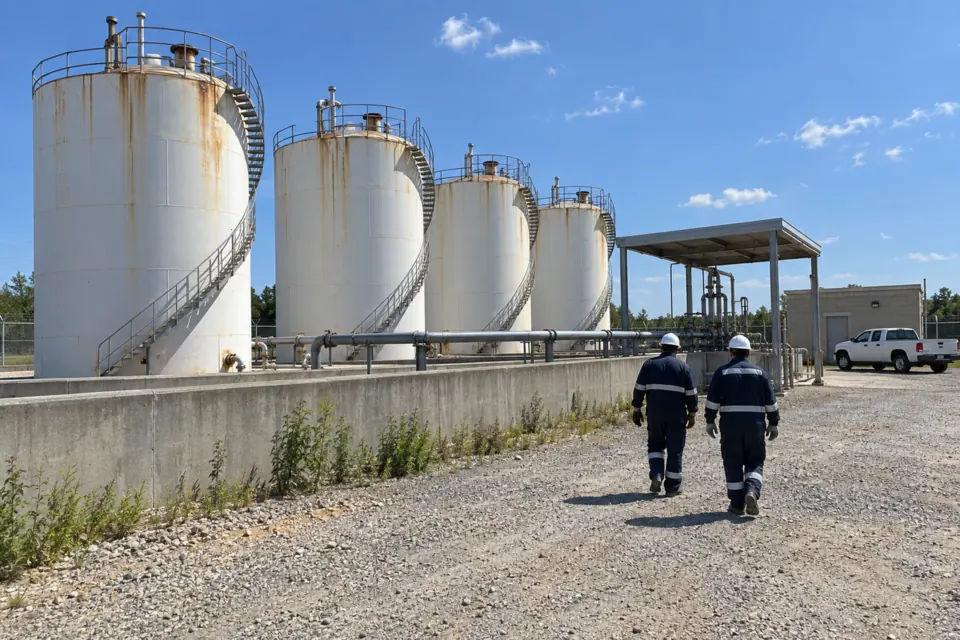
PE-certified plans are the most expensive because they require both a qualified environmental consultant to prepare the plan and a licensed Professional Engineer to review and stamp it. Expect to pay $3,000 to $8,000 for a standard facility. Complex operations with multiple storage areas, large tank farms, or proximity to sensitive waterways can push costs above $10,000. Our tank farm and bulk storage compliance guide covers the API 653 inspection and secondary containment design that drive most of those costs.
The initial plan cost is a one-time expense, but SPCC compliance has ongoing costs. These include the five-year review and evaluation, discharge prevention briefings for oil-handling personnel at least once a year, inspection and maintenance of containment structures, and amendments when storage configurations change. Budget $500 to $2,000 every five years for plan review and evaluation, plus the cost of any physical improvements the review identifies as necessary.
The Five-Year Review Requirement
SPCC plans must be reviewed at least once every five years. The review confirms that the plan still reflects current facility conditions, storage configurations, and operating procedures. If nothing needs to change, the owner or operator documents the review and signs a statement saying so. If conditions have changed in a way that affects spill potential, the plan must be amended within six months, and technical amendments must be certified.
Material changes require an amendment within six months, regardless of where you are in the five-year cycle. Adding new storage tanks, decommissioning old ones, replacing or relocating containers, installing new piping systems, or making changes that affect secondary containment all require plan updates. You cannot wait for the next five-year review to document a material change. Gas station operators closing their tanks for good should also review what gas station owners owe at closure before filing the final SPCC amendment.
Routine SPCC inspections are separate from the five-year review. Facilities must inspect containment structures, tank integrity, and spill prevention equipment on a regular schedule as defined in the plan. Inspection records must be maintained and available for regulatory review. For shop-built tanks, that integrity schedule can come from the STI SP001 standard. Those routine inspections do not substitute for the five-year plan review.
The owner or operator completes and documents the five-year review. If the review results in technical amendments to a PE-certified plan, a PE must certify those amendments. If you self-certified a Tier I or Tier II plan, you can usually self-certify those amendments too.
Common SPCC Violations and How to Avoid Them
Not having a plan at all is the most common SPCC violation. Many facility operators do not realize they exceed the 1,320-gallon threshold until an inspector arrives and adds up the containers. The threshold catches small operations by surprise because it is cumulative. A maintenance shop with several mid-size tanks and a shelf of 55-gallon drums can easily exceed 1,320 gallons without anyone noticing.
Inadequate secondary containment is the second most cited violation. Containment berms with cracks, missing drain plugs, accumulated rainwater that reduces containment capacity, and containment areas too small to hold the required volume are all common findings. Maintaining containment is an ongoing obligation, not a one-time construction project.
Outdated plans rank third. Facilities that added tanks, changed operations, or modified layouts without updating the SPCC plan are out of compliance. If the plan no longer matches what an inspector sees during a walk-through, you have a violation even if your physical spill prevention measures are adequate.
Missing training records are a documentation failure that turns into a regulatory failure. Even if your employees know exactly what to do during a spill, the absence of written training records means the facility cannot prove compliance. Record the date, attendees, and topics of every training session and annual briefing.
Checking Your Compliance
Start by counting your oil. Every container of 55 gallons or larger counts toward the 1,320-gallon threshold, including tanks, drums, totes, and oil-filled equipment. For a tank with no capacity plate, the tank volume calculator gives its gallons from the dimensions. If the total exceeds 1,320 gallons, you need an SPCC plan. If you already have one, check when it was last reviewed.
For facilities near or below the threshold, an accurate inventory prevents both unnecessary compliance costs and surprise violations. Decommissioning an unused tank could drop you below 1,320 gallons. Adding a single drum could push you above it. Owners closing an entire site rather than a single tank should also see redeveloping a closed gas station site for post-closure planning.
If your facility handles underground storage tanks and also exceeds aboveground SPCC thresholds, you may need both an SPCC plan and UST compliance under 40 CFR 280. Browse UST contractors in your state or request a free quote to connect with professionals who handle both regulatory programs.
The full SPCC regulation is published at 40 CFR Part 112, and the EPA provides the free Tier I plan template on their spill prevention regulations page. For facilities that need PE-certified plans or professional assistance with compliance, an environmental consultant familiar with your industry and state requirements is the fastest path to a compliant plan. Facilities that handle hazardous materials should also review pollution liability insurance requirements. Buyers acquiring a facility with oil storage should fold SPCC status into a pre-purchase property condition review before closing. When the work goes out for bids, start with UST inspection and testing services.