A SWPPP is a required compliance document for most large construction sites. Under 40 CFR 122.26, projects disturbing one or more acres need stormwater permit coverage, and EPA's Construction General Permit requires the written Stormwater Pollution Prevention Plan before the Notice of Intent is filed. Civil penalties reach $64,618 per day per 2024 Clean Water Act inflation figures, making it one of the highest stakes environmental records on any commercial job site.
Most operators encounter this rule in two forms. Construction sites follow the EPA Construction General Permit, called the CGP, or an authorized state equivalent. Industrial sites across 29 regulated sectors follow the EPA Multi Sector General Permit, called the MSGP. The underlying document is the same category of record in both cases. Only the applicability triggers, inspection rules, and renewal timelines differ between federal law and state delegation.
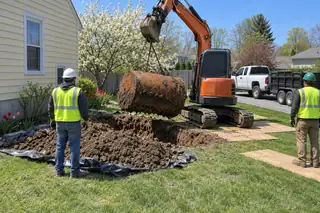
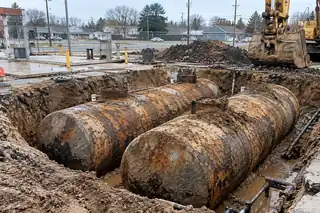
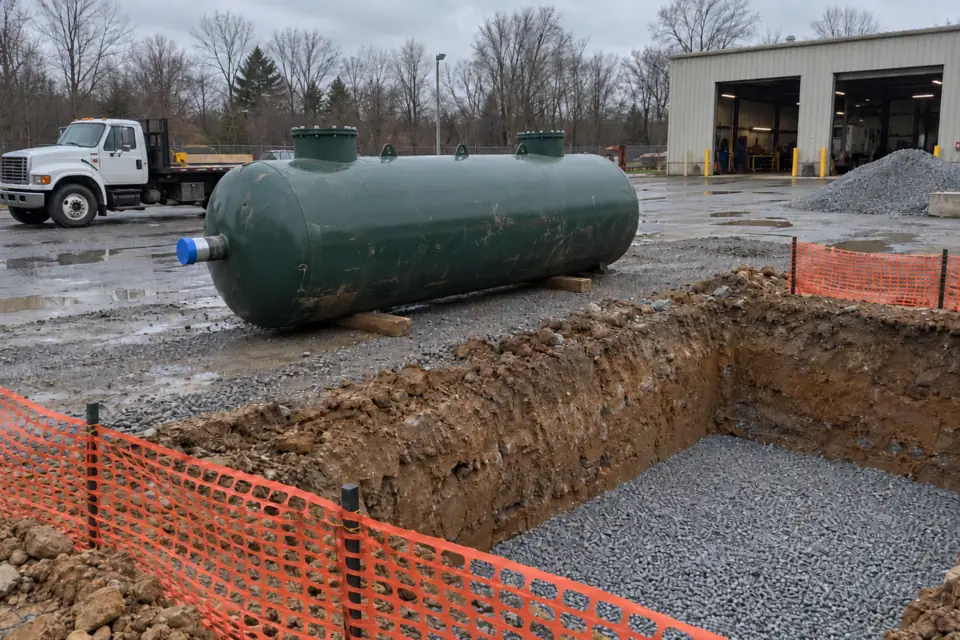
For underground storage tank sites, the requirement often attaches without warning. A simple UST removal rarely reaches the acre threshold on its own. But a tank removal paired with parking lot reconstruction, soil remediation, or new building development routinely crosses one acre. Once that line is crossed, every contractor on the job site works within permit conditions until final stabilization is accepted.
This guide walks through compliance requirements for the current 2022 CGP. It covers what a compliant plan must contain, inspection and documentation rules, and how state stormwater permit programs differ from federal baselines. It also covers the most common violations found during audits and practical steps to prepare a stormwater management plan for a UST site or former gas station redevelopment.

What Is a SWPPP and Who Needs One
A stormwater pollution prevention plan is a site specific document for construction and industrial projects. It identifies every source of pollution and describes the best management practices the operator will use. Those BMPs keep pollutants from reaching nearby surface waters. The plan is not a template to be copied. Each plan needs tailoring to the actual topography, soil type, receiving water body, and proposed earthwork sequence at the specific parcel where work will occur.
EPA defines the operator as any party with operational control over construction plans or site activities. On most projects that means both the developer and the general contractor. Both parties submit a Notice of Intent to obtain CGP coverage. Both are named in the stormwater plan as co operators. Listing every operator is the legal anchor for enforcement and the first item EPA reviewers check during any field audit.
The acre trigger applies to any earth disturbing activity on one or more acres. It also captures smaller sites that are part of a larger common plan of development or sale. A half acre lot inside a 10 acre subdivision still requires CGP coverage. This rule holds even when the half acre is built on its own timeline. Construction in the three non delegated states of Massachusetts, New Hampshire, and New Mexico, on most tribal land, and at federal facilities in a few states follows EPA's CGP directly.
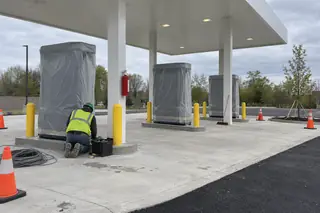
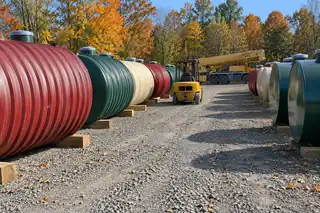
Separate from construction, the MSGP requires a stormwater pollution prevention plan for 29 industrial sectors. Those sectors include petroleum bulk terminals, scrap yards, and motor freight operations. An active retail fueling station is typically outside MSGP scope, but a bulk terminal that loads transport trucks falls directly inside it. A closed tank farm being redeveloped as commercial space also lands inside MSGP. Operators in that position often need both CGP and MSGP coverage during transition.
Federal Requirements Under the Construction General Permit
The current EPA Construction General Permit took effect February 17, 2022 and expires February 16, 2027. It replaced the 2017 CGP. The newer version tightened requirements around inspection frequency, corrective action deadlines, and turbidity monitoring on larger sites. Any plan written for the old 2017 permit must be reviewed and updated for the current permit before the operator files the Notice of Intent.
Before earthwork begins, each operator files a Notice of Intent through the EPA NeT portal. For coverage to attach, the NOI must be submitted at least 14 calendar days before disturbance starts. Electronic submission is required per 40 CFR 127, the NPDES eReporting Rule. Once filed, EPA issues an authorization number. That number becomes the compliance ID for every inspection report and corrective action record filed across the life of a project.
Federal effluent limitation guidelines for construction sites are codified at 40 CFR 450. These guidelines set numeric and narrative discharge standards. That includes a 50 NTU turbidity benchmark for sites discharging to waters already impaired for sediment. A compliant plan must describe how the operator will meet 40 CFR 450 standards. That description includes an erosion control plan with specific sediment controls, staged stabilization, and chemical treatment when inflow concentrations exceed regulatory thresholds.
For industrial sites, the 2021 MSGP requires the written plan before the Notice of Intent is filed. That permit expired in February 2026 and stays in force only for facilities already covered, while EPA works on a proposed replacement. A closed petroleum bulk terminal being converted to warehouse use typically transitions from MSGP to CGP coverage during redevelopment. Both plan formats need to remain current through final stabilization.
What a Compliant Stormwater Plan Must Contain
Every compliant plan requires a narrative site description and a topographic site map. The map shows property boundaries, drainage patterns, receiving waters, soil types per the NRCS survey, and all proposed structural controls. The construction SWPPP plan must also identify the sequence of earthwork and when each phase will occur. The map is the backbone of the document. Reviewers flag missing features faster than any other deficiency during an audit walkthrough.
The stormwater management plan section describes the erosion and sediment controls selected for each phase. Typical best management practices within the erosion control plan include silt fence, inlet protection, and rock construction entrances. Sediment basins require sizing to 3,600 cubic feet per acre of drainage area. The CGP also requires operators to minimize disturbance of steep slopes. Each practice entry must list design specifications, installation sequence, maintenance frequency, and the responsible party by job title.
The plan must list every potential pollutant source on the site. That includes fuel storage, concrete washout areas, portable sanitation units, stockpiled materials, and chemicals used for soil stabilization. For sites involving an oil tank removal or a former gas station, the spill prevention section carries extra scrutiny because of legacy petroleum contamination risk. Document containment volumes, cleanup kit locations, and the written procedure for reporting any release to the state environmental agency.
Every compliant document also includes blank inspection forms, corrective action logs, a rain gauge record sheet, and a signed certification page. The certification must be signed by a responsible corporate officer, municipal executive, or authorized delegate per 40 CFR 122.22 signatory requirements. Unsigned plans are treated as missing plans during enforcement. EPA inspectors often photograph the signature page first when they arrive on a site for an unannounced audit.
SWPPP Inspection Schedule and Documentation Rules
The 2022 CGP sets two allowable inspection schedules. Operators choose either weekly inspections every seven calendar days. Or biweekly inspections every 14 days combined with post storm inspections within 24 hours of any storm producing 0.25 inches of rainfall or greater. The 14 day option needs rainfall data, either from a rain gauge on site or from a representative weather station. The chosen frequency is documented in the stormwater management plan and cannot be changed mid project without a written amendment.
When a qualifying storm event occurs, the operator must inspect all disturbed areas, all controls, and all discharge points within 24 hours. If the site is inaccessible due to ongoing rainfall or flooding, the SWPPP inspection may be deferred. But the reason must be documented in the log with the exact date and time. Deferred inspections without that written justification are a frequent finding during EPA audits.
When a walkthrough identifies a deficient practice or failed control, corrective action timing depends on the severity of that condition. Under the 2022 CGP, routine fixes must be finished by the close of the next business day, and a new control or significant repair must be completed within seven calendar days of discovery. Each corrective action is logged with the date identified, the date completed, and the name of the person responsible.
The 2022 CGP requires keeping inspection reports and the corrective action log for at least three years after permit coverage expires or is terminated.
State Stormwater Permits Versus the Federal CGP
47 states administer their own NPDES construction program per EPA delegation. The three non delegated states follow EPA's CGP directly, as do the District of Columbia, Puerto Rico, and most tribal lands. In authorized states, the state issued stormwater permit supersedes the EPA CGP. Operators must read the state general permit rather than the EPA version. Program requirements can vary substantially in thresholds, inspection cadence, and credential rules from state to state.
Some state programs set tighter thresholds than EPA's CGP. New Jersey requires a Soil Erosion and Sediment Control plan for sites disturbing 5,000 square feet or more. That cutoff falls well below the federal one acre threshold. This state level erosion control plan adds obligations beyond CGP requirements. Any project from the New Jersey UST contractor directory at that scale needs both a state plan and a SESC plan approved by the local Soil Conservation District.
The Texas Commission on Environmental Quality issues its own state stormwater permit. That permit is Construction General Permit authorization TXR150000, with a five year coverage cycle and its own plan template structure. A tank decommissioning in Texas project disturbing five or more acres must file a Texas NOI, while a site of one to under five acres posts a signed site notice instead. The state template replaces the federal EPA format. Operators working in multiple states end up maintaining parallel plans across different state formats, often with identical field controls and different paperwork.
California's State Water Resources Control Board administers a 2022 Construction General Permit order. That permit uses a three tier risk classification system. Risk Level 3 sites must conduct turbidity sampling and comply with numeric action levels. An oil tank removal in California project grading more than an acre often lands at Risk Level 2. Risk Level 2 sites must also sample stormwater discharges for pH and turbidity, check results against numeric action levels, and upload them to the state SMARTS portal.
Common Violations and Their Penalties
EPA assessed Clean Water Act penalties reach $64,618 per day per violation for Class II administrative penalties per 2024 inflation figures. Judicial penalties can exceed $250,000 per day. Criminal sanctions apply for knowing violations. A single construction project with a missing plan, missing inspections, and an uncontrolled discharge can accumulate parallel violations at each level. Dollar exposure from one inattentive site escalates quickly through the audit timeline.
The most commonly cited finding is simply that the plan document cannot be produced during an inspection. Under the CGP, a current copy must be kept on site or somewhere easy to reach so it can be produced at an inspection or on request. An electronic copy on a phone qualifies only when the inspector can review it on site. Contractors relying on the design engineer to hold the document off site have been cited and fined in the same visit.
The second most common violation is incomplete or back dated inspection reports. EPA inspectors routinely request inspection records covering the period before their arrival. Inspectors compare local rainfall data against the site's post storm log entries. Gaps, duplicated language across multiple dates, or entries signed by someone not on the payroll all appear in consent decrees. These findings surface in public enforcement dockets available through EPA's ECHO database.
A written plan that includes silt fence and inlet protection but shows no actual controls in the field is a disconnect. Even when the paperwork is tidy, that disconnect counts as an inadequate BMP violation. Inspectors photograph controls and compare them against the site map and sequencing narrative. Projects that modify sequencing without updating the plan accumulate violations at each inspection. The plan does not apply as written until the document reflects current conditions on the ground.
Preparing a Plan for a UST Site or Gas Station Redevelopment
Any former gas station or active UST site approaching redevelopment usually gets a Phase I Environmental Site Assessment under ASTM E1527-21, which EPA's All Appropriate Inquiries rule accepts for buyer liability protection. The assessment happens before the stormwater plan is drafted. The Phase I identifies legacy petroleum sources, historic use, and likely contaminant migration pathways. Those factors must inform the plan's best management practices. That assessment is usually the first line item on any redevelopment budget, and the Phase 1 ESA cost guide covers what it runs.
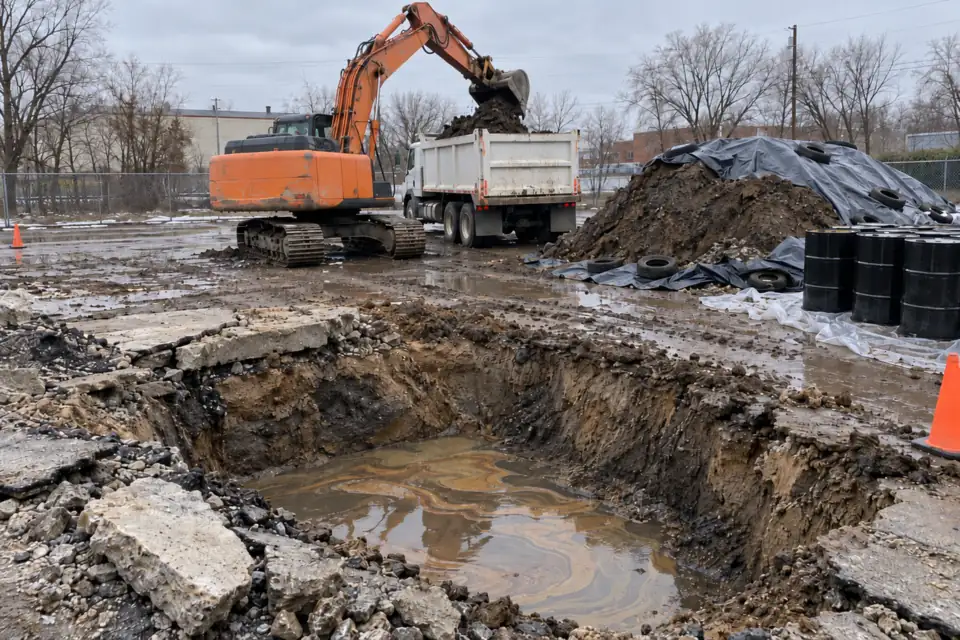
When a project includes removing or closing underground storage tanks, tank closure activities must be sequenced into the plan. Contaminated soil stockpiles require bermed, lined containment with run on diversion and run off collection. Stabilized stockpiles need hydromulch or a covering tarp weighted at the perimeter. The UST compliance deadlines guide lays out the parallel UST paperwork. Stormwater and UST schedules can then be aligned from day one across a single project.
The 2022 CGP does not require a licensed engineer to prepare every plan. Unless state rules say otherwise, preparer credentials are not a hard rule on federal sites. But most state programs require a qualified preparer credential or licensing on the cover page. New Jersey uses a Certified Professional in Erosion and Sediment Control, and California requires a QSD for plan preparation and a QSP for inspection signoff. Contractors working on a closed gas station redevelopment typically bring a qualified preparer onto a team from day one.
Stormwater work and UST work overlap on almost every commercial redevelopment site. A contractor fluent in both programs will write the plan to match actual UST closure sequencing. That same contractor will coordinate inspections with remediation milestones and keep documentation audit ready. The fastest path forward is to find a UST contractor through our directory. A unified approach prevents gaps between the SWPPP deliverables and UST deliverables.