

What to Know About Oil Tank Removal in Texas
Texas runs the largest commercial oil tank removal market in the country. Tens of thousands of regulated USTs sit at gas stations, fleet yards, and industrial sites from Houston's Energy Corridor through the Dallas-Fort Worth metro. San Antonio, Austin's expanding tech footprint, and the Permian Basin oilfields around Midland and Odessa drive additional turnover. Commercial work dominates because residential heating oil is essentially absent in Texas, with most homes on electric, natural gas, or propane. Gas station operators along I-10, I-20, I-35, and I-45 regularly cycle tanks out of service as brand changes, remodels, and aging single-wall inventory reach closure.
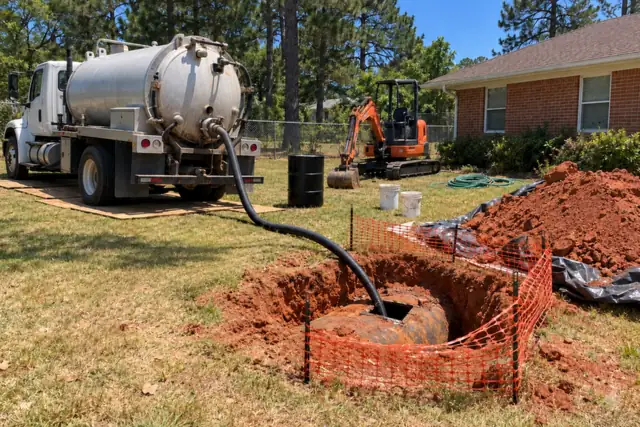
Texas tank work is regulated by the Texas Commission on Environmental Quality. TCEQ requires tank owners to submit a 30-day advance closure notice before any regulated UST is pulled or decommissioned. All closure work must be supervised by a TCEQ-licensed Project Manager, with tank-removal contractors holding corresponding state registration under TCEQ Chapter 334 rules. Residential heating oil tanks below the regulated threshold fall outside TCEQ jurisdiction, though Texas has very few of them. Closure documentation must be filed with TCEQ within 60 days of tank removal under federal 40 CFR 280 standards.
Commercial oil tank removal in Texas typically costs $5,000 to $15,000 per single-wall UST, with multi-tank gas station closures running $20,000 to $75,000 at larger sites. Permian Basin and Port of Houston projects carry higher mobilization and specialized-equipment premiums tied to remote access or active industrial operations. If soil sampling exceeds TCEQ cleanup levels, contamination cleanup adds $10,000 to $100,000 or more at Houston Gulf Coast sites with shallow groundwater. The Texas Commission on Environmental Quality administers the state underground storage tank program and issues the contractor licenses. Its Petroleum Storage Tank Remediation Fund stopped reimbursing owners on September 1, 2012, so corrective action on a release found today is an owner cost. Our oil tank removal cost guide walks through pricing by tank size, contamination scenario, and regional cost drivers across Texas markets.
A Texas commercial closure starts with Texas 811 utility locates and TCEQ's required 30-day advance notice, then tank purging, excavation, and extraction at an approved schedule. A single tank typically runs one to three days, while multi-tank gas station closures stretch to three to seven days depending on product type and canopy obstructions. Soil samples collected from the tank bed go to a TCEQ-accredited laboratory, with turnaround of one to three weeks before closure paperwork can be finalized. Before hiring, verify the contractor holds active TCEQ licensing, carries pollution liability insurance, and can show recent Permian Basin or Gulf Coast project references. Compare local options at tank contractors in Texas or get a free quote for written pricing.
Oil tank removal in Texas generates materials that must be tracked from the site to an approved disposal facility. Residual product is pumped and manifested. Tank shells go to a scrap yard or licensed salvage operator. Contaminated soil, when present, is characterized by sampling and hauled to a permitted landfill or treatment facility. The TCEQ Petroleum closure report lists where each stream went and includes the manifest numbers. Hazardous-waste levels trigger federal 40 CFR 262 manifest rules on top of the state's own disposal requirements. Contractors licensed to perform oil tank removal in Texas are expected to maintain the chain-of-custody paperwork for the full disposal trail. Missing or incomplete manifests are one of the most common reasons a closure report is kicked back for revision, which delays site sign-off and can push the project past budget.