Find Arkansas contractors for oil tank removal, UST closure, UST decommissioning, heating oil tank closure, basement tank excavation, petroleum tank removal, and environmental remediation. Serving Little Rock, Fort Smith, Fayetteville, Springdale, Rogers, Jonesboro, Hot Springs, Pine Bluff, and communities statewide.
How Arkansas Regulates UST Closure and PSTT Fund Claims
Arkansas oil tank removal falls under the state Regulated Storage Tanks program. The Division of Environmental Quality handles tank registration, closure notifications, contractor certifications, and leak response under federal 40 CFR 280 rules. Arkansas Regulation 12 adds state-specific closure procedures for commercial USTs at gas stations, fleet yards, and industrial sites. Residential heating oil tank closure below the regulated threshold does not require state certification, though documented soil screening and tank disposal records still apply. Homeowners should confirm local excavation permits and utility locates through Arkansas 811 before ground disturbance.
Arkansas tank removal work concentrates along the I-40 corridor from Little Rock and North Little Rock west to Fort Smith and the Fayetteville-Springdale-Rogers metro. Northwest Arkansas demand runs heavy on commercial UST turnover at distribution hubs serving Walmart, Tyson, and JB Hunt logistics operations. Jonesboro and the northeast Delta counties generate agricultural fuel tank work at cotton, rice, and soybean operations where on-farm USTs remain common. Southwest Arkansas still carries petroleum legacy from the El Dorado oil fields in Union and Columbia counties. Older Little Rock and Hot Springs neighborhoods routinely turn up basement heating oil tanks during property sales.
Residential oil tank removal in Arkansas typically runs $1,500 to $3,500 for a standard buried tank, with basement jobs at $2,500 to $5,000 due to access constraints. Commercial petroleum tank removal at gas stations and fleet sites runs $5,000 to $15,000 per tank before remediation. If soil sampling exceeds DEQ cleanup standards, site cleanup adds $5,000 to $30,000 or more depending on plume extent. Arkansas administers a Petroleum Storage Tank Trust Fund for eligible commercial UST owners, funded by tank registration fees and aligned with federal LUST Trust Fund mechanisms. Our oil tank removal pricing guide breaks it down by tank size, soil condition, and site access.
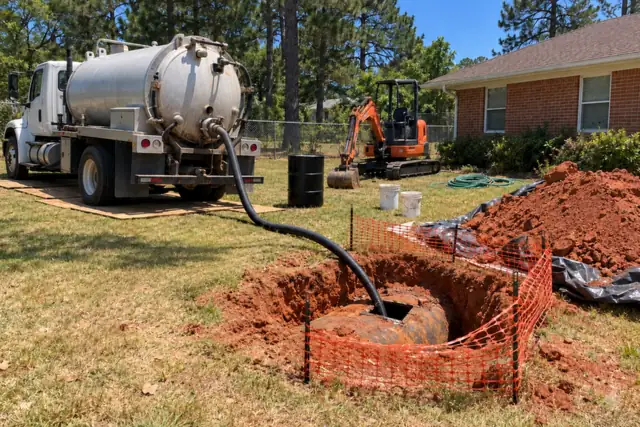
A typical Arkansas job starts with Arkansas 811 utility locates, then tank pumping, degassing, excavation, visual inspection, and soil sampling at the tank bed and piping trench. A clean residential closure wraps in one day; commercial jobs at multi-tank sites stretch to three to five days. Remediation extends to several weeks or months when a release meets state Regulation 12 cleanup criteria under federal UST rules. Before hiring, verify the contractor is registered with the state Regulated Storage Tanks program and carries pollution liability insurance. For residential jobs in Little Rock, Fayetteville, or Hot Springs, ask for lab soil results and a closure report to keep with property records for resale. Property owners can view Arkansas contractors or submit a quote request from active contractors.
Do I need a licensed contractor to remove an oil tank in Arkansas?
For regulated commercial UST work, Arkansas requires a state-certified contractor registered with the Regulated Storage Tanks program under federal 40 CFR 280 requirements. Residential heating oil tank closure below the regulated threshold does not require state certification by law. Most Arkansas homeowners still hire a licensed environmental contractor because soil sampling, closure documentation, and disposal logistics are beyond typical handyman scope. Arkansas 811 utility locate notification is required statewide; Little Rock, Fort Smith, and Fayetteville also apply local excavation permits.
How much does oil tank removal cost in Arkansas?
Residential removal in Arkansas typically runs $1,500 to $3,500 for a standard buried tank and $2,500 to $5,000 for basement jobs. Commercial petroleum tank removal at gas stations and fleet sites runs $5,000 to $15,000 per tank before remediation. If soil contamination is discovered, environmental remediation can add $5,000 to $30,000 or more depending on plume extent and cleanup standard. Arkansas's Petroleum Storage Tank Trust Fund may reimburse eligible commercial UST owners for corrective action costs, aligned with federal financial responsibility rules. See our cost guide for pricing by tank size, soil condition, and site access.
How long does oil tank removal take in Arkansas?
A straightforward residential tank closure in Arkansas typically takes one day for field work, including excavation, tank pumping, and initial soil sampling. Commercial tank closure at gas stations and fleet yards runs three to five days depending on tank count and site complexity. If soil sampling triggers DEQ cleanup review under federal 40 CFR 280, the paperwork track adds 6 to 12 weeks before a closure letter issues. Laboratory soil results from Little Rock and Fayetteville labs typically come back in 7 to 14 business days.
Does Arkansas have a state cleanup fund for underground storage tank releases?
Arkansas operates a Petroleum Storage Tank Trust Fund administered by the state Division of Environmental Quality. The fund reimburses eligible commercial UST owners for corrective action costs and third-party damages caused by a qualifying release, consistent with federal financial responsibility rules. Coverage is funded through tank registration fees and statutory motor fuel assessments. The program primarily benefits gas station operators and fleet fuel facilities, not residential heating oil tanks, which are excluded from coverage. Commercial owners should file program paperwork before starting cleanup because pre-authorization affects reimbursement.
What should I look for when hiring an Arkansas oil tank removal contractor?
Verify the contractor is registered with the state Regulated Storage Tanks program for commercial UST work under federal 40 CFR 280 and carries pollution liability insurance. Ask for references from similar tank size and site conditions in your part of Arkansas. Request a sample closure report to confirm the contractor delivers lab soil results, disposal manifests, and a written closure summary. For properties in Fayetteville, Rogers, Little Rock, or Fort Smith, confirm the contractor handles local permit coordination rather than leaving that to the owner.