Federal contracts paid about $3,900 to $6,900 for single California Phase 1 ESAs. Those seven awards, for federal parcels and facilities from 2017 to 2023, are public on USAspending.gov, and no California agency publishes a typical price. They are the closest thing to a public phase 1 environmental site assessment cost for the state.
National figures sit lower. When EPA wrote its All Appropriate Inquiries rule in 2005, it estimated the average Phase 1 at about $2,190, and the Iowa Department of Natural Resources puts the average at $2,000 to $3,000. Neither figure is a quote. The price for your property depends on its size, its history, how far the consultant travels, and how fast you need the report.
If you are buying commercial real estate, refinancing, or applying for an SBA loan, someone is likely to ask for an environmental site assessment. The report follows ASTM E1527-21, the standard EPA recognizes under the All Appropriate Inquiries rule in 40 CFR Part 312. Completing it before you buy is one of the steps a purchaser must take to qualify for the landowner liability protections in CERCLA, the federal law that decides who pays for hazardous substance cleanup, a category that excludes petroleum.
How much does a phase 1 environmental assessment cost for your specific property? The sections below cover what drives the price, what California records show, who may do the work, who pays, when lenders require one, and what happens if the report finds a problem.
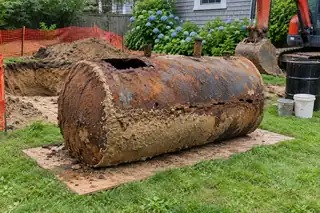
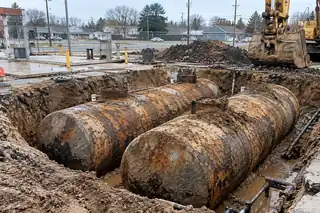
The phase 1 environmental cost is real money during a transaction where every dollar is already spoken for. It is small next to a cleanup. EPA's UST questions page puts the average underground storage tank cleanup at $154,000, and a single missed tank can turn into that bill after closing.
What Drives the Price of a Phase 1 ESA?
Property size is the most obvious factor. A larger site with more buildings takes longer to walk and photograph, and more time on site means a higher phase 1 environmental inspection cost. Size alone does not set the price, because much of the assessment is records review rather than time on the property.
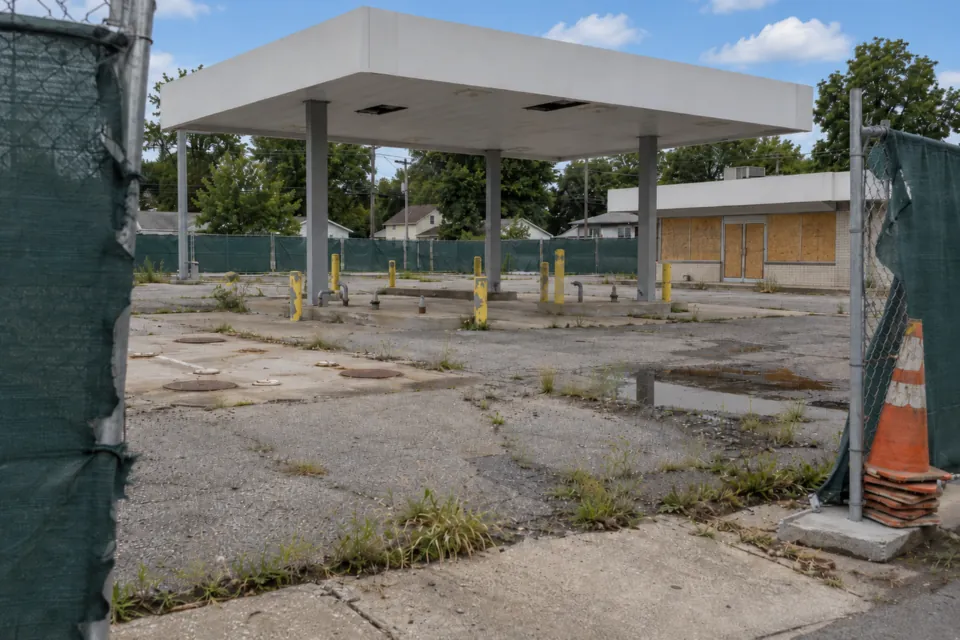
Site history matters more than size. A property that spent decades as a dry cleaner, auto shop, or gas station generates a longer records review and a more complicated site walk, because the environmental professional has to trace every owner, use, and permit. Under 40 CFR 312.26, the government records review should also include records of leaking underground storage tanks within one-half mile of the property.
Location affects the price in two ways. A consultant who drives hours to a rural property bills the travel time. A site in an older industrial corridor sits near more regulated facilities, so the database search returns more records to review. If you are searching for phase 1 environmental site assessment cost near me, start with local firms, since a nearby consultant has less travel time to bill.
Turnaround is the factor a buyer controls least. A rush report does not get shorter; the consultant moves your project ahead of others already in the queue. Ask whether a rush date changes the price, and get the delivery date in writing with the quote.
Timing also limits how early you can order it. Under 40 CFR 312.20, the assessment must be done within one year before you buy. The interviews, lien search, records review, site visit, and the professional's declaration must also be done or updated within 180 days before the purchase. A report from a deal that fell through two years ago needs updating, which means a second bill.
What Does a Phase 1 ESA Cost in California?
No California agency publishes a typical price, so the best public evidence is what government buyers paid. Seven federal Phase 1 ESAs for single California sites from 2017 to 2023 ranged from $3,945.86 in Seaside to $6,920.00 for one on the Tahoe National Forest. The National Park Service paid $4,675.00 for one at Mojave National Preserve in 2023, and GSA paid $4,222.24 for a 1.6 acre parcel in Herlong in 2019.
Scope moves the number more than location. A 2025 GSA order covered three federal buildings in Richmond, Santa Rosa, and Los Angeles for $6,693.59 in total, while a 2025 Phase 1 for the federal prison campus in Dublin was awarded at $187,304.50. Government awards are not private quotes, but they show the spread between a simple parcel and a large, complex facility.
California sites are searched against state databases that add review time. The State Water Board's GeoTracker system holds soil, vapor, and groundwater data for leaking underground storage tank cases. DTSC's EnviroStor tracks hazardous waste facilities and sites with known or suspected contamination, and CalEPA builds its Cortese List partly from both. Local Certified Unified Program Agencies handle underground tank permits and inspections, which makes their files another place a consultant can look.
California school districts face an extra step. As a condition of state school construction funding, Education Code 17213.1 requires a district to have an environmental assessor supervise and sign a Phase 1 before it acquires a schoolsite. The Department of Toxic Substances Control then reviews the assessment within 30 calendar days.
California does not license Phase 1 preparers. The state repealed its voluntary Registered Environmental Assessor program in 2012, and Health and Safety Code 25114.5 now defines an environmental assessor using the federal environmental professional definition in 40 CFR 312.10. That makes the federal qualifications the ones to check.
Who Can Prepare a Phase 1 ESA?
Federal rules set the qualifications, not a single license. Under 40 CFR 312.10, an environmental professional qualifies with a state professional engineer or geologist license plus three years of relevant experience, or a government license or certification to perform environmental inquiries plus three years. A science or engineering degree plus five years also qualifies, and so do ten years of relevant experience.
Price alone does not tell you what you are buying. A records search can come from a commercial database vendor or from a narrower set of public records, and the site visit can be done by the environmental professional or by someone working under their supervision. Those choices change both the price and how much a lender will trust the findings.
Ask three questions before hiring. Will the records search use a commercial database vendor? Will the environmental professional conduct or supervise the site visit? Will the report follow ASTM E1527-21? If any answer is unclear, keep looking.
Check the standard named on the cover. Since February 13, 2024, 40 CFR 312.11 recognizes ASTM E1527-21 for this work, and the older E1527-13 no longer satisfies All Appropriate Inquiries. A report written to the old standard is a report you may have to buy again.
A clean, defensible report that does not recommend unnecessary Phase 2 work is worth more than a low quote. The cheapest quote is not always the cheapest outcome, because a lender acts on whatever the consultant recommends.
Who Pays the Phase 1 Environmental Site Assessment Cost?
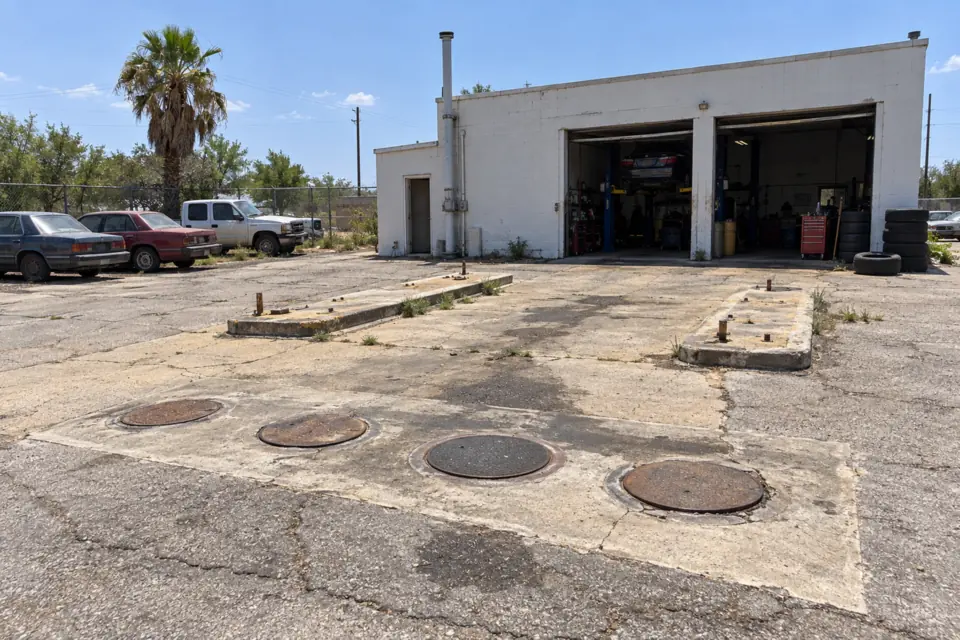
The buyer usually pays, because the buyer is the one who needs the report. Who pays for phase 1 environmental site assessment work can be negotiated like any deal term, but the CERCLA protections depend on the purchaser having made the inquiry before acquiring the property.
Paying for it yourself also means you choose the consultant, which matters. If the seller picks the cheapest firm available, the quality reflects that choice, and you are the one relying on it.
Sellers sometimes cover the cost as a negotiation tactic, most often on properties that have sat on the market or carry obvious environmental red flags like former gas stations. A seller who commissions a Phase 1 learns about any problem before a buyer's consultant finds it during due diligence. Buyers acquiring active fuel retail can pair the Phase 1 ESA with our due diligence checklist for fuel retail acquisitions, which covers tank compliance, fuel volume, and lease review.
There is one ownership detail most first time buyers miss. If you paid for the Phase 1 ESA, it belongs to you, and the seller does not automatically get a copy. If your deal falls through, the next buyer's consultant will likely find the same problems, and the same negotiation starts over.
Whoever pays, make sure the report names every party who will rely on it, such as the buyer and the lender, before it is issued. Adding a user after the fact can mean another fee and another update.
When Is a Phase 1 ESA Required, and When Can You Skip It?
SBA loans have the clearest rule. Under SBA's SOP 50 10 8, the environmental investigation must begin with a Phase 1 for gas stations and for any business that sells or dispenses fuel. The same rule covers the other environmentally sensitive industries listed in its Appendix 6, whatever the loan amount.
For other SBA loans over $250,000, the investigation starts with an Environmental Questionnaire and a Records Search with Risk Assessment, and the full assessment follows unless the risk comes back low. A property with on-site dry cleaning needs both a Phase 1 and a Phase 2. SBA lists a revised SOP, 50 10 8.1, effective October 1, 2026, so ask your lender which version governs your loan.
If you are buying raw agricultural land with no structures, no history of industrial use, and no nearby regulated sites, some buyers choose to skip the Phase 1 and accept the risk. That is a defensible decision on genuinely clean rural land. It is not a defensible decision on a former farm that had fuel tanks, pesticide mixing areas, or equipment shops.
Cash buyers who do not need lender approval can skip the Phase 1 ESA. Skipping it does not remove the contamination risk; it removes your knowledge of it. Without All Appropriate Inquiries before the purchase, you lose the CERCLA innocent landowner and bona fide prospective purchaser protections for contamination that was already there.
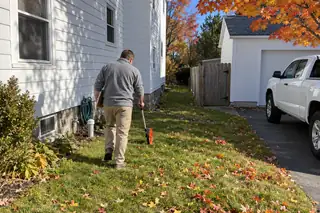
ASTM E1527-21 is written for commercial real estate, so a home purchase rarely calls for a Phase 1 ESA. The exception is a home with a known or suspected underground oil tank. There, a tank sweep and soil testing fit the question better than a full Phase 1, and the directory lists contractors who handle residential tank work.
What Happens If a Phase 1 Finds a Problem?
If the Phase 1 identifies Recognized Environmental Conditions, the lender may require Phase 2 testing before it will close.
Phase 2 work involves sampling soil, groundwater, and sometimes soil vapor to confirm whether contamination exists, and it follows ASTM E1903-19. Price depends on the number of borings and samples. A 2018 federal Phase 2 for a single site in Davis, California was awarded at $18,013, and our Phase 2 sampling and groundwater investigation guide covers method selection and scope.
Some buyers negotiate for the seller to cover Phase 2 costs, especially when the concern stems from the seller's own historical use of the property. Others make the purchase contingent on a clean Phase 2.
Phase 2 results decide what happens next. If testing comes back clean, you close with confidence. If contamination is confirmed, the cleanup becomes part of the deal, and EPA says corrective action for tank leaks that reach groundwater typically costs from $100,000 to over $1 million.
Not every contamination finding kills the deal. Some buyers negotiate a price reduction equal to the estimated remediation cost and proceed. Others require the seller to complete cleanup before closing. The right approach depends on the type and extent of contamination, the state's cleanup rules, and how badly both parties want the transaction to close.
How Do You Get a Phase 1 ESA Quoted?
Start with two or three qualified consultants who work in your area. Ask each one whether the work follows ASTM E1527-21, when it will be delivered, whether your lender will accept it, and which records sources the price includes.
If the site involves buried tanks, contamination history, or a gas station, the Phase 1 is the start of the work rather than the end. Compare site assessment providers in California or browse UST contractors by state, and you can request a free quote for the follow-up work.
For a property with a known underground tank, our guide to what to do when a Phase 1 finds a UST explains the next steps. California owners facing a closure can compare tank decommissioning contractors in California.
Do not wait until your lender asks. The earlier you commission the Phase 1, the more time you have to deal with anything it finds before closing, and the one year validity window lets you order it as soon as the deal is signed.
A report that costs a few thousand dollars is small against a cleanup that EPA averages at $154,000. That gap is why the Phase 1 is usually the cheapest line on the environmental side of a commercial deal.