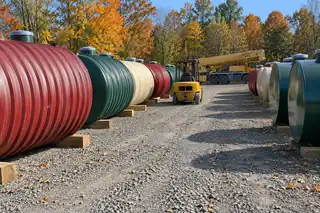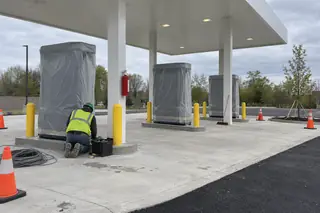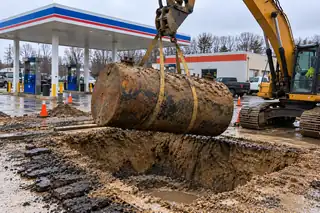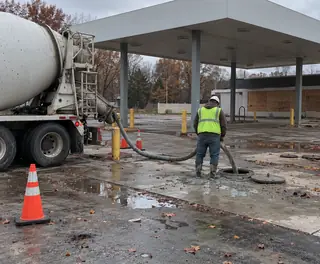
Every gas station for sale carries environmental liability tied to its fuel tank system. Cleanup exposure commonly runs $50,000 to $500,000, and buyers who skip due diligence inherit those obligations under the federal UST rules and state cleanup law. A Phase 1 Environmental Site Assessment to ASTM E1527-21 ties the EPA All Appropriate Inquiries Rule at 40 CFR 312 directly to federal innocent landowner protection under CERCLA, which covers hazardous substances such as solvents but not petroleum.
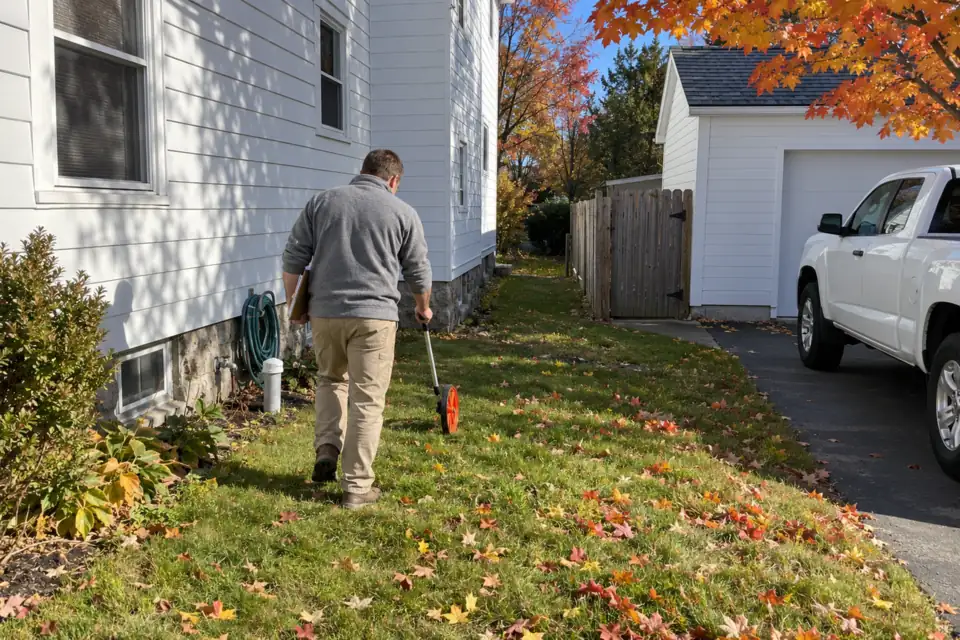
This guide walks through what a serious buyer checks before closing on any fuel retail business. It covers underground storage tank compliance, financial benchmarks, lease and real estate review, and the operational questions that separate a turnaround opportunity from a money pit.
Fuel retail is a high-volume, thin-margin business. The convenience store attached to a fuel forecourt typically drives most of the profit, while pump sales cover rent, utilities, and tank compliance costs.
Buying a gas station without a clear picture of each revenue stream leaves you guessing when volumes dip. Use this checklist alongside your accountant, environmental consultant, real estate attorney, and a licensed UST contractor before you sign anything.

What to check before buying a gas station
Every acquisition decision starts with three documents: a Phase 1 ESA, three years of verified fuel sales data, and current UST compliance records from the state program. A seller who cannot produce all three is signaling either negligence or something worse. The compliance file alone should include the most recent line tightness test, cathodic protection survey, release detection reports, and Operator A/B/C training certificates required under the Energy Policy Act 2005.
The fuel volume number matters more than asking price. A convenience store with a gas forecourt averaging 80,000 to 150,000 gallons per month is a viable mid-tier site. Stations under 60,000 gallons per month often struggle to cover fixed costs unless the convenience store, deli, or lottery attach rate carries the load. Ask for dispenser-level totalizer readings, not just wholesale fuel invoices.
Real estate ownership versus a gas station lease changes the deal entirely. An owned-site fuel station for sale transfers both the going concern and the land, which typically adds $200,000 to $1.5 million to the asking price depending on the trade area. Leased sites transfer the business only and require landlord consent and lease estoppel review. Confirm setback rules, canopy easements, and zoning compliance with the local jurisdiction.
The seller's story must match the numbers. A broker pitch of strong growth potential paired with flat or declining fuel volumes is a warning sign. Always pull the state UST registration file and cross reference it against fuel supplier statements. Mismatches between reported gallons and delivered gallons indicate either theft, a broken meter, or financial window dressing ahead of the listing. Cross check this early with your commercial property UST specialist.
The Phase 1 environmental site assessment
A gas station environmental assessment means a Phase 1 ESA performed by a qualified environmental professional under ASTM E1527-21, the current standard EPA recognized in a rule published in December 2022. The assessment reviews historical records, interviews, government database searches, and a site walkthrough to identify recognized environmental conditions. A proper Phase 1 ESA on a fuel retail property typically costs $2,500 to $6,000 and takes two to three weeks for a small commercial fuel site.
Under 40 CFR 312.20, the interviews, lien search, records review, site visit, and the professional's declaration must be conducted or updated within 180 days before the purchase closes, and the inquiry as a whole within one year. An older report does not qualify the buyer for the bona fide prospective purchaser defense, innocent landowner defense, or contiguous property owner defense under CERCLA 1980. Buyers sometimes try to save money with a stale report and lose federal liability protection in the process.
Recognized environmental conditions on a fuel retail site almost always include the underground storage tank system itself, historical dispenser locations, hydraulic lifts, waste oil tanks, and former service bays. The assessment report flags each one and recommends whether a Phase 2 investigation with soil borings, groundwater sampling, or vapor testing is needed before closing. On active stations, a Phase 2 is common, not unusual. Our Phase 2 sampling that confirms or clears a REC guide explains what a defensible Phase 2 work plan looks like before you commission one. If your consultant is working in the Sun Belt, cross reference their findings against the Florida site assessment framework.
If the consultant reports no recognized environmental conditions on an active fuel retail site, challenge that finding. Such an outcome is rarely seen on an operating fuel forecourt with decades of deliveries. Either the consultant missed something or the site has a clean operational history documented through prior closures with the state agency. Demand the basis for the finding in writing before you rely on it.
Underground storage tank due diligence
Gas station due diligence on the tank system is where most deals fall apart or get renegotiated. The federal program at 40 CFR 280 requires spill prevention, overfill prevention, corrosion protection, release detection, and financial responsibility for every regulated underground storage tank. Every one of those categories has a record trail, and a seller who cannot produce the paperwork is asking you to buy a liability, not a business.
Tank age is the single biggest variable. Pre 1988 bare steel tanks should have been replaced under the original RCRA Subtitle I deadline. Tanks installed between 1988 and 2005 are likely fiberglass or STI-P3 coated steel and may still be operational if maintained. Tanks installed after the Energy Policy Act 2005 compliance upgrades include secondary containment and interstitial monitoring. Knowing which vintage you are buying sets your remaining service life and replacement budget.
Review the last three years of release detection records. Automatic tank gauge reports, statistical inventory reconciliation, and line leak detector tests all satisfy 40 CFR 280 Subpart D, but each method has gaps. Sudden loss events, inconclusive SIR months, or line failures that never got root caused all indicate a tank system that may need testing or replacement soon. Plan ahead with tank decommissioning in New Jersey or equivalent service pricing from your state.
A tank system at end of life adds $150,000 to $350,000 per three tank upgrade to the first year of ownership. That figure covers excavation, tank removal by a contractor such as those listed for oil tank removal in Texas, soil assessment, new double walled tanks, dispenser replacement, and canopy work. If the selling property has 25 year old tanks with no upgrade plan, that number belongs in your offer.
Gas station cleanup cost and environmental liability
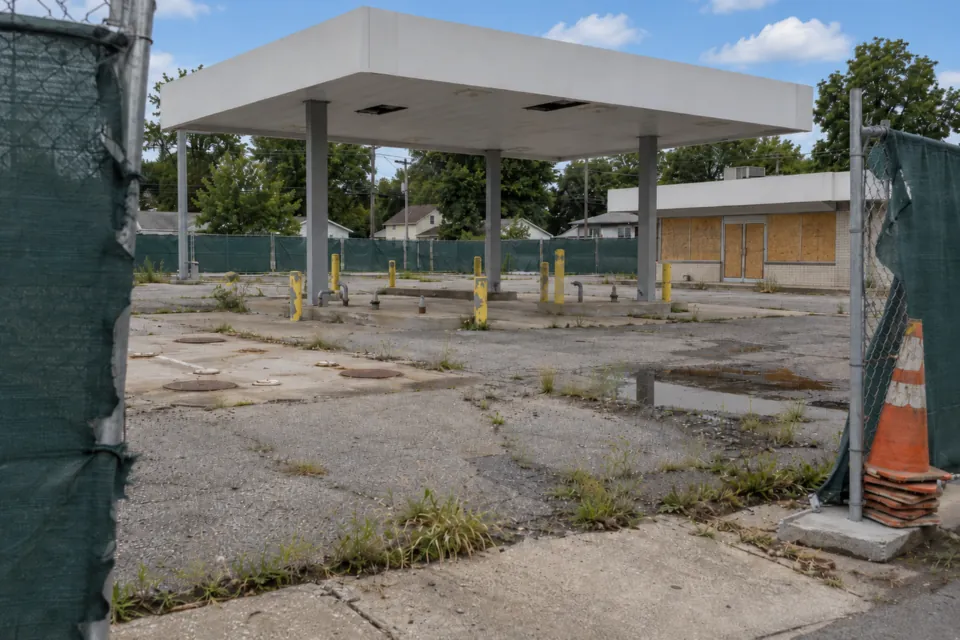
Gas station cleanup cost ranges are wider than any other commercial property category. A clean site with no prior release history carries near zero cleanup exposure. A site with a documented release in the state database could run $50,000 for simple excavation to over $2 million for plume delineation, groundwater remediation, and long term monitoring. The range exists because soil type, groundwater depth, and receptor proximity drive remediation cost far more than the volume released.
Some states run petroleum tank cleanup funds, but the rules differ by state and some have closed to new claims. Texas ended reimbursement from its Petroleum Storage Tank Remediation Fund on September 1, 2012, so do not count on state money for a Texas cleanup; the Texas UST contractor directory lists firms that can price one. New Jersey's Petroleum Underground Storage Tank Remediation, Upgrade and Closure Program stopped taking new applications for non-leaking tanks on May 3, 2011, and the New Jersey contractor directory lists tank firms working there. Florida's Petroleum Restoration Program pays for cleanup only at sites the state has found eligible for state-funded cleanup, so ask the seller whether the site already has that eligibility. Where a fund is still open, ask the state program what records a release needs to qualify.
Out of compliance at the time of release means out of luck when the fund denies the claim.
CERCLA 1980 extends cleanup liability to current owners and operators regardless of who caused the contamination. Without the bona fide prospective purchaser defense earned through a timely Phase 1 ESA, a new owner can be held jointly and severally liable for historical releases of hazardous substances on the property, such as solvents from former service bays. Petroleum is excluded from CERCLA, so fuel releases fall under the UST rules and state cleanup law instead. Pollution legal liability insurance typically runs $3,000 to $15,000 in annual premium for a single site convenience store, with limits of $1 million to $5 million. Require the seller to disclose prior claims, fund enrollment status, and any open corrective action case numbers with the state agency.
Fuel volume, financials, and a gas station business plan
A serious gas station business plan starts with a fuel volume baseline, a convenience store margin structure, and an honest operating cost projection. A typical single site c store turns 85,000 gallons per month at a 20 to 35 cents per gallon margin. Inside sales generate $80,000 to $140,000 per month at a 28 to 32 percent gross margin, and monthly operating costs run $45,000 to $75,000 before debt service. Any listing that reports numbers outside those ranges needs an explanation, not a buyer assumption. What an owner clears after the tank system takes its share is worked through in the owner profitability guide.
Dealer, dealer operated, and branded status each change the economics substantially. A branded dealer buys fuel on a supplier rack plus branding fees with rebates tied to volume, which can swing per gallon profit by 8 to 15 cents. Unbranded sites have more margin flexibility but weaker pump price credibility in competitive markets. Inside sales mix, lottery commission, food service, and quick service restaurant attachment each show up separately on the profit and loss statement.
Inventory transfer at closing is an adversarial negotiation. Fuel in the tanks on close day transfers at wholesale at the rack price, not at retail. Cigarette inventory transfers at cost with paid tax verification. Lottery remittance obligations must be reconciled with the state lottery commission before title transfers. Skipping reconciliation puts the buyer on the hook for the seller's unpaid lottery balance.
The three year trailing financial file should include filed tax returns, merchant processing statements, lottery commission statements, fuel supplier statements, and the state UST annual registration fee receipts. Any request for a partial set or an unaudited QuickBooks export in lieu of returns is a red flag. No reputable broker asks buyers to rely on seller prepared summaries alone.
SBA gas station loans: environmental review and tank records
Many buyers finance a station through the SBA 7(a) or 504 loan programs, and SBA's lending rules in SOP 50 10 treat a gas station differently from other commercial property. Any SBA loan secured by a station's land, or by its tanks, pumps and lines, must start its environmental review with a Phase I environmental site assessment by an independent environmental professional, whatever the loan amount. The environmental questionnaire and records search that SBA accepts for many other properties are not enough for a fuel site.
The Phase I has to cover all relevant environmental records for the station and the adjoining properties, including records the seller provides. If the consultant recommends a Phase II, SBA requires it to be done by an independent environmental professional who holds a current Professional Engineer or Professional Geologist license and has the equivalent of three years of full time relevant experience. When the site is contaminated, the report must also describe the recommended cleanup and estimate its cost.
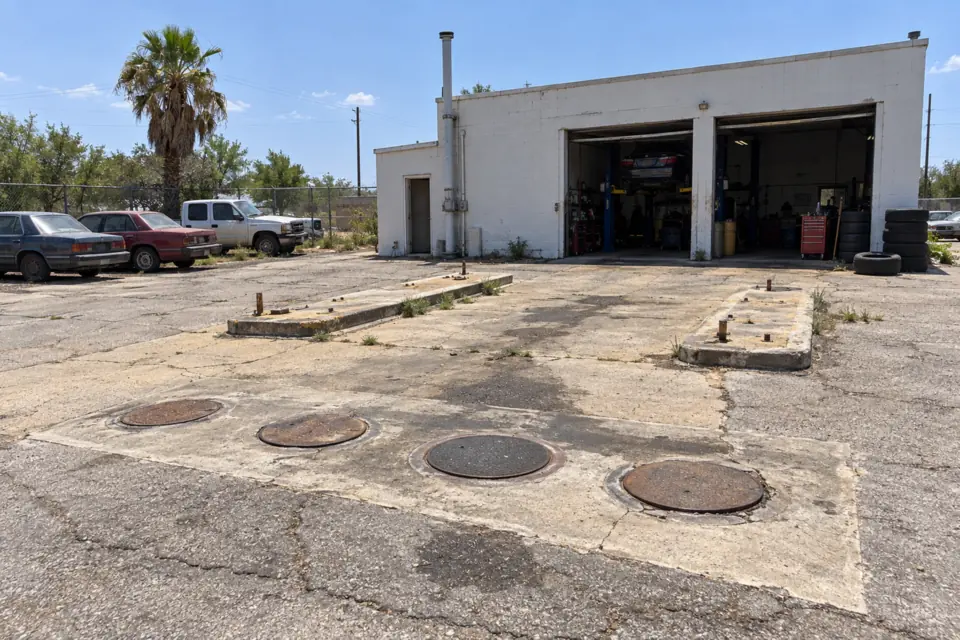
Tank testing records decide when the money moves. The environmental professional must determine whether the station meets every tank and equipment testing requirement that applies to it, and SBA does not allow the loan to be disbursed until the station is in full compliance. Leaking or defective equipment, systems and containment devices have to be repaired or replaced before disbursement. A seller who cannot produce current test results for the site's tanks and lines, such as release detection, tightness or cathodic protection tests where they apply, is handing you a delay as well as a risk.
A contaminated site is not automatically out, but the terms tighten. The lender can decline the loan or follow SBA's contamination procedures, and when the station changes hands SBA generally requires the seller to sign its environmental indemnification agreement. A seller's unwillingness to sign is not enough for SBA to waive it. In that agreement the borrower and the seller warrant that the fuel dispensing equipment was tested by an independent contractor within the preceding twelve months. The borrower also agrees to register for any petroleum storage tank fund it is eligible for. SBA revises SOP 50 10 from time to time, so ask your lender which version governs your loan.
Gas station inspection, renovation, and compliance checks
The pre close gas station inspection covers dispensers, canopy, lighting, pavement, underground piping integrity, POS systems, CCTV, fuel management, and interior c store fixtures. A full inspection costs $1,500 to $4,000 and takes a full day on a typical site. For a scope reference, review what tank inspection and testing contractors include in their bids. Inspectors often find failing hydrostatic sensors, cracked sumps, corroded shear valves, and expired fire suppression certifications that require immediate corrective action under NFPA 30A.
Dispenser and canopy refresh drives most gas station renovation budgets. A full dispenser replacement including EMV compliant payment card readers runs $25,000 to $45,000 per dispenser. Canopy lighting retrofit to LED runs $8,000 to $20,000 for a typical two island layout. Interior c store renovation with new coolers, flooring, and fixtures averages $75 to $150 per square foot for a 2,500 to 4,000 square foot store.
ADA compliance is the quiet killer on older stations. The 2010 ADA Standards for Accessible Design apply to any commercial renovation above a threshold. Parking stall count, ramp slope, restroom width, and counter height are the most commonly cited deficiencies. Factor a $15,000 to $40,000 ADA upgrade budget into any renovation plan for a pre 1990 facility.
Compliance training requirements under the Energy Policy Act 2005 mandate Operator A, Operator B, and Operator C designations for every UST facility. Expect to allocate at least one week and $400 to $900 per operator. Under 40 CFR 280.243, Class A and B operators must be trained within 30 days of taking on the role, and Class C operators before they start. Skipping this step is a direct violation flagged on the next state inspection.
Your next step in the gas station purchase process
Before you sign a purchase agreement on any fuel station for sale, build a deal team. That team needs a commercial real estate attorney familiar with UST transactions and a qualified environmental consultant for the Phase 1 ESA and potential Phase 2 work. You also need a CPA experienced in convenience store tax treatment and a licensed UST contractor for the tank and dispenser inspection. Each role has non substitutable expertise, and each one will flag problems the others miss. If the listing numbers stop making sense against the asking price, price a ground up build as the alternative using the cost to build a gas station guide. A new site with new tanks sometimes beats an old one at end of life.
Start with the environmental work. A Phase 1 ESA locks in your federal liability protection window and surfaces the recognized environmental conditions that determine whether you need a Phase 2 investigation before closing. Many deals die here, which is the point. Killing a bad deal early saves the rest of the acquisition budget for a property that actually closes.
Run the tank and dispenser inspection in parallel with the financial review. Pulling state UST records and comparing them against on site operations takes time, and so does reconciling fuel sales data against merchant processing deposits. Do not let the seller rush the timeline on a legacy property with 20 plus years of operating history.
Line up a UST contractor, licensed where your state requires it, for the tank assessment portion of your due diligence before you waive contingencies. Request a quote early using the directory's intake form, or browse the full list at find UST contractors. The right contractor during due diligence saves far more than their fee when they flag a problem before closing, not after.