

What to Know About Site Assessment in Florida
Florida's shallow water table makes UST site assessments especially high-stakes. The entry cost is moderate, with Phase I reviews at $1,500 to $3,500, but stakes escalate fast once sampling starts. The state Department of Environmental Protection oversees underground storage tank compliance and requires environmental investigations whenever a release is confirmed or suspected at a regulated facility. Because groundwater sits just a few feet below the surface across much of the state, even a small petroleum release from an underground tank can reach drinking water sources quickly. Property transactions involving sites with current or former USTs frequently trigger Phase I environmental site assessments as part of lender due diligence. Any property owner, buyer, or developer dealing with a known or suspected tank site in Florida should expect the state to require documentation before closing the case.
Demand for environmental site assessments in Florida concentrates along the I-95 corridor from Miami through Fort Lauderdale and West Palm Beach. Tampa Bay including St. Petersburg and Clearwater, Jacksonville, and Orlando also generate heavy assessment volume. South Florida's dense commercial real estate market generates constant Phase I ESA activity tied to property sales, refinancing, and redevelopment of former gas station parcels. Central Florida sees assessment work driven by tourism infrastructure, fleet fueling operations, and aging convenience store sites along major highways. The Gulf Coast from Naples to Sarasota has a growing share of assessment requests as older commercial properties change hands. Marinas, military installations, and agricultural fueling sites across rural counties add to the statewide workload.
A Phase I ESA in Florida typically costs $1,500 to $3,500 depending on property size and the complexity of its use history. Phase II ESAs involving soil borings and groundwater monitoring wells run $3,500 to $10,000. Costs climb when multiple sample points are needed or when the site has a long operational history. Individual soil sampling runs $500 to $2,000 per location, and laboratory analysis adds $200 to $500 per sample. Florida operates the Inland Protection Trust Fund, which may reimburse eligible cleanup costs for confirmed petroleum discharges from registered storage tank systems. Eligibility is keyed to the discharge or report date. PLRIP runs by incident-reported bands ending 12/31/1998, and PCPP covers discharges before 01/01/1995. A release that happens today qualifies for neither. Confirm the site's eligibility with FDEP before assuming any part of a cleanup is recoverable.
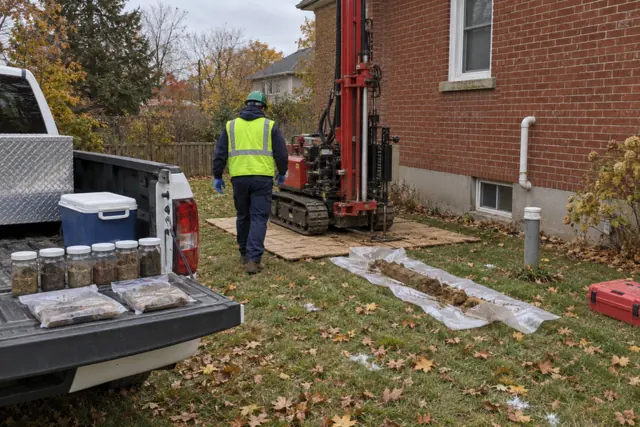
A Phase I ESA begins with a records review covering historical aerial photographs, fire insurance maps, regulatory database searches, and a physical site inspection. If recognized environmental conditions are identified, the Phase II investigation follows with soil borings drilled to the water table and groundwater samples collected from temporary or permanent monitoring wells. Field work for Phase II usually takes one to three days, and laboratory results come back within one to three weeks. The full Phase II report is typically delivered four to six weeks after drilling. Before signing a contract, confirm the firm carries pollution liability insurance and ask whether their scope includes correspondence with the Department of Environmental Protection on your behalf. Request a written breakdown of what happens if contamination is found so you are not surprised by follow-on investigation costs.