

How Florida Regulates UST Closure and the Inland Protection Trust Fund
Florida oil tank removal runs under the FDEP Storage Tank Compliance program. FDEP administers USTs under Florida Administrative Code Chapter 62-761 and federal 40 CFR 280 rules. Commercial UST closure at gas stations, fleet yards, and industrial sites requires an FDEP-certified Pollutant Storage Systems Contractor. Residential heating oil tanks are uncommon in Florida because the subtropical climate keeps winter heating demand low and about nine in ten homes heat with electricity, but legacy commercial tanks remain concentrated at older gas stations, marinas, and industrial corridors.
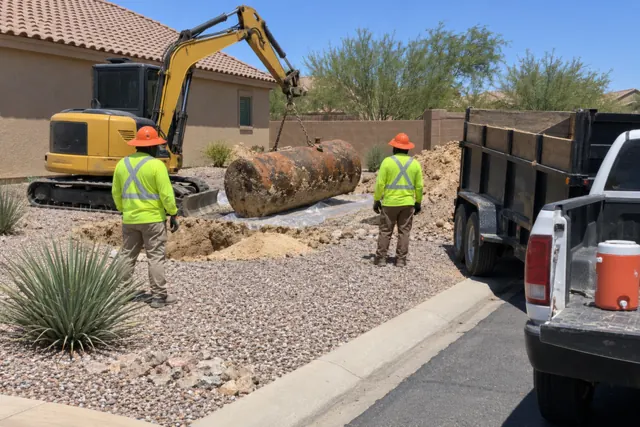
Florida tank removal work concentrates across the state's major metros. Miami, Tampa, Orlando, Jacksonville, and St. Petersburg anchor commercial UST turnover through gas stations, fleet yards, and port facilities. Fort Lauderdale and the Treasure Coast add marina-based fuel storage work, and Space Coast corridors around Cape Canaveral cycle federal and defense-contractor fueling tanks. Panhandle communities from Pensacola through Tallahassee mix Gulf Coast industrial tanks with pine-belt fleet operations. South Florida and Keys closures face tropical water-table sensitivities that drive tighter soil sampling. Hurricane season routinely compresses excavation windows into the dry December-to-May period.
Commercial UST closure at Florida gas stations typically runs $5,000 to $20,000 per tank depending on piping and pit size. Multi-tank Miami or Tampa gas station closures reach $30,000 to $60,000. If soil sampling exceeds FDEP cleanup thresholds, environmental remediation adds $10,000 to $80,000 or more, with Gulf Coast and Keys shallow-water-table sites often running higher. The Florida Petroleum Restoration Program and Inland Protection Trust Fund cover legacy contamination only. Eligibility is keyed to the discharge or report date. PLRIP runs by incident-reported bands ending 12/31/1998, and PCPP covers discharges before 01/01/1995. A release that happens today qualifies for neither. Federal LUST Trust Fund money is a separate FDEP-administered route. Our tank removal cost estimates cover pricing by tank size, soil condition, and site access.
A typical Florida commercial closure starts with Sunshine 811 locates, FDEP notification, tank pumping, degassing, excavation, and soil sampling at the tank bed. A single-tank Miami or Tampa gas station closure wraps in two to three days; multi-tank pulls stretch across a week. Soil laboratory turnaround runs seven to fourteen business days. Hurricane season from June through November routinely compresses excavation schedules. Before signing, verify the contractor holds an active FDEP Pollutant Storage Systems Contractor certification and can show a recent closure report from a comparable Miami, Tampa, Orlando, or Jacksonville job. Property owners weighing options can browse Florida tank removal contractors or submit your quote request from active contractors.