Oil tank removal closes a buried fuel tank and restores the property to compliance. Removal costs $1,500 to $3,500 residential and $5,000 to $25,000 commercial, covering permits, excavation, tank cleaning, soil inspection, disposal, and a closure report. This guide explains when removal is required, how the process runs, what cost ranges actually cover, and how rules differ between residential heating oil tanks and commercial underground tanks regulated under EPA 40 CFR Part 280.
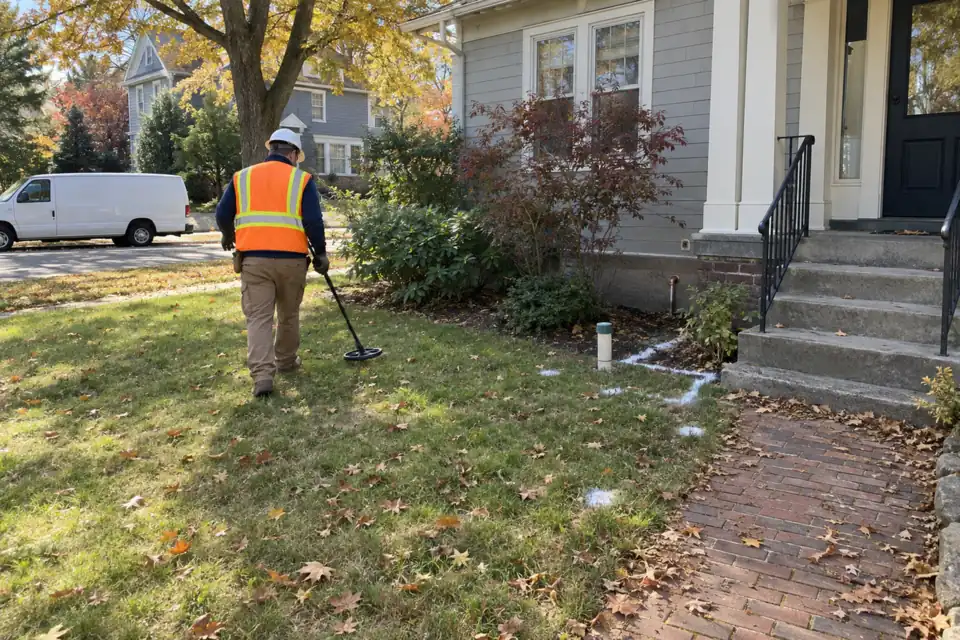
The federal threshold for a regulated UST is a tank with more than 10 percent of its volume below ground that stores petroleum or specific hazardous substances. Farm and residential heating tanks under 1,100 gallons sit outside the federal definition entirely. Most home heating tanks fall outside federal UST rules under 40 CFR 280.10. They remain subject to state environmental statutes, local fire codes drawn from NFPA 31, and contamination liability under state cleanup laws even when no federal program applies.
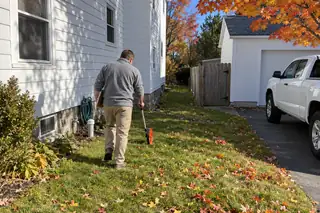
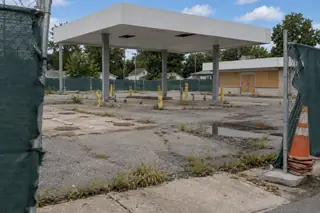
A property owner with a 275-gallon basement tank faces very different rules than a small commercial operator with a 4,000-gallon gasoline UST behind a former service station. The same split shows up in real estate. A homeowner selling a property with a buried oil tank in the side yard is in a different paperwork lane than a commercial buyer running a Phase I ESA on a parcel that once held diesel storage. Both situations involve a buried oil tank, yet the agencies, forms, and costs are not the same.
State-by-state cost ranges, contractor names, and specific permit forms live on each state's dedicated service page. Permit fees, agency names, and reimbursement rules differ enough that head-term coverage cannot replace state pages.
This page covers the head-term basics. State-level rules, agency names, and local cost ranges live on the dedicated state pages such as the New Jersey state service page and the New York state service page. To compare estimates from contractors active in your area, request a quote once the basics below are clear.
When Oil Tank Removal Is Required
Removal becomes mandatory in three common situations. First, a tank that is leaking or has lost integrity must be closed under federal or state UST rules. Second, a tank that has been out of service for 12 months without temporary closure paperwork must be permanently closed under 40 CFR 280.71. Third, many municipalities require closure when an active tank is replaced with a different fuel system or when a property changes use, even if the existing tank is structurally sound.
Federal UST rules apply to tanks storing petroleum or specific hazardous substances with more than 10 percent of their volume below ground, sized above the 110-gallon residential and farm exemption threshold. Tanks falling outside the federal definition are governed by state residential oil tank programs, which most Northeast states maintain because residential heating oil was historically widespread. New Jersey, Massachusetts, Connecticut, and New York each run separate residential oil tank rules distinct from the federal UST program.
Removal is not always required just because a tank exists. A residential heating oil tank still in active use can be left in place and refueled normally. A commercial tank in active service can stay in service indefinitely as long as it meets monitoring, leak detection, financial responsibility, and operator training requirements under federal rules. The trigger for required removal is usually a regulatory event such as failure of a leak test, a closure order, a property sale, or a voluntary fuel switch.
Property transactions are the most common reason a buried oil tank shows up on a removal schedule. A buyer's home inspector flags the tank, the lender refuses to close until removal is complete, and the seller hires a contractor under time pressure. On commercial deals, a Phase I ESA found a tank under ASTM E1527-21 is a recognized environmental condition that must be addressed before closing, often through removal followed by soil verification.
Mortgage underwriters treat a known buried tank as an immediate closure trigger regardless of condition. FHA, VA, and USDA loans often require closure or escrow before funding the property, with sign-off from the regulating authority.
The Removal Process Step by Step
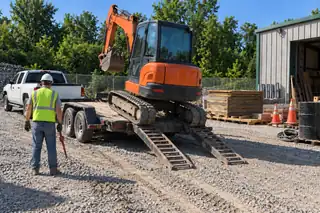
The oil tank removal process follows a consistent sequence whether the system is residential or commercial. The contractor pulls the required permits, schedules the inspector visit, pumps and cleans residual product, excavates and lifts the tank, performs a soil inspection, transports the unit for disposal or recycling, and submits a closure report to the regulating agency. The full sequence usually runs one to three days for a standard residential tank with no contamination findings.
Permitting comes first because most jurisdictions require a closure permit issued by the local fire marshal, building department, or state environmental agency before any excavation begins. Permit lead times range from same day in low-volume jurisdictions to two or three weeks in busier markets. The contractor handling the application should know which forms each agency requires and which jurisdictions also need a witnessed inspection of the open excavation on removal day.
Tank cleaning happens before excavation. The contractor pumps residual heating oil or gasoline, vacuums sludge from the bottom, and renders the vessel inert by purging vapors so excavation does not create an explosion risk. NFPA 31 governs cleaning practices for residential fuel oil tanks, while commercial tank cleaning follows API standards referenced by state UST programs and EPA closure guidance. A clean and inert tank is the only safe condition for excavation and lifting, and any contractor who skips this step is creating an avoidable safety hazard on the property.
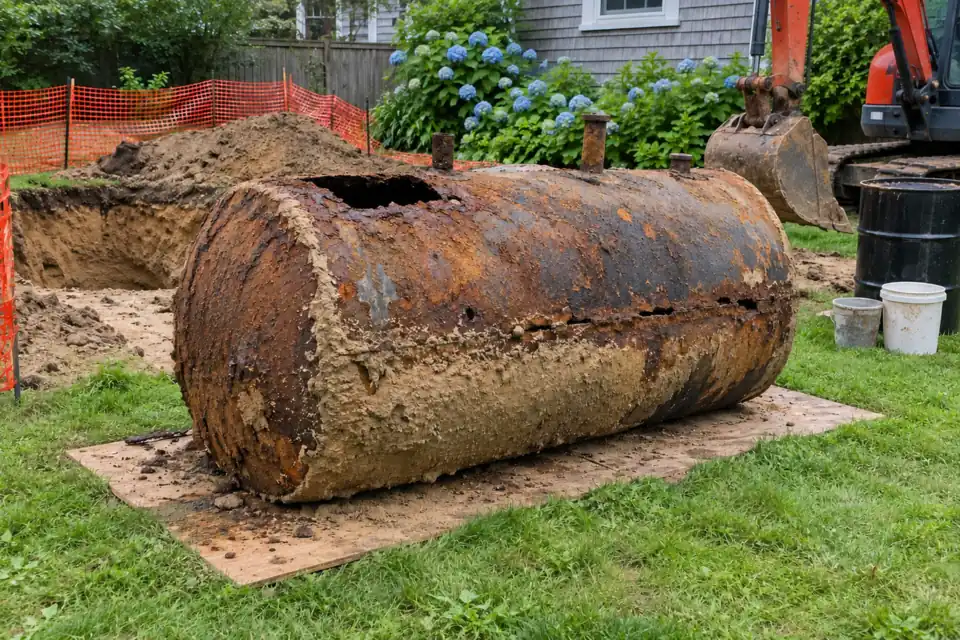
After the tank is lifted out, the contractor inspects the excavation pit and the unit itself for evidence of release. Visible staining, a fuel odor, or a hole in the tank wall triggers soil sampling. Even a tank that looks intact usually receives at least one soil sample taken from beneath the tank footprint and sent to a state-certified laboratory. The closure report combines inspector findings, lab results, the disposal manifest, and permit copies into one closure package retained by the property owner.
Closure reports usually run 5 to 15 pages combining the permit, cleaning manifest, soil sample chain of custody, and disposal certificate from the licensed waste hauler. Most state programs require the package within 30 to 90 days.
How Much the Job Costs
Tank closure pricing depends on tank size, depth of burial, accessibility, regional labor rates, and whether contamination is found. A standard 275-gallon residential heating oil tank in an accessible suburban yard usually costs $1,500 to $3,500 to remove cleanly. A 550-gallon residential tank or one buried under a deck or driveway can run $2,500 to $5,500. The full breakdown for residential pricing lives in the dedicated oil tank removal cost guide, and the removal cost calculator estimates it by state.
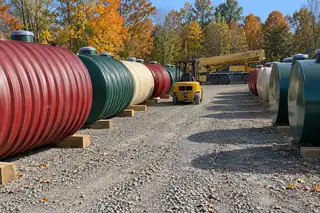
Commercial underground oil tank removal pricing tracks tank size, soil findings, and access logistics, with sizes from 1,000 to 30,000 gallons and excavation conditions that can require dewatering, shoring, traffic control, or underground utility relocation. A 4,000-gallon commercial tank removal typically falls between $8,000 and $20,000 for the removal itself before any contamination work. Larger commercial tanks and tank farm decommissioning projects can exceed $50,000 even when the soil under the tank ends up clean.
Two cost categories sit outside the headline removal price. Permit fees vary by jurisdiction and typically run $50 to $500 per tank, with some commercial sites paying more for witnessed inspections or after-hours work. Soil testing, lab analysis, and any required vapor sampling generally add $300 to $1,500 to a clean closure, depending on how many samples the state agency requires for sign-off. Contamination cleanup, if required, is its own separate cost discussed in the next section and can dwarf the original removal price by an order of magnitude when groundwater becomes involved.
A clean removal estimate should always be itemized. Property owners signing a single lump-sum quote without a written breakdown often discover after the job that line items they assumed were included (soil samples, disposal fees, closure report filing) were billed separately. Reputable contractors itemize permit fees, excavation, tank cleaning, transport, disposal, soil sampling, lab costs, and reporting on the original quote so both parties know exactly what is in scope.
Lump-sum quotes below the typical floor often signal a bidder planning to subcontract soil sampling or skip the closure package. State agencies reject incomplete packages and property owners pay twice.
What Happens If Contamination Is Found
Contamination changes the project scope dramatically. If post-excavation sampling shows soil concentrations above state cleanup standards, the closure report becomes a discharge notification and the project shifts from a tank removal job into a remediation case. Most states require notification within 24 to 72 hours of confirmed contamination. The property owner becomes a responsible party under state cleanup statutes and remains responsible until the agency issues a no further action letter, which may take weeks for a small soil hot spot or years for a groundwater plume.
Remediation costs differ widely. A small soil hot spot may be excavated and disposed of for $5,000 to $15,000 above the original removal price. A plume that has migrated into groundwater or onto a neighboring property can run $50,000 to $250,000 or more and take years to close out. Several states administer cleanup funds that reimburse a portion of these costs for residential heating tank releases or qualifying commercial UST owners; eligibility rules differ by state and program.
Insurance coverage for an oil tank discharge is rarely automatic. Standard homeowner policies typically exclude pollution losses, though some carriers offer optional residential oil tank coverage as an endorsement for $50 to $200 per year. Commercial UST owners are required by federal financial responsibility rules under 40 CFR 280 Subpart H to demonstrate $1 million per occurrence in coverage either through insurance, a surety bond, an approved state fund, or qualified self-insurance.
A confirmed release does not always mean the property is unsellable. With a documented closure plan, an enrolled cleanup case, and a signed access agreement for ongoing remediation work, transactions can and do close while remediation continues in the background. The path is more complex and lenders may require escrow holdbacks. The tank decommissioning vs removal guide covers the closure-in-place option that some state programs allow as an alternative when excavation is impractical. Some state regulations label that option oil tank decommissioning rather than removal even though the cleanup obligations are nearly identical.
State environmental agencies maintain online release-tracking databases that record most confirmed UST discharges by site address. Buyers running a Phase II ESA pull these records during diligence, and an open case can sink a transaction.

Residential Heating Oil Tanks vs Commercial Tank Equipment
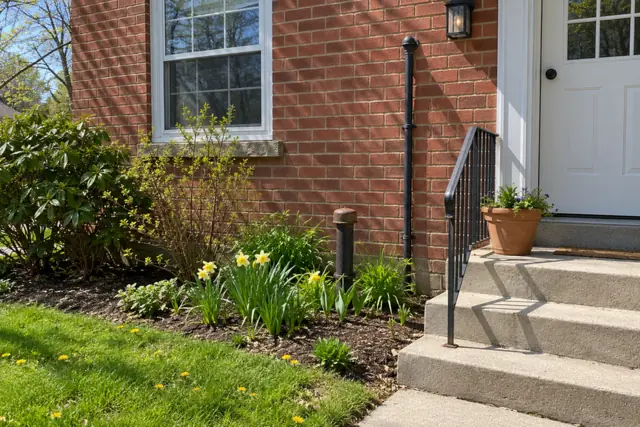
The clearest line between the two regimes is the federal UST definition. A residential fuel oil tank serving a single-family dwelling, regardless of size, is excluded from federal UST regulation under 40 CFR 280.10. A commercial UST storing petroleum for sale, fleet refueling, or industrial use is regulated federally and by the state UST program. Buildings using oil for on-site heating fall outside federal UST rules even at large institutional sizes.
States fill the residential gap to varying degrees. New Jersey, Massachusetts, Connecticut, Rhode Island, and New York maintain dedicated residential oil tank closure programs with required notifications, contractor credential rules, and soil sampling protocols. Most Sunbelt and Mountain West states do not regulate residential fuel oil tanks at all, leaving closure to local fire codes and contamination liability under general state cleanup statutes. The state regulatory map for residential oil heating is genuinely uneven and worth checking against the actual agency page before any work begins.
Federally regulated UST work is far more uniform because every state administers a federally approved UST program built on similar core requirements. State variation shows up in licensing structure, cleanup fund eligibility, notification timelines, and remediation standards rather than in the basic process flow. Operators of small commercial sites with retired UST equipment should expect closure paperwork, financial responsibility documentation, and soil verification regardless of which state the property sits in. The federal floor is real even when the state layer adds detail on top of it.
Most state UST programs operate under EPA State Program Approval frameworks codified at 40 CFR 281, though a handful of states run their UST programs without formal federal SPA. Either way, the federal floor under 40 CFR Part 280 still applies, which produces broadly consistent core requirements across state lines.
Both regimes converge on one point: a buried oil tank that leaks creates direct legal liability for the property owner under state cleanup statutes whether the tank held 275 gallons or 10,000 gallons.
State Regulations and Where to Find Your State's Rules
State regulations control most of the practical detail of any tank closure project. The federal floor under 40 CFR Part 280 sets minimum requirements for regulated UST closure, but states implement and often exceed these requirements. State rules govern permit fees, contractor credential categories, soil cleanup standards, allowed laboratory methods, and reporting timelines. Two adjacent states can have very different processes for what looks on paper like the same job.
The fastest way to find your state's rules is to start with the dedicated state service page on this site. Each page summarizes the agency in charge, contractor credential categories used in that state, typical regional cost ranges, and notification requirements. Examples include the Massachusetts state service page and the Florida state service page, each of which links out to the relevant state agency page for primary source verification. Use the state page as a launchpad rather than a stopping point, since agency rules update on no fixed schedule.
State agency websites are the authoritative source for current forms and fee schedules. EPA maintains a list of approved state UST programs that links directly to each state's program page. Operators planning underground oil tank removal projects should verify rules against the state agency page rather than relying on contractor summaries. Closure rules and notification timelines change periodically and contractor checklists can lag agency updates by months. A 60-second agency check before signing a contract prevents surprises later in the project and protects fund eligibility on any commercial sites that qualify.
Cleanup fund eligibility is the other state-specific item worth checking before signing a removal contract. Some states maintain residential fuel oil tank funds with specific eligibility windows, cost ceilings, and contractor requirements; others maintain commercial fund programs with required pre-approval before remediation work starts. A removal contractor active in your state should know whether your situation qualifies for fund coverage, which paperwork preserves eligibility through the closure and reporting phases, and how reimbursement timing typically works.
State legislatures occasionally rewrite UST closure deadlines and reporting thresholds. Operators retiring tanks should verify current closure timelines with their state UST agency, such as PADEP in Pennsylvania, MassDEP in Massachusetts, or NJDEP in New Jersey, rather than relying on prior-year guidance.
Hiring a Qualified Tank Removal Contractor
Contractor selection depends on what kind of tank you are removing and where the property sits. For commercial UST removal, the contractor needs the state UST closure credential issued by the state UST program, which generally requires demonstrated technical experience, training hours, and posted bonding. For residential oil tank removal in regulated states like New Jersey, the contractor needs the residential subsurface closure certification specific to that state's program.
In states that do not specifically regulate oil tank removal contractors, the appropriate credential is usually a combination of general contractor or excavation contractor licensing plus environmental services experience and pollution liability coverage. Ask the contractor for proof of liability and pollution insurance, references for similar tank closure jobs, and a copy of a recent closure report from another property. The closure report quality is the single best practical signal of contractor competence.
Three questions filter most weak bids. First, is the quote itemized for permits, excavation, soil samples, lab analysis, disposal, and reporting? Second, does the contractor's pollution insurance cover this specific project, and what is the per-occurrence limit? Third, who handles the closure report and how is it delivered to the regulating agency? Vague answers to any of these three questions are a strong signal to keep shopping for bids, especially on a commercial UST job where reporting errors can delay agency sign-off by months.
Bond and insurance verification takes 10 minutes by phone with the carrier listed on the certificate. The carrier confirms whether the policy is current, the actual pollution limit, and whether the named insured matches the quoting company.
Once the basics are clear, request quotes from two or three contractors active in your state for direct comparison. Use the find a UST contractor directory to start a short list filtered by state and credential category. The All Appropriate Inquiries Rule under 40 CFR Part 312 defines what counts as adequate due diligence on commercial parcels with abandoned tanks. Reviewing it before you close on any property with a known or suspected tank is time well spent and clarifies your liability exposure as the buyer of record.