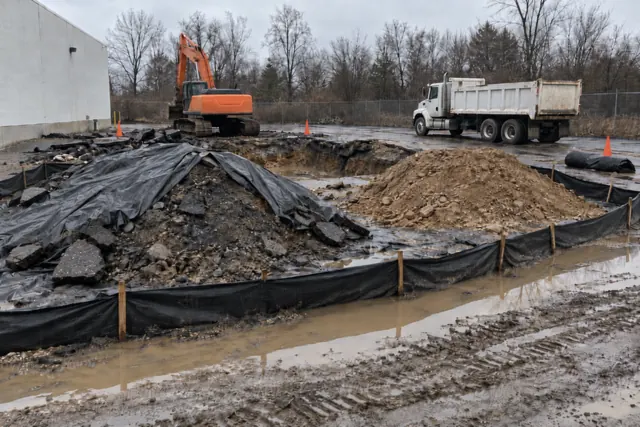
Soil and groundwater cleanup, free product recovery, and tank closure across Oklahoma City, Tulsa, Norman, and Broken Arrow
What to Know About UST Remediation in Oklahoma
Oklahoma environmental remediation contractors work under Oklahoma Corporation Commission Petroleum Storage Tank Division oversight. The program builds on federal EPA UST corrective action standards at 40 CFR Part 280. Confirmed releases require notification within 24 hours, and sites that delay reporting often see their Petroleum Storage Tank Indemnity Fund eligibility narrow or get disqualified entirely. Once a release is confirmed, the operator must perform an environmental evaluation of the property to define plume boundaries and cleanup goals. Soil borings, groundwater monitoring wells, and laboratory analysis form the technical backbone of any closure plan submitted to the agency. Choosing a remediation firm with Oklahoma project experience cuts approval timelines because their reports already track the fund's documentation format and PSTD submittal flow.
Remediation work in Oklahoma is concentrated around the corridor between Oklahoma City and Tulsa, with significant activity in Norman, Broken Arrow, and Edmond. Sandstone aquifers across central Oklahoma allow petroleum plumes to migrate quickly, which forces contractors to install monitoring well networks that extend well beyond the original tank footprint. Sites in older Tulsa neighborhoods often involve gasoline stations dating to the 1950s and 1960s, where leaded fuel residues complicate cleanup chemistry. Lawton and Enid jobs frequently encounter clay-heavy soils that respond well to in-situ chemical oxidation but resist standard pump-and-treat approaches. Contractors familiar with Oklahoma's geology select cleanup investigation and treatment methods that match local subsurface conditions rather than applying a generic remediation playbook.
Remediation cost in Oklahoma usually scales with plume size and the depth to groundwater. Small soil-only sites with limited contamination typically run $30,000 to $80,000 for excavation, transport, and confirmation sampling. Moderate groundwater plumes that require monitoring wells, quarterly sampling, and a year of active treatment range from $90,000 to $275,000. Larger sites with off-property impacts, free product recovery, or vapor intrusion concerns can reach $400,000 to $1.2 million across multiple years of work. The Petroleum Storage Tank Indemnity Fund reimburses eligible cleanup expenses up to $1.5 million per release, so accurate invoicing and proper documentation directly affect what the operator pays out of pocket.
Vetting a remediation firm in Oklahoma starts with confirming worker credentials and project history at comparable Oklahoma City, Tulsa, and Norman sites. Field crews running excavation, drilling, or treatment systems must hold current HAZWOPER training under federal OSHA standards at 29 CFR 1910.120, and supervisors should carry the 8-hour annual refresher. Ask any prospective contractor for three Oklahoma closure letters issued in the last 24 months and references from operators who billed the Petroleum Storage Tank Indemnity Fund. Confirm the firm carries pollution liability insurance and has a registered professional engineer or geologist on staff to seal cleanup reports. Request a written scope, a milestone schedule, and a ceiling price before authorizing fieldwork so the project does not drift into open-ended billing.
Oklahoma contractors for environmental remediation
Tank owners and operators are legally responsible for cleanup costs, but Oklahoma operates a Petroleum Storage Tank Indemnity Fund that reimburses eligible expenses. Coverage requires the tanks to have been registered, the release reported promptly, and the operator current on annual fees at the time of the release. Reimbursement caps at $1.5 million per occurrence, with a deductible that varies based on compliance history. Sites that lapsed on registration or skipped tank tightness testing can lose fund eligibility entirely. Contractors who regularly bill the fund know its line-item rules and submit cleaner invoices that get paid faster. When you compare quotes from soil remediation companies in Oklahoma, make sure each one covers excavation, soil disposal, backfill, and the confirmation sampling needed to close the case.
How long does a typical Oklahoma UST remediation project take?
Project length depends on plume size, depth to groundwater, and the chosen treatment technology. Soil-only excavations at Oklahoma City and Tulsa sites sometimes wrap in three to six months from initial assessment to closure letter. Groundwater plumes treated with monitored natural attenuation often run two to five years before regulators agree to closure. Active treatment systems such as soil vapor extraction or chemical oxidation can reach closure inside 12 to 24 months at moderate sites in Norman or Broken Arrow. Operators should expect quarterly progress reports and at least one annual site visit from regulators throughout the project.
What contaminants are most common at Oklahoma UST sites?
Gasoline-related compounds dominate Oklahoma UST releases, with benzene, toluene, ethylbenzene, and xylenes appearing most often in lab results from Oklahoma City and Tulsa sites. Older Edmond and Lawton stations still show methyl tert-butyl ether residues from oxygenate-blended gasoline used through the early 2000s. Diesel and heating oil sites add total petroleum hydrocarbons to the analytical list, which often drives longer cleanup timelines. Lead contamination shows up at gasoline stations operated before 1996 and changes the disposal classification of excavated soil. The contractor's analytical plan should test for the specific fuel grades stored at the site rather than running a generic petroleum panel.
Does Oklahoma require licensed remediation contractors?
Oklahoma requires that environmental consultants and cleanup contractors who bill the Petroleum Storage Tank Indemnity Fund be approved by the state and meet specific qualification standards. Companies that perform soil excavation, drill monitoring wells, or operate treatment systems generally need a registered professional engineer or geologist sealing key reports. Field crews must hold current OSHA HAZWOPER credentials before working on a contaminated site. Operators should verify each prospective contractor's standing on the state's approved consultant list before signing a contract. Hiring an unapproved firm risks the entire reimbursement claim.
How is site closure documented in Oklahoma?
Closure in Oklahoma requires a final report demonstrating that contaminant levels meet the state's cleanup standards or risk-based closure criteria. The contractor compiles soil and groundwater data, modeling results, and any institutional controls such as deed notices or vapor barriers. State regulators review the package and issue a No Further Action letter when the data supports closure. Some sites close under Tier 1 numerical standards, while complex cases close under Tier 2 risk-based corrective action with monitored controls. Operators should retain the closure letter permanently, since it transfers with the property and matters during any future sale or financing.