
Tank Installation Contractors in Massachusetts

Find contractors in Massachusetts for underground storage tank installation, fuel system installation, dispenser installation, and piping installation. Serving Boston, Worcester, Springfield, New Bedford, and communities statewide.

Browse Massachusetts Contractors →

Massachusetts Tank Installation: Permits, Costs, and Coastal Challenges

Tank installation in Massachusetts requires permits and strict compliance with state environmental regulations. The state environmental agency regulates underground storage tanks under 310 CMR 80.00, which covers design standards, installation procedures, and release prevention for all new systems. Massachusetts does not issue a state-specific UST contractor license, so facility owners must verify that installers hold appropriate general contractor credentials and carry pollution liability coverage. All new tanks must be double-wall construction with interstitial monitoring, continuous leak detection, and secondary containment on piping. The state also requires third-party inspection of installation work before the system goes into service, which adds a compliance layer that some facility owners underestimate during project planning.
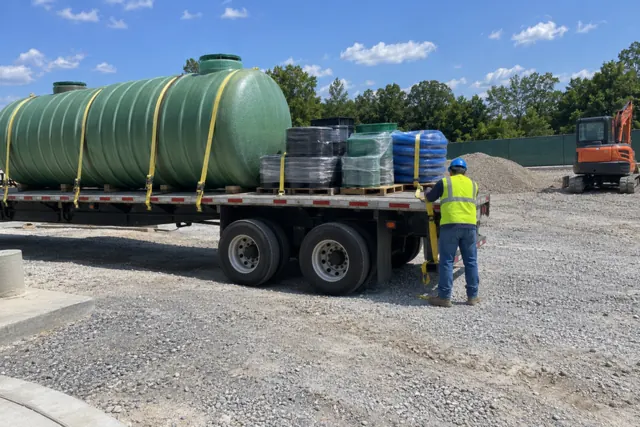
Demand for tank installation concentrates along the I-90 and I-95 corridors where gas stations, fleet fueling depots, and convenience store chains cluster near population centers. Boston and the surrounding metro account for the largest share of new installations, driven by aging infrastructure replacements at stations built in the 1970s and 1980s. Worcester sees steady demand from regional fuel distributors expanding capacity, while Springfield and the western part of the state serve a mix of truck stops along I-91 and municipal fleet facilities. Cape Cod and the Islands present a unique challenge: seasonal demand spikes, limited contractor availability, and environmental sensitivity around coastal aquifers push both timelines and costs higher than mainland projects. The New Bedford and Fall River corridor also generates consistent work tied to industrial and marine fueling operations.

A single-tank installation in Massachusetts typically runs $60,000 to $160,000 depending on tank size, site conditions, and the complexity of piping and dispenser work. Multi-tank gas station buildouts with canopy, dispensers, and monitoring systems regularly exceed $300,000 to $500,000, and monitoring equipment alone adds $5,000 to $15,000 per tank. Soil conditions in eastern Massachusetts, where clay-heavy glacial till is common, can increase excavation costs by 15 to 25 percent compared to sandier regions. The state does not operate a dedicated fund for new installation projects, though the existing cleanup fund may cover eligible remediation if contamination from a previous tank is discovered during excavation. Budget a separate line item for the mandatory third-party inspection, which typically costs $1,500 to $3,000.

The installation process begins with permit applications to local fire departments and the state environmental agency, which together can take four to eight weeks for approval. Site work follows a sequence: excavation, bedding preparation, tank setting, piping connections, backfill, dispenser installation, and system testing. Expect the physical installation to take two to four weeks for a single-tank project, longer for multi-tank builds or sites with difficult access. Before signing a contract, confirm that the installer carries pollution legal liability insurance, not just a standard CGL policy. Standard commercial liability policies have excluded pollution events since 1986, and a spill during installation without proper coverage leaves the facility owner holding the full cleanup bill. Get at least two quotes that itemize tank, piping, monitoring, inspection, and permitting costs separately so you can compare actual scope, not just bottom-line numbers.

Tank Installation Contractors in Massachusetts

Browse contractors, see contact details, and request free quotes.

Browse Massachusetts Contractors →

Frequently Asked Questions

Do tank installation contractors need a state license in Massachusetts?

Massachusetts does not require a state-specific UST contractor license for tank installation work. Contractors must hold a general construction or specialty trade license, carry adequate liability insurance, and comply with state environmental regulations under 310 CMR 80.00. The state environmental agency requires that all new installations be inspected by a qualified third party before the system operates. Verify that your contractor has completed similar UST projects and carries pollution legal liability coverage, which is separate from standard general liability insurance.

How much does it cost to install an underground storage tank in Massachusetts?

A single underground storage tank installation in Massachusetts typically costs between $60,000 and $160,000. That range covers the tank, excavation, piping, backfill, and basic monitoring equipment. Multi-tank builds at gas stations or fleet facilities can run $300,000 to $500,000 or more when dispensers, canopy work, and advanced monitoring are included. Eastern Massachusetts sites with clay-heavy soils often cost 15 to 25 percent more for excavation alone. Add $1,500 to $3,000 for the state-required third-party installation inspection.

How long does a UST installation project take in Massachusetts?

Plan on two to four weeks for the physical installation of a single tank, not counting the permitting phase. Permit approvals from local fire departments and the state environmental agency typically take four to eight weeks, so total project timelines run two to three months from start to finish. Multi-tank projects or sites with contamination from a previous system can extend that timeline by several months. Winter installations are possible but cost more and move slower, especially in January and February when frozen ground complicates excavation.

Why do coastal Massachusetts sites cost more for tank installation?

Coastal sites on Cape Cod, the Islands, and the South Shore sit above sole-source aquifers that supply drinking water to surrounding communities. The state imposes stricter environmental review and monitoring requirements for UST installations near these water resources, which adds engineering costs and extends permitting timelines. Contractor availability on the Cape and Islands is also limited, and equipment transport by ferry raises mobilization costs. Seasonal restrictions during peak tourist months can further compress the construction window. These factors together can push coastal project costs 20 to 40 percent above comparable inland installations.

What happens if contamination is found during a new tank installation in Massachusetts?

If excavation for a new tank uncovers contamination from a previous system, the project stops until soil sampling and a release notification are completed. The state environmental agency requires reporting of any discovered contamination within a set timeframe, and cleanup obligations fall on the current property owner regardless of who caused the original release. The state cleanup fund may reimburse eligible remediation costs, but the owner pays upfront and applies for reimbursement afterward. Contamination discovery during installation can add $10,000 to $50,000 or more to project costs and delay the timeline by months. This is why a Phase II environmental site assessment before breaking ground is worth the $3,000 to $10,000 investment on any property with UST history.

Looking for a contractor in Massachusetts?

Browse contractors, see contact details, and request free quotes.

Browse Massachusetts Contractors →

For Massachusetts UST regulations, visit the Massachusetts Department of Environmental Protection. Federal requirements are available from the EPA UST Program.

Related Services in Massachusetts

Find Massachusetts ContractorsRequest a Free Quote
Free Quotes