
Tank Inspection & Testing Contractors in Massachusetts
Find contractors in Massachusetts for tank tightness testing, leak detection, line testing, and UST compliance inspection. Serving Boston, Worcester, Springfield, Cambridge, and communities statewide.
What to Know About Oil Tank Inspection & Testing in Massachusetts
Massachusetts requires strict tank inspection and testing for every active UST. The state's regulatory framework sits in M.G.L. c. 21E and 310 CMR 80.00, which mandate annual line tightness testing, monthly leak detection, and periodic UST compliance inspection by trained operators. The Massachusetts Department of Environmental Protection administers the program and reviews release reporting under the Massachusetts Contingency Plan. Buyers in Boston and along I-495 typically order a Phase I ESA before closing, which flags whether a tightness test is needed on inherited tanks. Active gas stations, school heating systems, college campuses, and municipal fleet yards make up the bulk of regulated facilities.
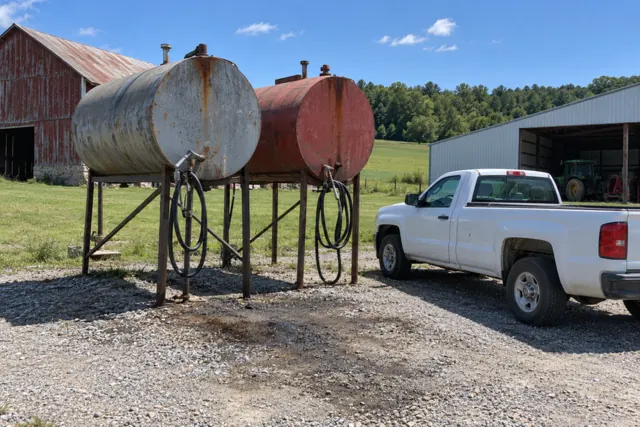
Demand concentrates in Greater Boston, where retail fueling sites and university heating plants in Cambridge and Boston need recurring tank tightness test cycles to satisfy MassDEP. Worcester, Springfield, Lowell, and the I-495 industrial corridor host a steady mix of fleet yards and distribution facilities running line testing on multi-product piping. On Cape Cod, where the sole-source aquifer rules out closure errors, owners run more frequent integrity testing than the state minimum requires. Boarding schools and private colleges in Andover, Northampton, and the Berkshires also keep a heavy book of compliance inspection work due to clustered heating-oil tanks. Massachusetts differs from most states because the LSP (Licensed Site Professional) program brings a privately licensed professional into any release event, raising the documentation bar.
Tank tightness test pricing in Massachusetts typically runs $500 to $2,000 per tank, while full UST compliance inspection at active retail facilities lands at $1,000 to $3,000. Line testing on multi-product piping is usually $300 to $800 per line, and monthly monitoring service contracts add $400 to $1,200 annually. Costs sit higher than national averages in the Boston-Cambridge labor market, where union rates and traffic-bound mobilization push quotes toward the upper end. Massachusetts does not operate a state UST cleanup trust fund the way Pennsylvania or Illinois does, so owners rely on private pollution liability coverage when integrity testing reveals a release. If a leak triggers the Massachusetts Contingency Plan, a Licensed Site Professional must oversee the cleanup, and that supervision typically adds $5,000 to $15,000 in professional fees.
The typical Massachusetts process starts with a records review of MassDEP submissions, then volumetric tightness testing, statistical inventory reconciliation, and automatic tank gauge verification at the site. A standard tank tightness test takes 4 to 8 hours per tank, and the certified report normally lands 1 to 2 weeks later. Operators must hold valid Class A/B/C training, and crews entering excavation areas should carry current HAZWOPER training under federal 29 CFR 1910.120. Before signing, Massachusetts property owners should ask for a sample MassDEP-format closure report from a recent Cape Cod or Worcester County job and written confirmation testers are NWGLDE-listed. Itemize line testing, integrity testing, and monthly monitoring service in the bid before paying.
Tank Inspection & Testing Contractors in Massachusetts
Browse contractors, see contact details, and request free quotes.
Browse Massachusetts Contractors →Frequently Asked Questions
Does Massachusetts require a license to perform UST tank inspection and testing?
Yes. Massachusetts requires testers to use methods listed on the National Work Group on Leak Detection Evaluations (NWGLDE) registry, and Class A/B/C operators must complete state-approved training under 310 CMR 80.00. When a release is confirmed during testing, a Licensed Site Professional must take over the response under the Massachusetts Contingency Plan. Always confirm both the tester's certification and the LSP relationship before contracting.
How much does a tank tightness test cost in Massachusetts?
A single tank tightness test in Massachusetts usually runs $500 to $2,000, and a full UST compliance inspection ranges $1,000 to $3,000 depending on tank count. Line testing typically adds $300 to $800 per product line. Boston, Cambridge, and Worcester pricing skews toward the high end because of labor rates and traffic-bound mobilization. Multi-tank facilities often negotiate annual contracts that bundle leak detection, integrity testing, and monthly monitoring data review at $1,500 to $3,500 per year.
How long does a Massachusetts UST tightness test take?
Field testing on a single-tank site usually finishes in 4 to 8 hours, and a multi-tank retail station runs a full day. The contractor typically delivers the certified report 1 to 2 weeks after fieldwork. If the test fails, MassDEP requires release notification within 24 hours, and an LSP must be engaged under the Massachusetts Contingency Plan. Allow 30 to 90 days for follow-up integrity testing if a release is confirmed.
Why does Massachusetts use the LSP system instead of letting the state manage cleanups directly?
Massachusetts is one of the few states that delegates contaminated-site oversight to private Licensed Site Professionals rather than assigning state staff to each release. The LSP signs and stamps cleanup decisions under the Massachusetts Contingency Plan (310 CMR 40.0000), and MassDEP audits a sample rather than reviewing every site. For UST owners, a confirmed leak after a tightness test triggers an immediate LSP retention, separate from the testing contractor. Massachusetts owners should keep an LSP relationship on standby before scheduling tests on suspect tanks.
What happens if my tank tightness test fails in Massachusetts?
A failed tank tightness test triggers a release report to MassDEP within 24 hours and engagement of an LSP under the Massachusetts Contingency Plan. The LSP directs immediate response actions: removing remaining product, evaluating soil and groundwater, and determining tiered classification. Cape Cod and other sole-source aquifer towns face stricter response timelines and lower notification thresholds. Budget 6 to 18 months from failed test to a regulatory closure determination depending on contamination severity.
Browse contractors, see contact details, and request free quotes.
Browse Massachusetts Contractors →For Massachusetts UST regulations, visit the Massachusetts Department of Environmental Protection. Federal requirements are available from the EPA UST Program.
