

New Jersey Heating Oil Tanks and Closure Requirements
New Jersey calls a home heating oil tank an unregulated heating oil tank, or UHOT. The NJDEP UHOT program covers a residential heating oil tank of any size and one or more heating oil tanks on the same nonresidential property with a combined capacity of 2,000 gallons or less. Federal UST rules do not reach these tanks, because 40 CFR 280.12 excludes tanks that store heating oil for use on the premises. State rules still apply to a buried heating oil tank. First, whether it is removed or closed in place, NJDEP requires the work to be done by a contractor certified for tank closure under N.J.A.C. 7:14B. A CLOSURE certification covers any underground tank, and an HHO CLOSURE certification covers heating oil tanks only.
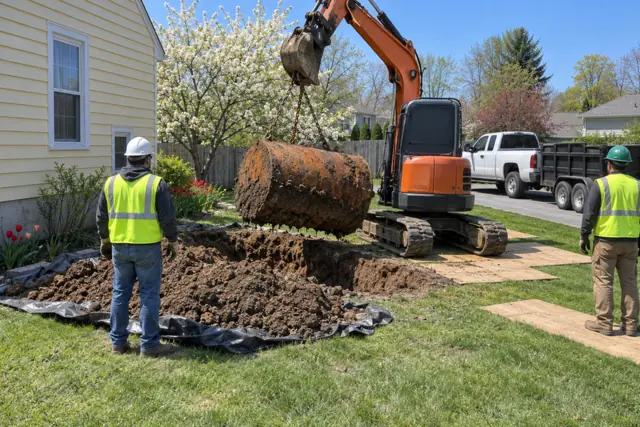
New Jersey's construction code allows either removal or closure in place for a heating oil tank, though municipal rules can limit closure in place, so ask the local construction office. The standards sit in the state Uniform Construction Code, and DCA Bulletin 95-1B explains them for municipal code offices. Either route requires a demolition permit, with plan review and inspection by the local fire subcode official. Before the construction office issues its certificate of approval, the owner or contractor must provide a sketch showing the location of the removed or abandoned tank. NJDEP strongly recommends removing out-of-service underground heating oil tanks even when there is no sign of a leak. The bulletin also notes that insurance and mortgage companies are driving the removal of previously abandoned tanks.
The UHOT homeowner guide says NJDEP does not set or control prices, but it points homeowners to the UST Fund Cost Guide, effective January 1, 2010, published with the Petroleum Underground Storage Tank Remediation, Upgrade and Closure Fund. That fund stopped accepting applications for non-leaking tanks on May 3, 2011, because it ran short of money. New applications for leaking residential tanks are still accepted and date-stamped, but NJDEP says they will not be reviewed until funding becomes available, and the fund page currently lists a 3.5-year wait on new applications. The department also warns that the fund has never guaranteed money to any applicant, whatever a contractor's advertising says. The guide also suggests checking homeowners insurance or a separate tank policy for coverage. The cost FAQ below gives national planning ranges, and our removal cost guide explains what moves them.
The Heating Oil Tank System Remediation Rules, N.J.A.C. 7:26F, require a call to the NJDEP Hotline at 1-877-WARNDEP once a discharge is found. The UHOT homeowner guide lists the reasons for that call when the tank has not already been abandoned in place. They are holes in the tank, staining in the excavation, oil in contact with soil or groundwater, elevated field instrument readings, fuel oil odors, and any detectable extractable petroleum hydrocarbons (EPH) in lab results. The owner must then hire a Certified Subsurface Evaluator or a Licensed Site Remediation Professional to run the cleanup. A closure contractor can do that work only if it also holds one of those credentials. Before signing, look up the firm's certification type on NJDEP DataMiner and get the written contract N.J.A.C. 7:14B requires, including a maximum price. Compare firms at New Jersey tank removal contractors or submit your quote request.