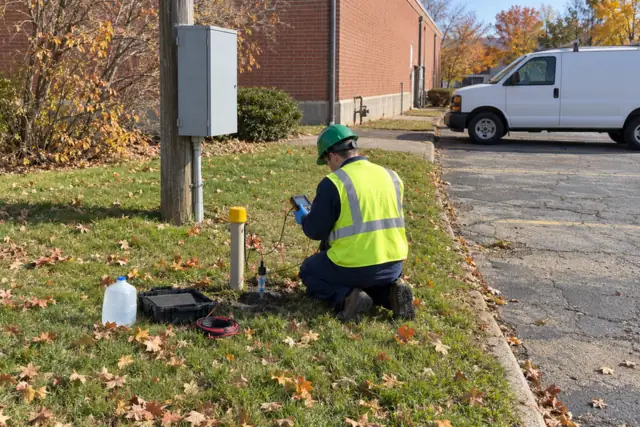
Oil Tank Inspection & Testing Companies in Nebraska
Find licensed contractors in Nebraska for oil tank inspection, underground storage tank testing, tank tightness testing, leak detection, and UST compliance assessments. Serving Omaha, Lincoln, Bellevue, Grand Island, Kearney, North Platte, and communities statewide.
What to Know About Oil Tank Inspection & Testing in Nebraska
Nebraska requires training requirements for contractors performing oil tank inspection and testing on regulated
underground storage tanks. Like Kansas to the south, Nebraska has a notably small certified contractor pool for a
state its size. Roughly two dozen companies hold active credentials statewide. That number covers a state that
stretches 430 miles from Omaha to the Wyoming border. A facility owner in the western Panhandle or the
Sandhills may be scheduling a contractor who has to drive half a day to reach the site. The small pool is not a
reflection of low demand. It is a reflection of a rural state where the tank population is spread thin across
enormous distances. When a certified contractor is on site, the inspection needs to count.
The majority of underground oil tank inspection work in Nebraska falls into two categories. The Omaha and Lincoln
metro areas generate the highest concentration of commercial fueling station, fleet yard, and industrial facility
inspections. The I-80 corridor connecting those cities to Grand Island, Kearney, and North Platte supports a
steady stream of truck stop and travel center inspection demand. But outside the I-80 corridor, Nebraska's
regulated tank inventory is dominated by agricultural fueling sites. Farm fuel tanks, grain elevator storage
systems, and rural cooperative fueling stations are the backbone of petroleum infrastructure in rural Nebraska.
Many of these sites installed single-wall steel tanks in the 1970s and 1980s and have operated continuously since.
The same contractors who perform underground oil tank inspection across the state also handle oil tank removal and
tank decommissioning when these aging agricultural systems finally reach end of life. For a grain elevator fueling
site that has been running the same tank for 40 years, the question is not whether tank decommissioning will
happen. It is whether it happens on the owner's schedule or the state's.
Oil tank inspection cost in Nebraska typically ranges from $500 to $2,500 for a basic tank tightness test and
$2,000 to $6,000 for comprehensive multi-tank assessment at larger facilities. Cost varies by location and access.
An Omaha fueling station along I-80 is routine. A single-tank farm site in the Sandhills accessible only by gravel
roads is not. But the cost that makes inspection worthwhile has nothing to do with the contractor's quote. Most of
western and central Nebraska sits directly over the Ogallala Aquifer, the same massive groundwater resource that
underlies western Kansas. A leaking underground storage tank that causes soil contamination above the Ogallala
does not stay a local problem. Petroleum that reaches the aquifer threatens irrigation water that Nebraska's
agricultural economy depends on and drinking water for communities across the region. Environmental remediation
costs for releases near the Ogallala routinely reach $15,000 to $100,000 or more, with regulatory oversight that
reflects the aquifer's regional importance.
Federal law requires EPA or the state to inspect each regulated underground storage tank at least once every three years. Nebraska's rules go further: every tank is subject to at least one State Fire Marshal inspection a year under Title 159, Chapter 12. Owners also have duties of their own under 40 CFR 280: release detection on tanks at least every thirty days by one of several approved methods, and walkthrough inspections every thirty days and once a year. Nebraska's climate adds the same freeze-thaw stress that challenges tank systems across the northern
plains. Winter temperatures regularly drop below zero across most of the state, and the resulting ground movement
stresses piping joints and tank walls in ways that accumulate over decades. For agricultural site owners who have
operated the same tank system for 30 or 40 years without major problems, the temptation is to assume the tank is
fine because it has always been fine. That assumption gets more dangerous every year. A fuel tank inspection that
shows marginal results is the signal to start planning, not the signal to wait for the next inspection. An
environmental remediation contractor familiar with Nebraska's aquifer sensitivities and agricultural site
conditions can help determine whether the next step is closer monitoring, repair, or full replacement before a
winter failure turns a manageable expense into a groundwater emergency.
Nebraska contractors for tank inspection and testing
Do I need a certified contractor for oil tank inspection in Nebraska?
Only for some of the work. Under Title 159, Chapter 3, the State Fire Marshal licenses contractors who install or close regulated underground storage tanks and certifies cathodic protection testers, but it has no separate certification for tank inspection or tightness testing. The licensed pool is small, roughly two dozen companies covering the entire state. That means scheduling takes longer than facility owners in more densely served states
might expect, particularly for sites in western Nebraska or the Sandhills. Planning inspections well ahead of
compliance deadlines is essential. Using a tester without the equipment maker's training, or a closure firm without an SFM license, risks documentation the state will not accept. In Nebraska, getting a qualified crew back to a remote site for a retest could take weeks.
How much does oil tank inspection cost in Nebraska?
A basic tank tightness test in Nebraska typically costs $500 to $2,500 depending on tank size, site access, and
location. Comprehensive underground storage tank inspection for multi-tank commercial facilities runs $2,000 to
$6,000. Oil tank inspection cost is higher for remote agricultural sites in the Sandhills or Panhandle where
contractor travel adds significantly to the job. The cost worth comparing is not between contractors. It is
between a routine inspection and the soil contamination cleanup that follows a missed leak. Environmental
remediation for a leaking underground storage tank above the Ogallala Aquifer can reach $15,000 to $100,000 or
more, with regulatory scrutiny that reflects the aquifer's importance to the region's water supply and
agricultural economy.
How often do underground storage tanks need to be inspected in Nebraska?
Every tank in Nebraska is subject to at least one State Fire Marshal inspection a year under Title 159, Chapter 12, more often than the federal minimum of once every three years. Owners also have duties of their own under 40 CFR 280: release detection on tanks at least every thirty days by one of several approved methods, and walkthrough inspections every thirty days and once a year. For agricultural sites operating
original 1970s or 1980s tank systems, those minimums are increasingly inadequate. These tanks have
endured decades of freeze-thaw cycling that stresses joints and accelerates corrosion. A tank that passed its
last tightness test three years ago may have developed new seepage since, particularly if the intervening
winters were severe. Many certified contractors in Nebraska recommend annual fuel tank inspection for
older single-wall tanks, especially at sites where the nearest groundwater resource is the Ogallala
Aquifer.
Why are agricultural fueling sites a concern for tank inspection in Nebraska?
Nebraska has hundreds of agricultural fueling sites, including farm fuel tanks, grain elevator storage systems,
and rural cooperative stations, that were built decades ago and have operated continuously on original
equipment. Many of these sites sit directly over the Ogallala Aquifer, which supplies irrigation water for
Nebraska's agricultural economy and drinking water for rural communities. A leaking underground oil tank at one
of these sites does not just create soil contamination on the property. It threatens the water supply that the
surrounding community and agricultural operations depend on. Regular tank tightness testing catches corrosion
and small leaks before they grow into releases that reach groundwater depth. For sites where inspection reveals
a tank approaching end of life, planned tank decommissioning and replacement on the owner's timeline is always
less expensive and less disruptive than an emergency response after a failure.
What types of tank testing are available in Nebraska?
Nebraska contractors offer several UST testing methods adapted to the state's agricultural and commercial tank
inventory. Tank tightness testing measures whether a tank holds pressure without loss, detecting leaks below
automatic gauging thresholds. Line tightness testing checks piping connections between the tank and dispenser
for slow seepage at joints. Cathodic protection testing verifies that the corrosion prevention system is
functioning within design specifications, which is critical for older single-wall tanks that rely entirely on
cathodic protection to resist soil corrosion. For sites with suspected contamination, groundwater monitoring
well sampling is especially important in Ogallala Aquifer recharge zones where petroleum migration can affect
water resources far beyond the property boundary. Soil vapor surveys can map the lateral extent of contamination
in sandy Nebraska soils where petroleum moves horizontally with relative ease. A certified contractor can
recommend the right combination of tests based on tank age, construction type, and proximity to sensitive water
resources.