
Tank Installation Contractors in Nebraska

Find contractors in Nebraska for underground storage tank installation, fuel system installation, tank replacement, dispenser installation, piping installation, and monitoring equipment setup. Serving Omaha, Lincoln, Grand Island, Kearney, North Platte, Scottsbluff, and communities statewide.

Browse Nebraska Contractors →

Tank Installation Requirements and Costs in Nebraska

Nebraska requires State Fire Marshal certification for UST installation work. The Fire Marshal's office oversees tank registration, permitting, and compliance inspections for every new underground storage tank placed in the state. Contractors must hold active credentials before breaking ground, and facility owners who hire uncertified installers risk permit revocation and fines that can stall a project for months. This certification requirement applies to all commercial fueling facilities, including gas stations, fleet yards, agricultural cooperatives, and bulk fuel depots. Nebraska's environmental oversight falls under the Department of Environment and Energy, which monitors groundwater protection requirements tied to every new installation.
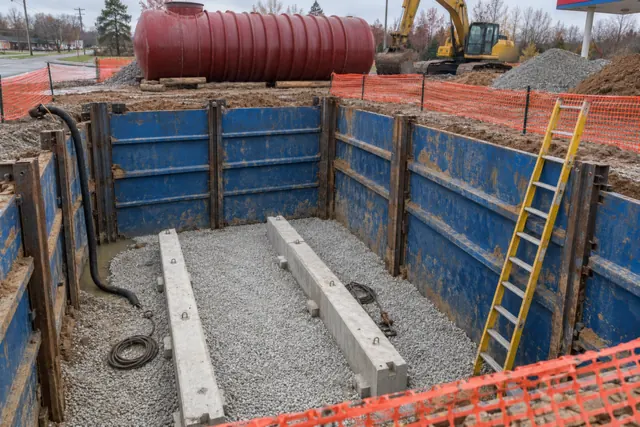
Omaha and Lincoln generate the bulk of Nebraska's tank installation activity, driven by retail fuel station upgrades and fleet operations serving regional distribution networks. Along the I-80 corridor from Omaha to North Platte, truck stops and travel centers replace aging single-wall systems to meet current double-wall containment standards. Grand Island and Kearney serve as regional fueling hubs for agricultural operations stretching across central Nebraska. Cooperative fuel depots and grain elevator fueling stations account for a steady volume of replacement projects in those areas. Western Nebraska towns like Scottsbluff and Sidney see fewer installations per year, but the distances between fueling stops make each site critical to long-haul trucking and farm equipment operations. Rural demand tends to spike during years when federal or state compliance deadlines force aging tank upgrades.

A single underground storage tank installation in Nebraska typically costs $50,000 to $130,000, depending on tank capacity, material, and how accessible the site is for excavation equipment. Full gas station buildouts with multiple tanks, dispensers, piping, and electronic monitoring run $250,000 to $450,000, with monitoring systems alone adding $5,000 to $15,000. Sandy loam soils across much of central and western Nebraska simplify excavation compared to rockier ground, but high water table areas near the Platte River valley require dewatering that adds $3,000 to $8,000. Nebraska operates a state petroleum cleanup fund with a hybrid deductible plus 25% copay structure. The fund may reimburse eligible investigation and remediation costs if contamination from an old tank is discovered during a replacement project, though it does not cover new installation expenses.

Expect four to eight weeks of permitting and engineering before physical work begins. Excavation, tank setting, piping connections, and backfill typically take two to four weeks for a single-tank project, with dispenser installation and monitoring commissioning adding another one to three weeks. Multi-tank buildouts at new stations can stretch six months from permit application to first fuel delivery. State inspectors must approve the excavation and tank placement before backfill, so schedule around their availability rather than assuming same-week turnaround. Before signing with a contractor, confirm the bid includes registration fees, post-installation tightness testing, monitoring setup, and state notification. Contractors who quote tank setting alone without these line items leave you exposed to $5,000 to $10,000 in costs that surface after the tank is already in the ground.

Tank Installation Contractors in Nebraska

Browse contractors, see contact details, and request free quotes.

Browse Nebraska Contractors →

Frequently Asked Questions

Do Nebraska contractors need a specific license to install underground storage tanks?

Yes. Nebraska requires State Fire Marshal certification for all UST installation work, covering tank setting, piping connections, and monitoring equipment commissioning. This certification is separate from general contractor or excavation licenses. Hiring an uncertified installer puts the facility owner at risk of permit denial and fines during the first compliance inspection. Verify a contractor's active certification status with the State Fire Marshal's office before signing any agreement, because lapsed credentials are not uncommon in a state with a relatively small contractor pool.

How much does a new UST installation cost in Nebraska?

Single-tank installations typically run $50,000 to $130,000 depending on capacity, material choice, and site conditions. Multi-tank gas station projects with dispensers, piping, and monitoring equipment range from $250,000 to $450,000. Excavation costs stay moderate across most of the state thanks to sandy loam soils, but sites near the Platte River valley may need dewatering that adds $3,000 to $8,000. Always confirm whether a quoted price includes permitting, tightness testing, and state registration before comparing bids.

How long does a UST installation take in Nebraska from permit to fueling?

Plan for three to six months total for a single-tank project. The permitting and engineering phase runs four to eight weeks before excavation begins, and the physical installation work takes two to four weeks under normal conditions. Dispenser hookups and monitoring commissioning add one to three weeks after tank setting. Multi-tank buildouts at new gas stations can push the timeline past six months. Winter projects between December and March face frozen ground delays across most of the state, so scheduling installation for spring through early fall avoids the most common weather-related setbacks.

Does Nebraska's cleanup fund apply if old contamination is found during a tank replacement?

Nebraska's petroleum cleanup fund uses a hybrid structure with a deductible plus a 25% copay on eligible costs above that threshold. If contamination from a previous tank is discovered during excavation for a replacement system, the fund may reimburse investigation and remediation expenses but does not cover installation costs. Eligibility requires prompt reporting of the release to the state, and filing deadlines run from the date contamination is discovered, not from when cleanup begins. Facility owners replacing aging single-wall tanks should budget for contamination costs upfront. Petroleum in the soil is common at sites built before the 1988 federal UST rules.

What monitoring equipment do new UST installations in Nebraska require?

All new systems must include automatic tank gauging, interstitial monitoring for double-wall tanks, and line leak detectors on pressurized piping. These requirements align with the 2015 federal UST rule updates that tightened release detection across all states. Electronic monitoring panels need to generate automatic alerts when sensors detect a potential release. Budget $5,000 to $15,000 for the full monitoring package depending on how many tanks and product lines the system includes. Small private-use tanks with low throughput may qualify for simplified monthly monitoring, but most commercial installations in Nebraska require the full electronic setup.

Looking for a contractor in Nebraska?

Browse contractors, see contact details, and request free quotes.

Browse Nebraska Contractors →

For Nebraska UST regulations, visit the Nebraska Department of Environment and Energy. Federal requirements are available from the EPA UST Program.

Related Services in Nebraska

Find Nebraska ContractorsRequest a Free Quote
Free Quotes