

What to Know About UST Remediation in Nebraska
Petroleum spreads fast through Nebraska's sandy aquifers, accelerating every UST remediation timeline. The Nebraska Department of Water, Energy, and Environment (DWEE) regulates every leaking underground storage tank cleanup under Title 200 rules. Once a release is confirmed, the responsible party reports it to both the State Fire Marshal and DWEE, then submits a corrective action plan with sampling data. Most projects begin with a Phase I environmental review to establish baseline conditions, identify prior owners, and document any historical chemical use that could complicate liability. From there, contractors define the contaminant plume through soil borings and groundwater monitoring wells before selecting a treatment approach. Skipping these early steps almost always extends the project timeline because regulators reject closure requests built on incomplete characterization.
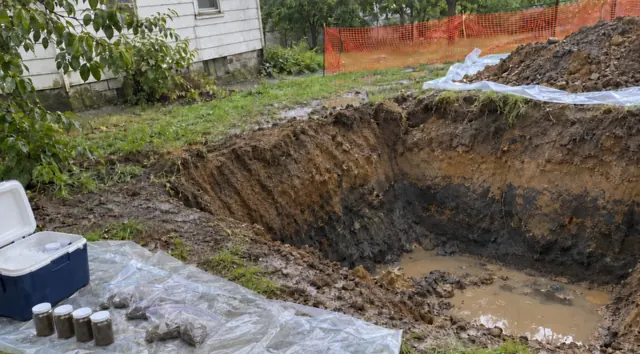
Active UST remediation projects span the state from Omaha and Lincoln in the east to Scottsbluff and Kearney in the west. Sites near Grand Island and along the Platte River corridor often involve shallow groundwater and coarse alluvial soils that allow free product to migrate hundreds of feet from the original source. Older fueling stations in Bellevue, Fremont, and Norfolk frequently uncover steel tanks installed before the 1988 federal UST upgrade deadline, with corrosion holes that leaked unnoticed for decades. Nebraska's loess-heavy soils complicate excavation in some counties because the silt collapses easily and requires extensive shoring or active dewatering. Contractors familiar with regional geology adjust their methods based on whether the site sits over the High Plains Aquifer, in glacial till, or near a wellhead protection area.
Remediation costs in Nebraska vary widely based on contamination depth, plume size, and the treatment technology selected. A small soil-only excavation at a former service station typically runs $25,000 to $75,000, while sites with documented groundwater contamination push projects into the $150,000 to $500,000 range. Larger releases involving off-site plumes or sensitive receptors like municipal supply wells can exceed $1 million across multi-year cleanup phases. Nebraska's Petroleum Release Remedial Action Fund reimburses remedial action costs, funded by a per-gallon fee on petroleum sales. Standard owner out-of-pocket is $25,000 per release: a $10,000 deductible plus a 25 percent co-payment on the next $60,000. Low-volume applicants pay $15,000. Under Neb. Rev. Stat. 66-1519 the fund reaches releases first reported on or before June 30, 2028. Contractors usually invoice the state directly through pre-approved work plans, so owners should confirm fund eligibility and approved task budgets before signing any remediation agreement.
Choosing the right contractor matters more than chasing the lowest bid because Nebraska closure standards depend on documented protocol compliance. Look for firms whose field crews carry current 40-hour HAZWOPER training and have closed at least a dozen DWEE cleanup files in the past three years. Verify that the project manager has direct experience with state fund reimbursement paperwork, since procedural errors can delay payment by six months or more and strain owner cash flow. Ask for references from prior Nebraska sites and review the No Further Action letters those projects produced as proof of regulatory closure. Before hiring, request a written scope that specifies sampling frequency, reporting deadlines, and a clear path to a closure letter from DWEE.