

What to Know About Tank Installation in Indiana
UST installation in Indiana must be supervised by a person certified by IDEM, which took over UST contractor certification from the State Fire Marshal on July 1, 2023. The state's environmental management agency oversees all underground storage tank permitting, and any new tank system must meet both federal EPA technical requirements and Indiana's own registration and installation standards. Complete single-tank projects price at $50,000 to $150,000. Contractors performing UST installation work must hold current state certification, and the installing company bears responsibility for ensuring the tank system passes initial compliance testing before fuel is loaded. Indiana mandates secondary containment, leak detection, and spill prevention equipment on all new UST systems. Facilities that skip any of these steps face enforcement action and potential denial of their operating permit.
Indianapolis generates the highest volume of tank installation work in Indiana, driven by gas station construction, fleet fueling expansions, and convenience store development along the I-465 beltway. Fort Wayne and South Bend see steady demand from regional fuel distributors upgrading aging single-wall systems to double-wall tanks. Evansville and Terre Haute anchor southern Indiana's installation market, with truck stops and travel centers along the I-64 and I-70 corridors replacing tanks that have reached the end of their service life. Indiana's position at the intersection of I-65, I-69, I-70, and I-74 creates a concentrated network of fueling facilities that other Midwest states cannot match. Manufacturing plants, agricultural cooperatives, and fleet operators across the state also install private fueling systems, adding demand outside the retail gas station market.
A single underground storage tank installation in Indiana typically costs $50,000 to $150,000, covering the tank itself, excavation, backfill, piping, and basic monitoring equipment. Multi-tank gas station build-outs with dispensers, canopy, and full compliance systems run $250,000 to $500,000 or more depending on the number of product lines and site conditions. Monitoring equipment alone adds $5,000 to $15,000, and soil conditions affect pricing significantly across Indiana. Areas with high water tables, particularly in northern counties near the Great Lakes watershed, require dewatering during excavation that can add $10,000 to $25,000 to the project. Indiana's Excess Liability Trust Fund can pay part of the cost of installing a replacement tank with a qualifying closure through IDEM's decommissioning and replacement program, if eligibility is approved before breaking ground. Having a properly installed and registered system is also a prerequisite for fund eligibility if a future release occurs.
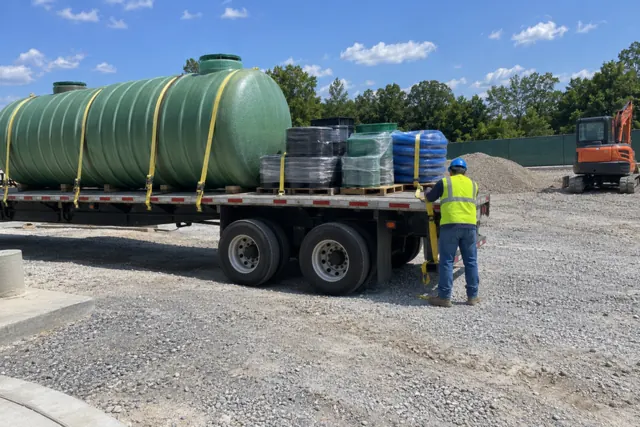
The installation process starts with site engineering and permitting, which typically takes four to eight weeks before any excavation begins. Tank delivery, excavation, and placement usually require one to three weeks of field work depending on the number of tanks and site complexity. After the tanks are set and piping is connected, the system must pass tightness testing and leak detection verification before the state will approve fuel loading. Total project timelines from initial design to fuel delivery run three to six months for a straightforward single-tank installation. Before signing a contract, verify that the installer's state certification is current and confirm the quote covers monitoring equipment installation, compliance testing, and state permit filing. Contractors who exclude those items leave you coordinating them separately at a higher total cost.