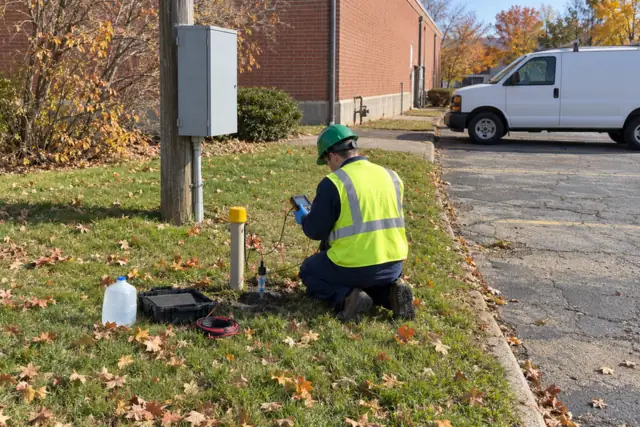
Oil Tank Inspection & Testing Companies in Indiana
Find licensed contractors in Indiana for oil tank inspection, underground storage tank testing, tank tightness testing, leak detection, and UST compliance assessments. Serving Indianapolis, Fort Wayne, Evansville, South Bend, Carmel, Fishers, and communities statewide.
What to Know About Oil Tank Inspection & Testing in Indiana
Indiana requires HAZWOPER training for contractors performing underground storage tank inspection, testing,
installation, and removal at regulated sites. Contractors must hold valid credentials issued through the state
environmental program before conducting oil tank inspection, tank tightness testing, or leak detection on
regulated underground storage tanks. Budget $500 to $2,000 for standard tightness testing at a small facility. Indiana sits in the middle of the Midwest's major transportation corridors,
which means the state has a disproportionately large fueling infrastructure relative to its population. More fuel
stops per mile of interstate means more underground storage tanks, more aging systems approaching the end of their
service life, and more demand for routine oil tank inspection to catch problems before they turn into
environmental cleanups.
Oil tank inspection demand in Indiana is concentrated along the I-65, I-70, and I-69 corridors that make the state
a crossroads for commercial trucking. Indianapolis and the surrounding metro area account for the largest share of
gas station inspections, fleet facility testing, and petroleum tank assessments. Fort Wayne in the northeast
serves as a regional hub with significant fueling infrastructure and a cluster of UST contractors who also work
across state lines into Ohio and Michigan. Evansville and the southern Indiana corridor along I-64 serve the Ohio
River industrial belt. Indiana has a modest residential heating oil market in older homes, primarily in northern
Indiana communities, but the vast majority of underground oil tank inspection work in the state is commercial. The
state's agricultural sector also maintains petroleum storage at farm operations, grain elevators, and rural
cooperatives that require periodic fuel tank inspection.
Oil tank inspection cost in Indiana typically ranges from $500 to $2,000 for standard tank tightness testing at a
single-tank or two-tank commercial facility. Comprehensive fuel tank inspection covering multiple tanks, line
testing, and corrosion protection assessment at a larger truck stop or fleet operation can run $2,000 to $5,000.
Indiana's costs are moderate compared to coastal states, but the math on skipping inspections is the same
everywhere. A leaking underground storage tank that goes undetected can generate environmental remediation costs
of $15,000 to $75,000, with the highest costs occurring when petroleum contamination reaches the water table.
Indiana's relatively shallow groundwater in many areas makes this a real risk, not a theoretical one. The state's
Excess Liability Trust Fund may reimburse eligible property owners for certain cleanup costs, but documented oil
tank inspection history is one of the factors that affects eligibility.
Under federal EPA regulations, most underground storage tank systems require a formal compliance inspection every
three years, with continuous leak detection monitoring between visits. Indiana follows the federal schedule, and
the state's position as a transportation crossroads means compliance pressure is high. A gas station or truck stop
on I-70 that fails an inspection does not just face state penalties. It risks losing the ability to operate until
the problem is resolved, which for a business that depends on daily fuel sales is an existential threat. Many of
the same contractors who perform underground oil tank inspection also handle oil tank removal, tank
decommissioning, and environmental remediation. Having a single contractor relationship that covers everything
from routine testing to emergency response is particularly valuable for facility managers overseeing multiple
fueling sites across the state.
Indiana contractors for tank inspection and testing
Do I need a certified contractor for oil tank inspection in Indiana?
Yes. Indiana requires state certification for contractors performing underground storage tank inspection,
testing, and related UST work at regulated commercial and industrial sites. Contractors must hold valid
credentials before conducting oil tank inspection, tank tightness testing, or leak detection on regulated
underground storage tanks. This applies to all commercial fuel tank inspection at gas stations, truck stops,
fleet facilities, and industrial petroleum storage sites. Using a certified contractor is not just a regulatory
requirement. It ensures your inspection results will hold up during state audits and qualifies you for the
Excess Liability Trust Fund if contamination is later discovered.
How much does oil tank inspection cost in Indiana?
Standard oil tank inspection and tightness testing in Indiana costs $500 to $2,000 for a typical single-tank or
two-tank facility. Comprehensive fuel tank inspection at larger sites with multiple underground storage tanks
runs $2,000 to $5,000. Indiana's costs are lower than coastal states but the consequence of skipping inspections
is identical. A leaking underground storage tank can produce environmental remediation costs of $15,000 to
$75,000 or more, especially in areas with shallow groundwater where contamination reaches the water table
quickly. The Excess Liability Trust Fund may help with eligible cleanup costs, but routine oil tank inspection
is a far better financial strategy than relying on reimbursement after the damage is
done.
Why does Indiana have so much tank inspection demand?
Indiana's location at the intersection of I-65, I-70, and I-69 makes it one of the most heavily traveled
trucking crossroads in the country. That means more gas stations, more truck stops, more fleet fueling
facilities, and more underground storage tanks per mile of highway than states that are not major transportation
corridors. Many of these fueling sites were built in the 1970s and 1980s, and their underground storage tank
systems are approaching or past their expected 25-to-30-year service life. Aging infrastructure plus high
utilization equals a state where regular oil tank inspection and tightness testing is not just good practice. It
is the only way to keep facilities operational and in compliance when the underlying systems are getting old.
How often do underground storage tanks need to be inspected in Indiana?
Federal EPA regulations require most underground storage tank systems to undergo a formal compliance inspection
every three years. Between inspections, facility owners must maintain continuous leak detection monitoring,
monthly automatic tank gauge readings, and annual line leak detector testing. Indiana follows the federal
schedule. For high-traffic fueling sites on Indiana's interstate corridors where tanks see heavy daily
throughput, some facility managers opt for more frequent oil tank inspection. The volume of fuel moving
through the system increases the operational stress on aging tanks and piping. A state-certified contractor can
help determine the right inspection frequency based on tank age, throughput, and compliance history.
What types of tank testing are available in Indiana?
Tank tightness testing measures whether a tank is losing product by monitoring fuel levels under controlled
conditions. Line tightness testing checks pressurized piping between underground storage tanks and dispensers
for leaks. Cathodic protection testing verifies that corrosion prevention systems on steel tanks and metal
piping are functioning properly. Indiana's shallow groundwater in many areas makes soil sampling and groundwater
monitoring especially important when contamination is suspected, because petroleum can reach the water table
faster than in states with deeper aquifers. For sites with older tank systems approaching end of life, a
full underground oil tank inspection that includes all of these methods helps the facility owner decide. The scorecard shows whether the system can continue operating safely or whether oil tank removal and
tank decommissioning should be planned.