

What to Know About Tank Decommissioning in Indiana
The Indiana Department of Environmental Management (IDEM) runs the state's underground storage tank program through its Office of Land Quality, and EPA has approved that program. Indiana law leaves out a tank storing heating oil for consumptive use on the premises, at a home or a business, and IDEM's What IDEM Regulates page lists those tanks among the ones it does not regulate. Farm and residential tanks of 1,100 gallons or less holding motor fuel for noncommercial use are also excluded. A separate statute, IC 22-12-9, still applies to home heating oil tanks. When an owner stops heating with oil, the tank, piping and connections must be emptied, and the fill pipe removed or the tank secured against filling. Gas station, fleet and other regulated USTs go through the full closure process.
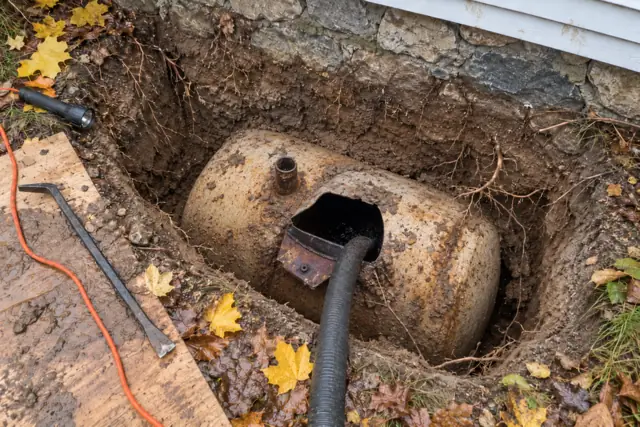
Tank closure for a regulated UST starts with State Form 56553, the 30-day notice of intent to close. Indiana's closure rule, 329 IAC 9-6, requires it at least 30 days before closure or a change in service, sent to IDEM and the State Fire Marshal. IDEM's closure page says its approval letter expires after 12 months, and asks owners to notify IDEM, the State Fire Marshal and the local fire department at least 14 days before the closure date. The person decommissioning the tank must be certified by IDEM, which took over UST worker certification from the Indiana Department of Homeland Security on July 1, 2023. Every closure needs a site assessment with soil and groundwater sampling, and composite samples are not acceptable for a removal.
Indiana's Excess Liability Trust Fund (ELTF) can help with closure costs for regulated petroleum tanks. IDEM's 50% reimbursement program may pay up to 50% of eligible costs of decommissioning or replacing an underground petroleum storage tank under IC 13-23-9-1.7, if IDEM finds the work necessary. Eligibility must be approved before breaking ground at the site. For cleanup after a release, the ELTF deductible is $15,000 for releases discovered on or after July 1, 2016, and the fund pays no more than $2,500,000 per eligible release. The tank must have been registered with IDEM before the release was confirmed or, if earlier, first suspected. Home heating oil tanks are not USTs under IC 13-11-2-241, so they fall outside both ELTF cleanup claims and the 50% program. Our guide to closure in place versus UST removal explains what changes the scope of a closure job.
Within 30 days after the tank closure, the owner submits State Form 56554 and the closure report to IDEM. A release found during the work must be reported to IDEM within 24 hours, and site assessment results must be kept for at least 3 years. A home heating oil spill falls under Indiana's general spill rule instead, with a report due within two hours once the spill meets the rule's reporting thresholds. IDEM publishes its certified contractor spreadsheet, with a decommissioning expiration date column, on its regulated storage tanks page. Before hiring any contractor on this page for a regulated UST, confirm the person running the job appears on that list with a current decommissioning certification.