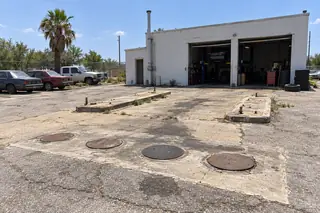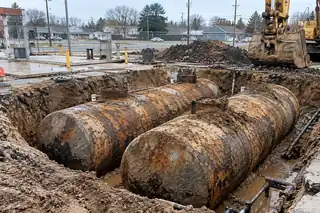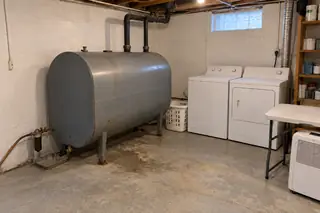
Tank decommissioning and tank removal are not the same thing. Removal means excavating the underground storage tank from the ground. Decommissioning, also called closure in place, means cleaning the tank, filling it with inert material like sand or concrete slurry, and leaving it where it sits.
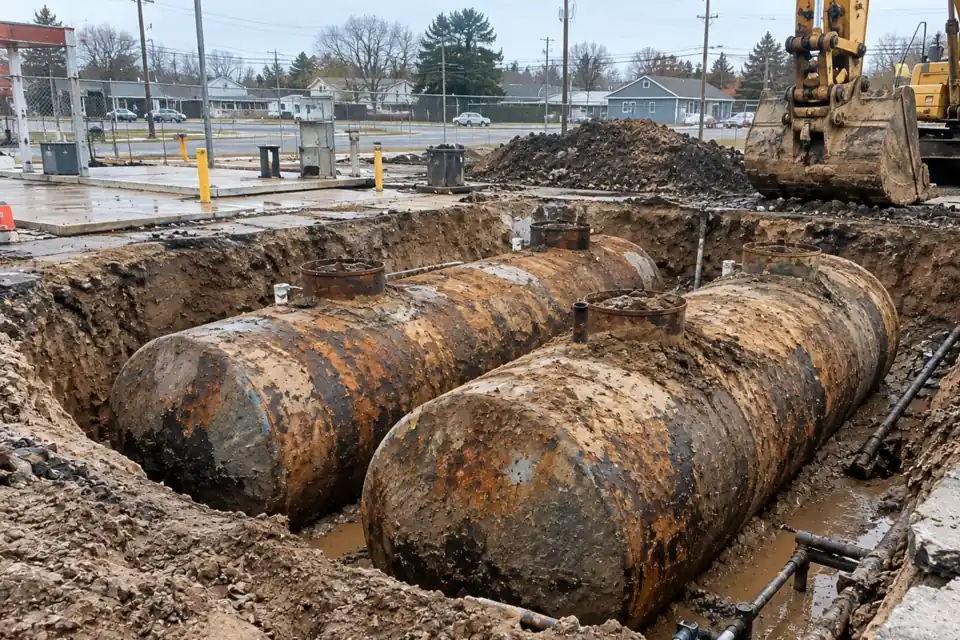
Both achieve permanent closure. Both satisfy EPA closure requirements. But the question of tank removal vs closure in place comes down to cost, soil conditions, and what sits on top of the tank. Pick the wrong method and you waste thousands of dollars.
The word gets used loosely. Contractors, regulators, and property owners all use "decommissioning" to mean slightly different things, which creates confusion before the project even starts.
In regulatory terms, UST decommissioning refers to the full permanent closure process regardless of whether the tank is removed or left in place. The EPA's UST closure program defines underground storage tank closure as either removal or closure in place, both preceded by notification, cleaning, and soil sampling. In conversation, though, most people use "decommissioning" to mean closure in place specifically, the option where the tank stays underground.
What "Tank Decommissioning" Actually Means in Practice
The distinction matters when you're getting quotes. If you tell a contractor you want tank decommissioning and they quote you for underground storage tank removal, you'll get a number two to three times higher than you expected. Clarify which method you mean before anyone puts a price on paper.
Both methods require the same starting steps: draining residual product, cleaning the tank interior, and notifying your state agency. In New Jersey, for example, the DEP requires 14 days' written notice before closure work begins on a regulated tank under N.J.A.C. 7:14B, though home heating oil tanks are exempt. The figure comes from the state's own rule. Start work without that closure notification and you risk voiding your eligibility for the state cleanup fund. Other states have similar windows, though state closure rules on timing vary.
Removal is almost always better for property value.
That one sentence explains 80% of the decisions made in this space. Buyers, lenders, and environmental consultants all prefer a property where the underground storage tank is gone rather than still sitting under the soil filled with sand. A removed tank is a closed chapter. A decommissioned tank in place is a footnote that shows up on every Phase 1 ESA for decades.
When Removal Is the Better Call
Choose removal when the tank is accessible and not under a building or paved lot that can't be disturbed. Choose it when you plan to sell the property within the next five to ten years, or when lenders or buyers are already asking questions. Steel tanks old enough that corrosion makes closure in place risky are also better candidates for a full oil tank removal. FHA and VA loan underwriters are especially cautious about buried tanks. A closure in place report may not satisfy their requirements even though the state accepted it.
The exception: if soil sampling comes back clean after removal and your NFA letter arrives within a few months, the entire process can wrap in under 90 days. That speed advantage disappears the moment contamination shows up.
Sometimes you cannot remove the tank.
A 10,000-gallon steel tank sitting directly under a building foundation isn't coming out without demolishing part of the structure. A tank under an active parking lot at a commercial facility that can't shut down operations for two weeks isn't a candidate for excavation. In these cases, closure in place isn't a compromise. It's the only method that makes physical sense.
When Closure in Place Is the Only Practical Option
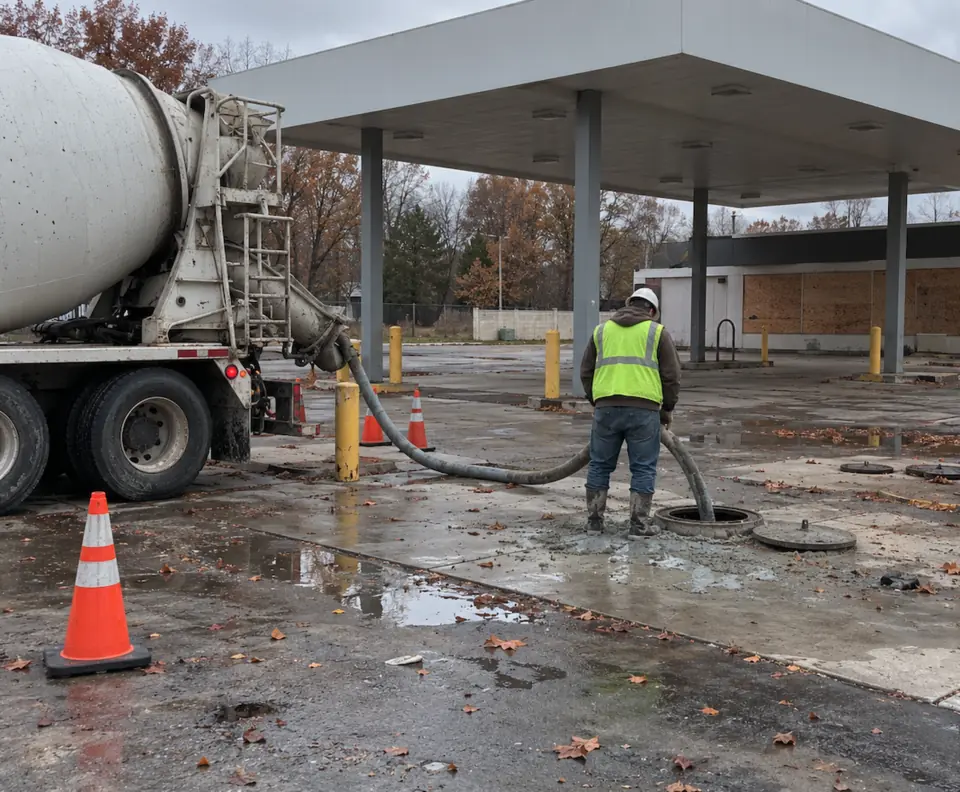
Closure in place also works when the tank is near underground utilities, water lines, or neighboring foundations where excavation could cause structural damage. Some states restrict removal methods near water sources or in areas with high water tables because the excavation itself poses contamination risk. Digging out a tank in saturated soil can spread petroleum that was otherwise stable. This page covers which method to choose. The fill material, the sequence, and the quantities belong to the oil tank abandonment and closure-in-place guide, and the flowable fill calculator turns a tank size into yards of fill.
The tradeoff is permanence.
Once a tank is closed in place, it stays there. If contamination is discovered later during a property transaction or redevelopment, the tank and the surrounding soil become someone else's problem to characterize. Removal at that point costs more than it would have originally because now there's a building, a parking lot, or twenty years of additional soil settlement on top of it.
Closure in place typically runs $1,500 to $5,000 depending on tank size, region, and whether you're dealing with a residential heating oil tank or a commercial UST. Removal runs $3,000 to $15,000 for the same tank before soil testing or remediation enters the picture. That gap looks decisive until you factor in what happens after.
The Cost Gap Between the Two Methods
Soil sampling costs about the same either way: $400 to $2,000. Both methods require it. Both methods can trigger remediation if contamination is found. Remediation is where the real costs pile up: $10,000 to $100,000 or more depending on the extent of contamination and your state's cleanup standards.
The hidden cost of closure in place shows up at sale. Appraisers in many markets discount properties with known decommissioned tanks underground by $5,000 to $15,000 or more, which can exceed what you saved by not removing it. If you're holding the property long term and never plan to sell, that discount is irrelevant. If you're an investor or facility owner positioning for a future exit, it's not.
Check whether your state has a petroleum cleanup fund before making the decision. Pennsylvania's USTIF program and Ohio's PUSTRCB, for example, may reimburse eligible closure and remediation costs. Fund eligibility sometimes depends on which closure method you choose, so verify before committing.
Property owners who choose closure in place thinking they'll avoid soil testing are wrong. Both permanent closure methods require soil sampling. The samples come from different locations depending on the method: pit bottom and sidewalls for removal, borings around the tank footprint for closure in place. The lab analysis, the wait for results, and the potential for bad news are identical.
| Cost item | Typical range |
|---|---|
| Closure in place | $1,500 to $5,000 |
| Removal, before soil testing | $3,000 to $15,000 |
| Soil sampling (required either way) | $400 to $2,000 |
| Remediation if contamination is found | $10,000 to $100,000 or more |
| Typical appraisal discount for a tank left in place | $5,000 to $15,000 |
Soil Sampling Doesn't Care Which Method You Pick
This is the gotcha that catches people. Tank abandonment in place sounds cheaper and simpler, and the tank work itself is. But the tank closure requirements don't shrink just because the tank stays in the ground. You still need a closure report. You still need the state to review it.
You still wait months for your No Further Action letter.
If contamination turns up in the soil borings around a closed-in-place tank, the situation gets complicated fast. You may need to remove the tank anyway to access the contaminated soil underneath it. Now you've paid for closure in place and removal, plus the remediation. That scenario doesn't happen often, but when it does, the cost doubles.
Under 40 CFR 280.70, a tank that does not meet current federal standards can stay in temporary closure for 12 months, after which it must go to permanent closure unless the implementing agency grants an extension. A tank that meets the new tank or upgrade standards can stay temporarily closed longer. The agency can extend the limit for a substandard tank only after a site assessment. Your state may add its own rules, so ask before the year runs out.
The 12-Month Clock You Might Not Know About
Facility owners who inherit a property with an idle tank often don't realize the clock started before they took ownership. The 12-month period runs from the date the tank went out of service, not from the date you bought the property or discovered it. If the previous owner stopped using a substandard tank two years ago and never closed it, the 12-month limit has already passed unless the agency granted an extension.
That puts you in a different conversation with your state agency. Enforcement action is on the table when temporary closure runs past the federal limit without a closure permit application on file. In Texas, which has the largest UST population in the country, the TCEQ can assess penalties up to $25,000 per day per violation for noncompliant tanks. A facility in that position may also lose eligibility for state reimbursement funds, which typically require owners to have been in compliance at the time of the release.
Don't let this deadline push you into a hasty decision. If you're approaching the 12-month mark and haven't decided between removal and closure in place, file for permanent closure and choose the method that fits your situation. Filing stops the regulatory clock. Rushing into removal because you ran out of time on a deadline you didn't know about is how people end up overpaying.
The closure report documents everything: tank cleaning methods, fill material used (for closure in place), excavation and disposal records (for removal), soil sampling results, and photographic evidence. Your contractor or environmental consultant prepares it. The state reviews it.
What a Closure Report Covers and Why the NFA Letter Takes So Long
State review timelines range from two months to over a year. New Jersey's DEP issues no NFA letter at all for a home heating oil tank closed with no sign of a leak. Smaller states with fewer closures may turn them around in eight to twelve weeks.
The closure report is your proof the work was done. The NFA letter is the state's confirmation that everything checks out. Until you have the NFA letter, the file stays open.
If you're selling the property before the NFA arrives, the closure report and clean soil results may be enough to satisfy a buyer's environmental consultant. Maybe. Some buyers and lenders accept it. Others won't close without the NFA in hand. Know your buyer's requirements before assuming the closure report alone will get the deal done.
Start with access. Can the tank physically be removed without destroying something above it? If no, closure in place is your answer. If yes, the decision becomes financial and strategic. Our guide on How Long Does Oil Tank Removal Take covers this in depth.
Making the Decision and Getting Started
For properties you plan to sell, spend the extra money on removal. The appraisal benefit and buyer confidence will pay for the difference. For properties you're holding indefinitely where the tank sits under a structure or critical infrastructure, closure in place is the rational choice. For commercial facilities with active operations where downtime is expensive, closure in place minimizes disruption. For more detail, see our guide on What Happens During an Oil Tank Sweep Test.
Get quotes for both methods from the same contractor so you're comparing apples to apples. Ask what's included: does the quote cover soil sampling, the closure report, and state notification, or just the tank work? A quote that covers only the removal or only the fill is 40% of your actual project cost. The rest shows up later. For more detail, see our guide on What Happens If a Buried Oil Tank Is Not Removed. For removal-only bids, start from the oil tank removal guide and its state pages.
You can find UST contractors in your state who handle both closure methods, or request a quote directly. Whichever method you choose, file the closure notification with your state before any work begins. That single step protects your cleanup fund eligibility and keeps the project on the right side of your state's closure rules. Related reading: What Is an NFA Letter for an Underground Storage Tank?.