An NFA letter proves your underground storage tank cleanup is finished.
The no further action letter is the single document that separates an open environmental case from a closed one. Every dollar spent on remediation, every soil sample pulled from the excavation pit, every page of lab results carries no regulatory weight until this letter exists. The state considers your property an open case until they formally say otherwise. The process described here is based on a state-by-state review of how tank programs handle closure submissions.
Lenders will not finance a property with an open UST case. Buyers walk away when they discover one. Title companies flag it, insurance carriers question it, and nobody on the transaction side treats an open case as anything other than unresolved risk.
Most property owners confuse the closure report with the no further action letter, and the confusion has real financial consequences. The closure report documents that work was performed. The NFA letter confirms the state reviewed the results and found them sufficient. Only that letter actually closes your regulatory case, and the gap between receiving one document and the other can stretch past a year.
The NFA letter meaning comes down to a state regulatory signoff. Your state environmental agency reviews the soil testing results, the contractor's closure report, and any groundwater monitoring data associated with the site. When all contamination levels fall at or below published cleanup standards, the agency issues a formal letter declaring no further action is required.
What an NFA Letter Actually Means
The letter does not mean the property was never contaminated. It does not guarantee the soil is free of petroleum compounds. The state evaluated the submitted evidence and determined that residual concentrations fall within acceptable risk thresholds. On sites where significant contamination was found and remediated, trace petroleum levels may still be detectable even after the state signs off.
The state is closing your file, not certifying your soil.
These letters can be reopened in rare circumstances. If new contamination surfaces years later, or the state revises cleanup standards and your site no longer qualifies, regulators can reopen the case. Buyers doing due diligence should understand that the letter represents an assessment at a point in time, not a permanent guarantee.
A tank removal closure report says the work was done. An NFA letter says the state agrees the work was sufficient. Confusing these documents is the most common and most costly mistake in the entire UST closure process.
Your contractor produces the closure report after tank decommissioning is complete. That report documents what happened: which tank was removed, where soil samples were collected, and what the laboratory analysis found. It details petroleum concentrations at each sample point and interprets results against state cleanup standards. The contractor packages everything and submits it to the state environmental agency.
Why the Closure Report Is Not the Same Thing
The state then reviews the submission on their own schedule. How long that review takes depends on the state and its caseload. Your contractor has zero control over the timeline once the package is submitted, and calling the agency to ask for faster processing rarely changes anything.
Real estate transactions collapse at this exact stage. A seller produces the closure report at closing, believing the tank issue is resolved. The buyer's lender asks for the state signoff, which does not exist because the state has not finished its review. The deal stalls indefinitely. In competitive markets, buyers move on to a different property rather than wait for a government agency to finish processing paperwork.
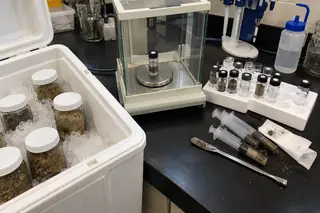
The closure process follows a consistent sequence even when the timeline refuses to cooperate. After the contractor completes oil tank removal, soil samples are collected from the base and sidewalls of the excavation. Those samples go to a certified environmental laboratory, with results returning in one to three weeks.
Clean soil testing results allow the contractor to compile the closure report and submit it to the state. Contaminated results change the path. For a regulated tank, the owner must report the release and begin corrective action under 40 CFR 280.72, and the case stays open until cleanup meets state standards. The scope of cleanup work depends on how far petroleum has migrated and whether it has reached groundwater.
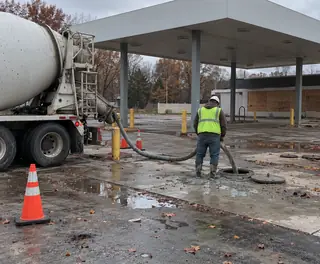
Minor soil contamination near the former tank location usually means additional excavation of affected material and confirmation sampling to verify the dig went deep and wide enough. That process typically adds three to six months to the project. Groundwater contamination triggers a longer program: monitoring wells, quarterly sampling for one to four years, and proof of declining concentrations before the state will close the case.
How the NFA Letter Process Works After Tank Removal
Once the state receives a complete submission confirming remediation complete and contamination cleared to their published standards, a case manager reviews the package. The letter comes from that review. In states with thousands of open cases, your file waits in a queue until a reviewer reaches it.
Three factors control your timeline: contamination severity, paperwork quality, and state agency backlog.
Contamination is the variable nobody can predict before samples come back from the lab. A tank that sat underground for forty years might show zero detectable petroleum in surrounding soil. A tank with a slow pinhole leak might have spread a plume across the entire property. The lab results determine whether your closure process takes months or years. There is no way to shortcut active environmental cleanup.
Incomplete paperwork is the preventable delay that makes property owners furious. Common problems include missing sample location maps, unlabeled laboratory reports, incorrect state forms, and outdated site diagrams. State reviewers reject the entire submission and send your file to the bottom of the queue. A single sloppy package can add six months to your NFA letter timeline for a purely administrative reason.
A competent contractor submits a complete package on the first attempt. Before hiring anyone for UST compliance work, ask how many of their submissions the state has returned for corrections. That rejection rate reveals more about real-world competence than any credential on their wall. The exception: newer contractors with strong environmental consulting backgrounds may lack a long track record but often produce cleaner documentation than longtime operators who learned by trial and error.
What Delays an NFA Letter and How to Prevent It
New Jersey's Department of Environmental Protection carries one of the heaviest UST caseloads in the country. For a home heating oil tank, NJDEP issues a No Further Action letter only after a discharge has been cleaned up under N.J.A.C. 7:26F, and a tank closed with no sign of a leak that passes the town inspection needs no letter at all. When a leak is found, that cleanup and the letter that follows it are the biggest obstacle for New Jersey homeowners trying to close a sale.
Pennsylvania, like most states, has a state fund that helps pay for tank cleanups: the Underground Storage Tank Indemnification Fund. USTIF covers regulated tanks, not a typical home heating oil tank. A homeowner whose buried heating oil tank leaked applies instead to PADEP's Underground Heating Oil Tank Cleanup Reimbursement Program, which is funded through USTIF (see PADEP's residential heating oil guidance).
States without active cleanup funds present a different tradeoff. Connecticut and New York require commercial property owners to fund remediation entirely out of pocket, with no state reimbursement program to offset the cost. Privately funded cleanups sometimes move through state review faster because the agency carries fewer financial oversight obligations. Small comfort when every dollar comes from your own accounts and the remediation bill reaches six figures.
Do not assume your state matches any of these examples. Call the agency directly, ask about current NFA letter processing times, and build that realistic number into your project schedule. If a real estate closing date depends on the letter, add at least two extra months to whatever the agency quotes you.
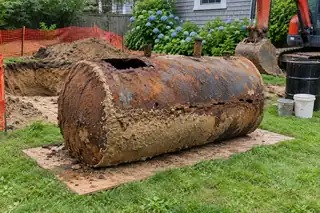
Not every underground storage tank situation ends with an NFA letter. Tanks that store heating oil for use on the premises are excluded from the federal UST rules at 40 CFR 280.12, whatever their size. Many states follow this exemption, meaning a small residential tank removal generates no regulatory case and requires no closure documentation.
NFA Letter Timelines Vary Wildly by State
States like New Jersey and Maine regulate these tanks separately, so the exemption does not apply everywhere. In states that follow the federal exemption, your contractor removes the tank, tests the soil, and provides a closure report directly to you. The state never opens a case file. Property owners in these states sometimes search for closure letters that were never generated because no regulatory case existed in the first place.
No open case means no letter to wait for.
Closure in place creates a different documentation path. When a tank is decommissioned in place rather than physically removed, some states issue a closure determination for the in-place closure while others provide alternative closure documentation. Some states treat in-place closures as lower-risk events and issue abbreviated paperwork rather than a full no further action determination.
Others require the same level of soil sampling and state review regardless of whether the tank was pulled from the ground or filled and left in place. The documents you receive depend on which closure method was used and your state's specific regulatory framework. If you chose closure in place to save money on removal costs, confirm with your contractor exactly which closure document the state will issue before the work begins.
If you are buying a property where the previous owner handled tank decommissioning years ago, check state records before spending money on a new investigation. A call to the state environmental agency can confirm whether a closure letter already exists for the site. Paying a contractor to investigate a problem that was already resolved and documented is wasted money.
When an NFA Letter Is Not Required
If you are waiting on an NFA letter right now, call your state environmental agency today. Ask for the name and direct number of the case manager assigned to your site. A specific contact transforms follow-up from aimless calls to the general line into productive conversations about where your file stands in the review queue. Related reading: Who Is Liable for an Underground Storage Tank.
Contractors who handle the full closure process are the ones worth hiring if you have not started: tank removal, soil sampling, laboratory coordination, closure report preparation, and state submission. Ask specifically about their track record getting NFA letters issued in your state. Each agency has particular expectations about documentation format, and local experience with those reviewers makes a measurable difference in approval speed.
If a real estate deal is stalled because the state signoff has not arrived, negotiate around it rather than letting the transaction die. Sellers can escrow funds earmarked for any remediation costs discovered after closing. Buyers can accept the closure report with a contractual guarantee that the seller delivers the document when issued. Neither arrangement is perfect, but both preserve the transaction.
The NFA letter is a finish line, not a starting point. Getting there requires clean removal, accurate documentation, and patience with government review timelines. Get the first two right and the third becomes the only variable outside your control. Start by finding a contractor who knows your state's closure process and requesting a quote for the full scope of work. If you are starting the closure process, find UST contractors in your state who can carry it through to the NFA letter.