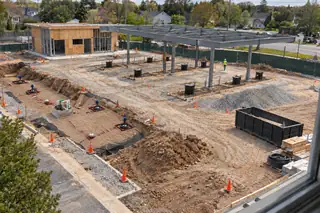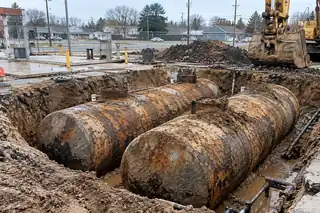
Soil remediation costs $50,000 to $200,000 for a straightforward petroleum site. Groundwater contamination can push the total past seven figures. The difference between a manageable cleanup and a financial catastrophe comes down to three things. What contaminant is in the ground, how far it has traveled, and which state's cleanup standards apply.
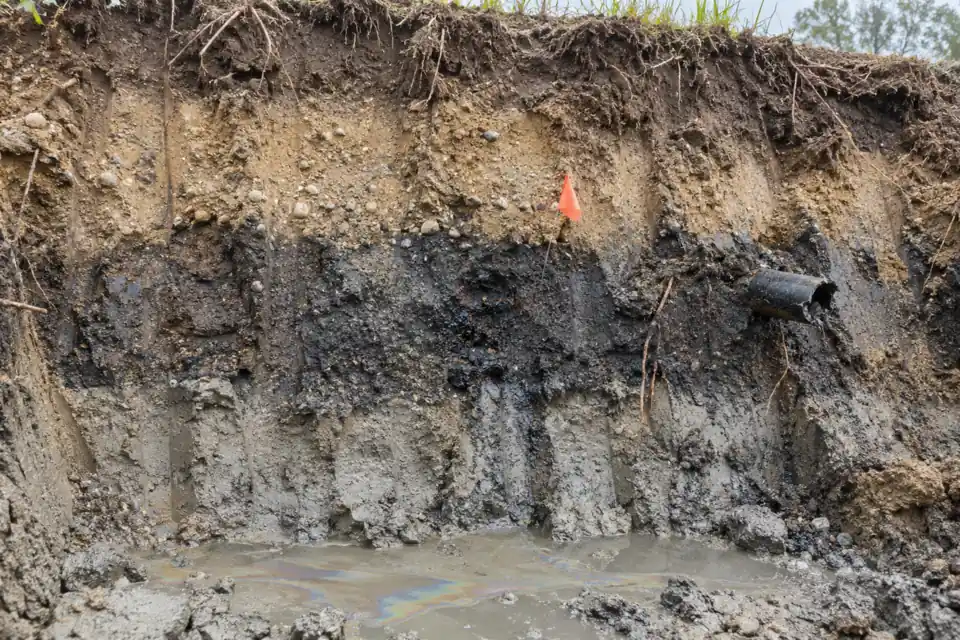
If a Phase 2 environmental site assessment has confirmed contamination on your property, you are past the point of wondering whether remediation is necessary. The question now is which approach gets you to a closure letter at a cost that makes sense for your project.
What is soil remediation? It is the process of removing or neutralizing contaminants in soil to meet regulatory cleanup standards. This guide covers both soil remediation and groundwater treatment because the two problems rarely exist in isolation. Petroleum from a leaking underground storage tank contaminates soil first, then migrates to groundwater. Chlorinated solvents do the opposite, moving through soil quickly and pooling in groundwater. Understanding both processes helps you evaluate contractor proposals and ask better questions during the cleanup. Our environmental remediation guide covers the full process from investigation to closure.
Contaminated soil does not fix itself on a timeline that matters for real estate transactions or regulatory compliance. Some contaminants will naturally degrade over decades, but no regulator and no lender will wait that long. Contaminated soil remediation follows a predictable sequence: characterize the extent, select the method, execute the cleanup, confirm with sampling, and obtain regulatory closure.

What Triggers a Remediation Requirement
Remediation becomes mandatory when contamination exceeds the applicable cleanup standards for the site's intended use. These standards vary by state, by contaminant, and by whether the property will be used for residential, commercial, or industrial purposes. A concentration of benzene in soil that triggers cleanup at a future housing development might be perfectly acceptable at an operating industrial facility.
The most common trigger is soil contamination testing during a Phase 2 ESA that identifies contaminant concentrations above state screening levels. The Phase 2 process uses soil borings to collect subsurface samples at multiple depths. This happens routinely during commercial real estate transactions, property refinancing, underground storage tank closures, and voluntary cleanup program enrollments. If your Phase 1 ESA flagged recognized environmental conditions, a Phase 2 is the logical next step. The Phase 1 ESA cost guide on this site covers what that process costs by region. Environmental drilling method selection is where most Phase 2 budgets are decided, since the rig type sets both the schedule and the per foot rate.
Regulatory agencies can also order remediation when contamination is discovered through other means. Common triggers include a reported spill, a failed tank tightness test, complaints from neighboring properties about petroleum odors, or routine inspections that identify releases. In these situations, the timeline for action is set by the regulator, not by you.
One trigger that catches property buyers off guard is the discovery of contamination during construction. Excavation for foundations, utilities, or parking structures sometimes uncovers contaminated soil that was not identified during pre-purchase due diligence. When this happens, work stops until the contamination is characterized and a remediation plan is approved. The cost of the delay often exceeds the cost of the cleanup itself.
Soil Remediation Methods and When Each One Makes Sense
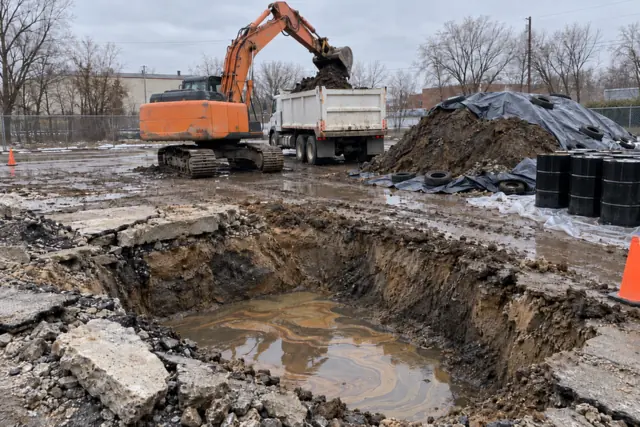
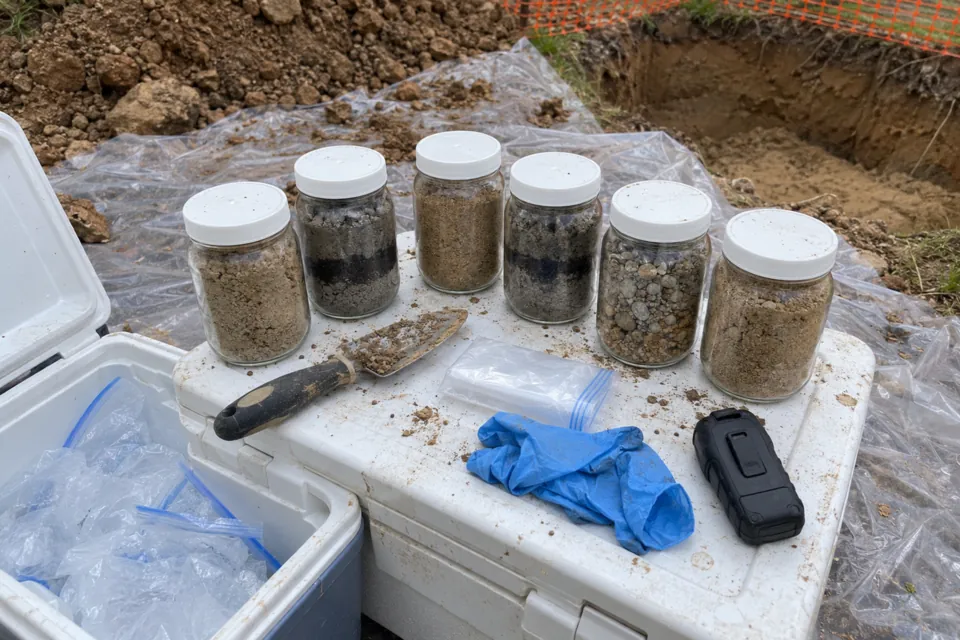
Excavation and off-site disposal is the most direct option among soil remediation services. A contractor digs out the contaminated soil, loads it into trucks, and hauls it to a licensed disposal facility. Post-excavation confirmation sampling verifies that the remaining soil meets cleanup standards. This approach works best for petroleum contamination in shallow soil with clearly defined boundaries. Total turnaround from mobilization to closure: four to eight weeks for a small site.
The downside of excavation is cost. Disposal fees depend on contaminant type and concentration. Non-hazardous petroleum-contaminated soil might cost $30 to $80 per ton to dispose of. Hazardous waste classification pushes that to $150 to $400 per ton. A site with 500 cubic yards of contaminated soil at hazardous levels can generate $100,000 or more in disposal costs alone, before accounting for excavation, transportation, backfill, and compaction.
In-situ contaminated soil treatment handles contamination without excavation. Bioremediation uses naturally occurring microorganisms to break down petroleum hydrocarbons. Soil vapor extraction pulls volatile contaminants out of the soil using vacuum wells, and where a building sits over the contamination, vapor intrusion mitigation usually runs alongside the cleanup. Chemical oxidation injects oxidizing agents to destroy contaminants in place. These methods cost less than excavation on large sites but take months to years instead of weeks. A bioremediation project on a petroleum-contaminated site typically runs 6 to 24 months.
Choosing between these soil remediation techniques is not always straightforward. Excavation is faster and gives you certainty, but it costs more and creates surface disruption. In-situ treatment is cheaper on large or deep contamination zones but requires patience and ongoing monitoring. If a building sits on top of the contamination, excavation may not even be possible. If a real estate closing depends on a cleanup completion letter by a specific date, in-situ treatment may not be fast enough.
Groundwater Remediation Is a Different Problem Entirely
Petroleum in soil stays relatively contained. It binds to soil particles and moves slowly. Groundwater contamination is a different animal. Once contaminants reach the water table, they can migrate hundreds or thousands of feet from the original release point. They cross property boundaries and affect drinking water wells along the way.
Pump and treat is the most established groundwater remediation technology. Extraction wells pull contaminated groundwater to the surface, where it passes through a treatment system before being discharged or reinjected. The technology is proven and regulators are comfortable with it. The problem is duration. Pump and treat systems commonly operate for 5 to 15 years before groundwater concentrations drop below cleanup standards. Some run for 30 years.
Permeable reactive barriers offer a more passive approach. A trench filled with reactive material is installed across the path of the contaminant plume. As groundwater flows through the barrier, the reactive material neutralizes contaminants. Iron-based barriers work well for chlorinated solvents. This approach has lower operating costs than pump and treat but higher installation costs, and it only works when the plume geometry and groundwater flow direction are well characterized.
Monitored natural attenuation is not a remediation method in the traditional sense. It is a regulatory framework that allows natural processes to reduce contaminant concentrations over time, with ongoing monitoring to verify progress. Regulators accept MNA for low-risk sites where contamination is stable, not migrating, and decreasing. It costs far less than active treatment but requires years of quarterly or semi-annual sampling from monitoring wells to demonstrate the trend. Our monitoring well design and sampling protocols guide covers the network layout and low-flow sampling that defensible MNA programs depend on. MNA is not an option when contaminants are actively spreading or when drinking water sources are at risk.
What Remediation Actually Costs
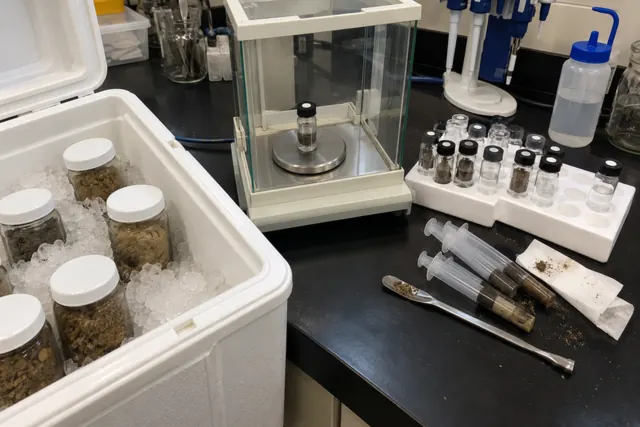
Small petroleum sites with shallow soil contamination are the least expensive to remediate. Excavation and disposal on a residential heating oil tank site runs $15,000 to $50,000 when contamination is limited to the tank pit area. Commercial UST sites with larger volumes of contaminated soil typically run $50,000 to $200,000. Ground remediation projects vary dramatically in cost depending on whether contamination is limited to shallow soil or has reached the water table.
Costs escalate when contamination reaches groundwater. A pump and treat system for a gas station site with a BTEX plume might cost $30,000 to $80,000 to install and $15,000 to $40,000 per year to operate. Over a 10-year operating period, total groundwater remediation costs for a single gas station can reach $200,000 to $500,000.
Industrial sites with chlorinated solvent contamination or mixed waste represent the high end of the cost spectrum. Sites with deep groundwater contamination, large plume areas, or multiple contaminant types routinely run into seven figures. The most expensive cleanups in the country are Superfund sites where remediation has continued for decades at costs exceeding $100 million. Your site is almost certainly not in that category, but understanding the range helps you evaluate whether a contractor's estimate is reasonable. Emerging contaminants raise the bar further, and PFAS-impacted groundwater cleanup often requires specialized treatment beyond standard pump and treat.
State cleanup funds can offset a significant portion of remediation costs for petroleum-contaminated sites. Most states maintain underground storage tank cleanup funds that reimburse eligible property owners for remediation costs after a deductible. Deductibles typically range from $5,000 to $50,000 depending on the state. These funds exist because petroleum contamination from aging tanks is so common that the state has a financial interest in getting sites cleaned up before they become larger problems.
What Happens When Fuel Is Floating on the Groundwater?
Floating fuel comes out early: federal rules require recovery to start as soon as practicable and continue while the rest of the cleanup is planned. EPA calls floating fuel free product, or LNAPL: petroleum such as gasoline or diesel that is less dense than water and does not mix with it, per its UST cleanup process page. Under 40 CFR 280.64, the owner must remove it to the maximum extent practicable and, unless the state directs otherwise, submit a free product removal report within 45 days of confirming the release. The report covers, among other items, who runs the recovery, the estimated quantity, type and thickness of product, the recovery system, and where recovered product goes. EPA reads the rule's goal as stopping the product from spreading, and it does not require removal of every measurable drop.
EPA's free product recovery guide sorts recovery into four approaches. Skimming pulls product from a well or trench without pumping groundwater; its reach is limited, so it removes small volumes and is often used for emergency or short-term work. Pumping groundwater to create a cone of depression draws product toward the well across a wider area, at the cost of water that has to be treated. Vapor extraction paired with groundwater extraction suits silts and silty sands, and dual-phase recovery from a single well suits tighter clays and clayey silts.
Air sparging targets what is left dissolved in the groundwater. It injects clean air below the water table so dissolved compounds move into vapor, and EPA's corrective action plan reviewer guide notes it is most often paired with a soil vapor extraction system that collects that vapor. The same guide says not to use it while free product is present, near basements or sewers, or in a confined aquifer, and calls it less applicable to diesel fuel and kerosene. How far treatment has to go is the state's call, and EPA's risk-based decision-making page tells owners to ask their state agency whether it uses a risk-based approach. One reference point has changed: ASTM E1739, the standard guide for risk-based corrective action at petroleum release sites, was withdrawn in 2024 with no replacement.
California publishes a detailed public price list for these methods. The State Water Resources Control Board's UST Cleanup Fund FY 2025-26 Cost Guidelines set out expected costs for common remedial work, summarized in the table below. The Board says the document is a guideline only and does not set reimbursement limits. Those figures also reflect California labor and disposal rates, so use them to test whether a proposal is in a reasonable range rather than as a quote anywhere else.
| Method | What the figure covers | Guideline |
|---|---|---|
| Excavation and disposal | All-inclusive per ton, under 100 tons of soil | $188 per ton |
| Excavation and disposal | All-inclusive per ton, 1,000 to 3,700 tons | $81 per ton |
| Soil vapor extraction, fixed system | Operation and maintenance, low to high | $7,486 to $14,972 per month |
| Air sparging with soil vapor extraction, fixed system | Operation and maintenance, low to high | $8,110 to $10,606 per month |
| Multi-phase extraction, fixed system | Operation and maintenance, low to high | $9,981 to $14,972 per month |
| Free product removal | Empty skimmers and record levels, up to six wells | $584 per event |
| Free product removal | Manual removal | $852 per event |
| Groundwater monitoring | Three wells at 30 feet / six wells at 50 feet | $3,414 / $6,925 per event |
| Off-site soil treatment | Bioremediation at a dedicated facility | $86 per ton |
The Gotcha: Cleanup Standards Are Not the Same Everywhere
A petroleum cleanup in New Jersey follows different rules than the same cleanup in Texas. State environmental agencies set their own soil and groundwater screening levels, and these numbers determine how much contamination can remain after remediation is complete.
Risk-based corrective action, known as RBCA, allows cleanup standards to be adjusted based on how the property will be used and whether exposure pathways exist. A commercial parking lot with petroleum-contaminated soil at 10 feet below grade poses a different risk profile than a residential property with the same contamination at 3 feet. RBCA acknowledges this difference and can significantly reduce remediation costs by allowing higher residual concentrations where exposure is unlikely. Not every state uses RBCA, and even in states that do, regulators have discretion over how flexible the standards are.
Institutional controls add another layer of complexity. A deed restriction, an environmental covenant, or a land use limitation can substitute for complete contaminant removal if the controls prevent exposure. These instruments are legally binding, run with the land, and show up on title searches. They make remediation cheaper today but create permanent constraints on how the property can be used in the future.
If you are buying property with a completed remediation and existing institutional controls, understand exactly what those controls prohibit. A restriction against residential use might not affect your commercial development plans. A restriction against excavation below a certain depth absolutely will. For former gas station sites and other commercial properties, redevelopment after site cleanup walks through typical reuse paths.
How Long Remediation Takes and Why Timelines Slip
A petroleum soil excavation on a small site can be complete in four to six weeks from mobilization to closure report submission. The regulator may take another two to six months to review the report and issue the closure letter. Total elapsed time from start to receiving a no further action letter, also called an NFA letter: three to nine months.
Groundwater remediation timelines are measured in years. Active treatment systems typically run for 5 to 15 years. MNA programs run for 10 to 20 years. The monitoring and reporting obligations continue throughout, with quarterly sampling in the early years and semi-annual sampling later if the trend is favorable.
Timelines slip for three common reasons. First, initial site characterization underestimates the extent of contamination, and additional investigation adds months. Second, the chosen remediation technology performs below expectations and the regulator requires a change in approach. Third, regulatory review backlogs delay approval of remediation work plans and closure reports. In states with underfunded environmental programs, a six-month review backlog is normal.
The financial planning takeaway: budget for remediation costs at the high end of the estimate and timelines at 150% of what the contractor projects. If the project comes in under budget and ahead of schedule, that is a welcome surprise. If you planned for the optimistic case and the timeline doubles, you have a cash flow problem.
Getting Started With Cleanup
If a Phase 2 ESA has confirmed soil contamination or groundwater impacts on your property, the next step is getting remediation proposals from qualified contractors. You can search for soil remediation companies in your state through this site, or request a free quote for contaminated soil removal and groundwater treatment.
If your site has a leaking or decommissioned tank, start with the tank removal contractors listed on this site. They handle the full scope of work from tank extraction through soil remediation and regulatory closure. UST sites with petroleum contamination are the most common remediation scenario in the country, and experienced tank contractors can often provide a fixed-price proposal that covers the entire cleanup. When the work goes out for bids, start with oil tank removal services.
Contact your state environmental agency to ask about cleanup fund eligibility, applicable screening levels, and whether your site qualifies for a voluntary cleanup program. The EPA provides corrective action guidance for UST sites at epa.gov/ust, including technical requirements and financial responsibility information that every tank owner should review.
Do not accept the first remediation proposal without getting at least two additional bids. Remediation pricing varies significantly between contractors, and the lowest bid is not always the best value. Look for a contractor who explains the rationale behind their proposed approach, provides a clear timeline to closure, and has experience getting sites through your state's regulatory process. For groundwater contamination requiring active treatment, look for groundwater remediation companies with documented experience operating pump and treat systems through regulatory closure in your state.