Most residential oil tank removals finish in one to three days.

That number surprises homeowners because the project feels like it should take longer. It does take longer, just not the part you would expect. An experienced crew can excavate a buried heating oil tank, pull it from the ground, collect soil samples, and backfill the hole in a single workday. The physical work is not what drags on for months.
The slow part is everything after the backhoe leaves. Soil testing results take one to three weeks. Then the paperwork goes wherever your state or town requires it, which can be a state environmental agency, a local fire or building official, or both. If the soil shows a leak, the cleanup and the state's sign-off take far longer than the dig, and that is the real oil tank removal timeline.
Abandonment in place shortens the physical work to half a day since the tank stays in the ground, but the regulatory timeline is nearly identical. You still need soil samples, a closure report, and whatever approval your state or town requires. The only phase you skip is the excavation itself.
Plan for the paperwork, not the backhoe.
What Happens Before the Crew Shows Up
The tank removal process begins with permits and agency notifications. For regulated tanks, federal rules at 40 CFR 280.71 require notice to the implementing agency at least 30 days before closure begins, and each state sets its own rules for home heating oil tanks, which federal rules do not cover. Your contractor handles the filings, but you need to understand what timeline each step triggers because it shapes your entire schedule.
New Jersey's Department of Environmental Protection requires 14 days' notice before a regulated UST is closed, but home heating oil tanks are exempt from that rule under N.J.A.C. 7:14B-1.4; a home tank closure needs an NJDEP-certified closure contractor and a demolition permit from the town instead. Maine does regulate home heating oil tanks, and its rule requires notice to reach DEP at least 10 business days before closure. In Connecticut, DEEP needs 30 days' notice before a regulated tank is closed but does not regulate home heating oil tanks, so the homeowner checks with the town about permits. In any state with a 30-day notice window, your earliest removal date is a full month from the day the paperwork goes in.
Pennsylvania requires no state notice for a residential heating oil tank, because 25 Pa. Code 245.1 leaves tanks storing heating oil for use on the premises out of its tank definitions, so scheduling moves faster once permits are filed. The contractor still needs any local permit and utility locates, but there is no state-level wait. The same goes for a home tank in New Jersey, where the gate is the town permit rather than a state notice.
States without mandatory pre-notification move faster. A contractor with open availability might schedule within a week of signing. Even in those states, utility locates and local permits typically add three to five business days before anyone can start digging safely.
The exception is emergency removals. Federal rules waive the 30-day notice when a regulated tank is closed as part of the corrective action for a leak, so the removal proceeds right away and the paperwork catches up after the fact. This is not a loophole you want to trigger on purpose.
How Long Oil Tank Removal Takes on the Actual Day
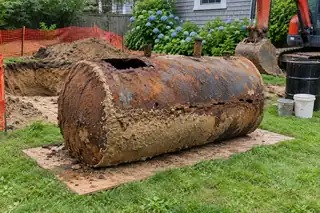
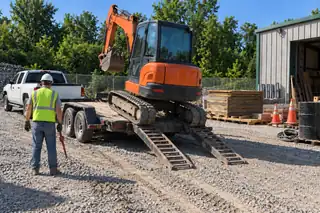
A standard residential tank removal takes one day. The crew excavates around the tank, pumps any remaining product, and disconnects supply and vent piping. They lift the tank out with a backhoe and collect soil samples from the pit walls and floor before backfilling. By late afternoon, the yard looks close to the way it did that morning.
Basement tanks are a different story. Heating oil tank removal from older Northeast basements means cutting the tank into sections with a reciprocating saw and carrying the pieces out through tight doorways and up stairwells. A one-day outdoor job becomes a two- or three-day indoor project with added labor and disposal fees.
Site access adds time that most homeowners do not account for. A tank buried under a deck, patio, or driveway means demolition before the crew can even reach the excavation area. Rebuilding that hardscape after backfill is a separate cost and a separate schedule. Some contractors handle both; others leave the restoration to you.
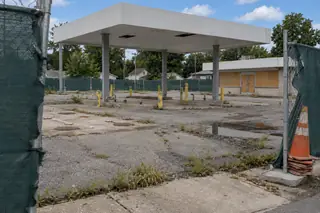
Commercial underground storage tank removal at gas stations and industrial facilities runs three to seven days depending on tank count and size. Sites with tanks beneath paved parking lots or near building foundations need more careful excavation and sometimes structural shoring, which adds both time and cost to the project.
Nobody waits months because of the digging. The oil tank removal steps that involve heavy equipment are the fastest phase of the entire project.
Soil Testing Turns Days Into Weeks
After the tank comes out, soil samples from the excavation pit go to a certified laboratory for analysis. The soil testing timeline runs one to three weeks for standard turnaround. Rush processing cuts that to roughly five business days but adds $200 to $500 above the normal lab fee. Most residential projects use standard turnaround unless a closing date is bearing down.
Clean results mean you move to the closure report phase and the overall timeline stays on track. Contaminated results reshape the entire project. Minor petroleum contamination confined to soil near the old tank might add three to six months of dig-and-haul remediation. The affected soil gets excavated and trucked to a licensed disposal facility.
A remediation timeline measured in years sounds extreme until you see the invoices. Groundwater monitoring requires quarterly sampling at $2,000 to $5,000 per event over one to four years. That alone adds $8,000 to $80,000 before you count the actual contamination cleanup work on top. Some residential cleanups exceed $50,000 total.
Soil test results also show whether you have a leak your state's petroleum cleanup fund could help pay for, if it has one that covers your tank. If the results come back dirty, your contractor needs to report the release to the state right away; New Jersey, for example, requires an immediate call, and Maine requires a call within two hours. Delaying that report, even by a few weeks, can cost you reimbursement that would have covered much of the remediation.
If you are buying or selling a property, get the tank pulled and tested as early in the process as possible. Discovering contaminated soil two weeks before closing is how real estate transactions fall apart. The exception is early-stage buyers who have not made an offer yet. Spending $400 to $1,500 on soil testing for a house you might walk away from is premature.
The NFA Letter Sets Your Oil Tank Removal Timeline
The job is not done when the tank leaves the ground. That is a misconception that costs people months. Your contractor writes a closure report documenting how the tank was removed, what samples were collected, and what the lab results showed, and files it wherever your state or town requires. Where the soil showed a leak, the state oversees the cleanup and issues a No Further Action letter, or its equivalent, when the cleanup is done.
The NFA letter timeline varies by state. In New Jersey, nothing goes to NJDEP after a clean home tank closure. After a leak cleanup, NJDEP says its technical review of the remedial action report takes two to four weeks once the submission is complete and the review fee is paid. Pennsylvania's tank rules do not cover home heating oil tanks, so a clean residential removal there produces no state letter at all. Ask your contractor which agency, if any, issues the final sign-off in your state.
Lenders care about this letter more than most sellers realize. A buyer's mortgage company may refuse to fund the loan without clean soil results or, after a leak, an NFA letter on file. Without that documentation, the deal stalls. Sellers either wait or agree to an escrow holdback that ties up thousands until the paperwork arrives.
Filing the closure report late creates a different kind of problem. Some contractors finish the physical removal and take weeks to compile the report. Every day between the removal and the filing is a day added to your total oil tank removal timeline. Ask your contractor for a specific date when the closure report will be filed, and hold them to it.
Do not skip the closure report, even where no rule requires one, because skipping it creates problems down the road. It is the formal record that the tank was removed under the rules that apply to it, which for a home heating oil tank means state and local rules, since federal UST rules do not cover it. Properties sold without a proper closure on file face title complications that make resale difficult for years afterward.
Winter Removals Cost More and Take Longer
Oil tank removal cost in northern states runs 15 to 30 percent higher during winter months. Frozen ground demands more powerful equipment, longer dig times, and sometimes heated water trucks to thaw the excavation area. In Minnesota and Wisconsin, many contractors decline residential UST work from December through March unless the tank is actively leaking.
Spring creates its own scheduling crunch. Everyone who waited through winter scrambles to book the same contractors from April through June. The backlog across the Northeast and Midwest pushes wait times to six to eight weeks for a spring removal slot. In some markets like northern New Jersey and suburban Pennsylvania, spring windows close by February.
The smartest scheduling move in cold climates is to book in September or October. The ground is still soft, contractors are clearing their fall schedules, and you avoid both the winter premium and the spring backlog. A removal completed in October gives you clean soil results before Thanksgiving and a closure report in hand before the end of the year.
Frozen ground is not just expensive, it is unpredictable.
In southern states, seasonality does not apply. Texas, Louisiana, and Florida contractors work year-round without weather interruptions. Commercial tank decommissioning at gas stations in cold climates also rarely pauses for winter because the financial pressure to close and redevelop outweighs the seasonal premium.
The Fund Eligibility Mistake That Costs Thousands
Many states run petroleum cleanup funds that reimburse owners for remediation costs when a tank removal reveals contamination, but most were built for regulated tanks, and only some reach home heating oil tanks. The ones that do come with specific eligibility windows and hard filing deadlines. Missing a deadline can mean paying for the entire contamination cleanup yourself.
Ohio's Petroleum UST Release Compensation Board pays eligible cleanup costs for regulated petroleum tanks. Ohio law leaves tanks storing heating fuel for use on the premises out of its tank definition, so a home heating oil tank does not qualify. Maine's Ground and Surface Waters Clean-up and Response Fund does reach home heating oil tanks, and 38 M.R.S. 568-A requires a written request within 180 days of reporting the discharge. Ask early, because deadlines like these are easy to miss.
Your contractor should know whether your state has a cleanup fund and what the deadlines look like. If they do not raise the subject after finding contamination, ask them directly. A contractor who pulls the tank and walks away without discussing fund eligibility is leaving your money on the table.
Documentation from removal day matters more than most people realize. Photographs of the excavation pit, the tank condition, the sample locations, and the chain of custody forms for soil samples all become part of your fund application. Contractors who cut corners on documentation during the removal create reimbursement problems months later.
The exception is properties where a tank was already closed and documented years ago. Reopening a completed closure to pursue fund reimbursement retroactively usually is not worth the regulatory complexity and legal fees it creates. Those programs are designed for active discoveries, not old cases.
Start Six Months Before You Plan to List
If you are selling a property with a buried oil tank, begin the removal process at least six months before you plan to list. That gives time for any state notice period, the one to three day removal, and the one to three week soil testing wait. Then add time for any closure report review, and far more if the soil shows a leak. Owners comparing bids can browse tank decommissioning contractors.
If you are not selling, the timeline pressure is lower, but do not let that become an excuse to sit on it. Tanks corrode every year they remain underground, and corrosion accelerates once the cathodic protection fails or the tank sits empty. A tank that would come out clean today might be leaking in two years. A clean residential tank removal costs $1,500 to $3,500 in most regions. A leaking tank with soil remediation runs $20,000 to $50,000 or more.
Get three quotes before you commit. Ask each contractor for a written timeline covering every phase from notification through final sign-off, not just the removal day. Compare the full oil tank removal timeline alongside the price. A contractor who quotes two weeks less than the competition but cannot explain how is not giving you a faster project. They are giving you a less accurate estimate.
Search for oil tank removal near you and start the conversation this week. For contractor options, see oil tank removal services.
Every week you wait adds a week to a process that already takes longer than anyone expects.