Hiring the wrong underground storage tank contractor can mean failed inspections, regulatory fines, environmental liability, and project delays that cost more than the original job. Whether you need a tank removed, installed, tested, or decommissioned, choosing the right contractor starts with verifying their credentials and asking the right questions before signing anything.
Many states require tank contractors to hold a state license or certification for some or all UST work, while others, such as Vermont and North Carolina, issue none. Where your state requires one, it is not optional. It is a legal requirement. Either way, owners and operators of regulated tanks stay responsible for reporting and cleaning up any release under 40 CFR 280 Subpart F.
Before you talk pricing with any contractor, check what your state agency requires for your type of job. If it licenses that work, confirm the contractor holds an active license that covers it. A contractor licensed for tank installation may not be licensed for decommissioning or tightness testing. Some states issue these as separate certifications.
UST projects fall into several categories, and states that credential tank work often certify them separately:
Start With the License
Installation covers new tank systems, the tank itself, piping, leak detection equipment, and associated hardware. You need this when building a new fueling facility or replacing an existing system.
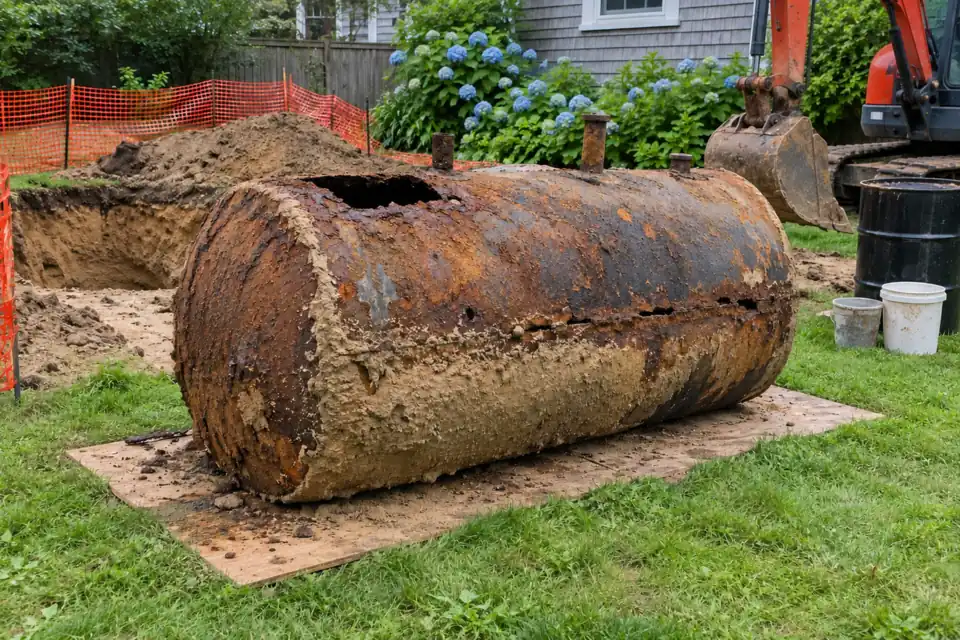
Decommissioning and Removal covers taking a tank out of service permanently. This includes tank closure in place (filling with inert material) or full physical removal. Environmental site assessment is usually required afterward.
Tank Tightness Testing is periodic pressure testing to confirm tanks and piping are not leaking. Most states require this on a regular schedule as part of ongoing compliance. When the work goes out for bids, start with tank testing contractors.
Cathodic Protection involves installing and maintaining corrosion prevention systems on steel tanks. Contractors performing this work typically need a separate certification. The cathodic protection guide covers the testing schedule and what a system costs.
Understand What Type of Work You Need
Site Assessment covers environmental investigation when contamination is suspected or confirmed, soil sampling, groundwater monitoring, and remediation planning.
Where your state certifies your project type, make sure the contractor you hire holds that certification. Ask to see the actual license document, not just a claim that they are licensed.
How many UST projects of this type have you completed in the last two years? Experience matters more than years in business.
Will you handle the regulatory paperwork and permit applications? UST work requires notification to state agencies, permit applications, and closure reports. An experienced contractor handles all of this as part of the project.
Ask These Questions Before Hiring
What is your insurance coverage? UST contractors should carry general liability, pollution liability, and workers compensation at minimum.
Can you provide references from similar projects? Ask for references from projects similar to yours in size, tank type, and regulatory environment.
What happens if contamination is found? For removal and decommissioning projects, contamination discovery is always a possibility. If you are at the hiring stage, our directory lists oil tank removal contractors.
What is included in the quote and what is not? Get a written scope of work that clearly defines what is included.
Get Multiple Quotes
Get at least three quotes from contractors who meet your state's requirements for any UST project over $5,000. Pricing in this industry varies significantly, it is not unusual to see a 40-60% spread between the highest and lowest bid on the same project.
The lowest bid is not always the best choice. Evaluate each quote based on what is included in the scope of work, the contractor's experience with your specific project type, their insurance coverage, and their references.
No license where your state requires one, or unwillingness to provide the license number. Walk away immediately.
No pollution liability insurance. This is non-negotiable for any work involving underground storage tanks.
Red Flags to Watch For
Pressure to sign quickly or verbal-only quotes. Legitimate contractors provide written proposals and give you time to review them.
Unwillingness to provide references. Any contractor with a track record will have clients willing to speak on their behalf.
Significantly lower price than other bids with no clear explanation. This usually means something is being left out of the scope. For more detail, see our guide on What Does a Licensed UST Contractor Actually Do. Start your shortlist in our state-by-state contractor directory.