
Four separate tests make up a full underground storage tank inspection.
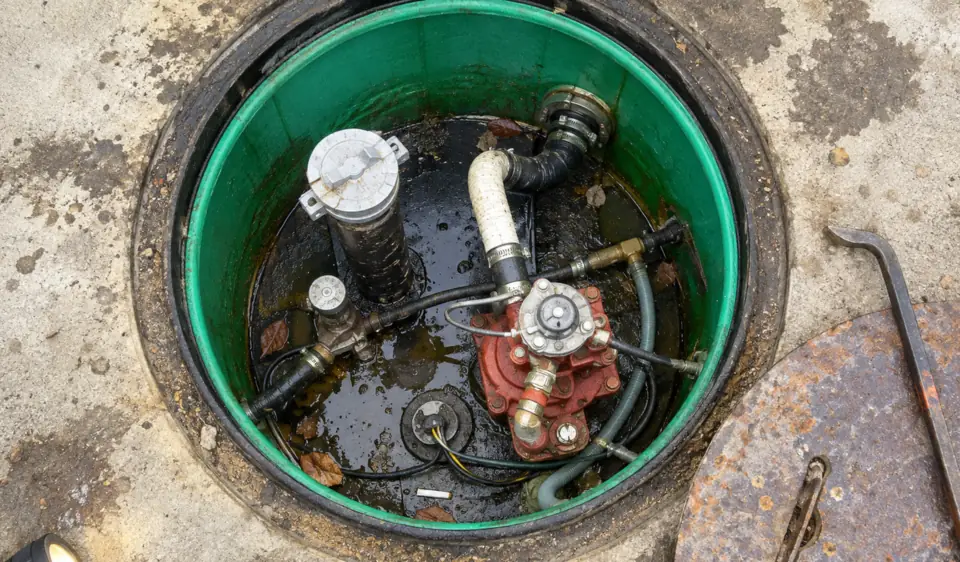
A tightness test checks for active leaks. A cathodic protection test checks whether corrosion prevention is working. A line test checks the piping. A visual inspection checks the physical hardware above and below grade.
A basic commercial inspection with visual checks and a tightness test runs $500 to $2,000, and adding line and cathodic protection testing pushes it to $2,000 to $5,000. Knowing which tests apply to your situation keeps you from paying for an underground tank inspection you don't need and from skipping one you do.
When someone says they need a fuel tank inspection, they usually mean a tank tightness test. This is a precision leak test that pressurizes or depressurizes the tank and monitors for volume changes over a set period. A tank that holds pressure is tight. One that doesn't is leaking product into the surrounding soil.

Tank Tightness Testing: The Test Most People Mean When They Say "Inspection"
Passing a tightness test means the tank is not actively leaking right now. It does not mean the tank has never leaked. A 30-year-old steel tank that passes today could have released product for years before corrosion sealed itself or before the water table shifted. Soil around the tank could already be contaminated from a historical release that a tightness test will never detect. If you need to confirm the ground is clean, you need soil sampling, not a tightness test.
Tank tightness testing typically costs $500 to $2,000 depending on tank size, location, and whether the contractor needs to pump out residual product before testing. Most tests take two to four hours on site. The contractor brings specialized equipment, runs the test, and provides a pass/fail report. Results are available the same day.
Not every tank qualifies for tightness testing. Tanks with known structural damage, tanks that have been out of service for extended periods, or tanks where the fill and vent hardware is too deteriorated to seal properly may not produce reliable test results. A contractor who tells you the tank can't be tested isn't trying to upsell you on removal. They're telling you the data wouldn't be trustworthy.
A tank can be perfectly tight while the piping connecting it to the dispenser leaks product into the ground. Line tightness testing pressurizes the underground piping runs separately from the tank. For commercial fueling facilities, this is where a surprising number of releases originate.
Line Tightness Testing: The Part Everyone Forgets
Piping fails more often than tanks in many states.
The reason is mechanical. Piping connections flex under soil movement, thermal expansion, and traffic loading above grade. Fittings loosen. Gaskets degrade. A facility can pass its tank tightness test year after year while the piping underneath the concrete apron slowly drips product into the subsurface. The EPA's leak detection requirements treat tank and line monitoring as separate obligations for exactly this reason.
Line testing runs $300 to $1,000 per line, and most facilities have multiple product lines. A gas station with four dispensers might have eight or more individual line runs. The math adds up. Some contractors bundle line testing with tank testing at a reduced rate, so ask before assuming you need to pay per line at full price.
For pressurized piping, an automatic line leak detector does not replace the annual line tightness test. Under 40 CFR 280.41, older pressurized piping needs the detector plus either a yearly line test or monthly monitoring. Piping installed after April 11, 2016 needs the detector and interstitial monitoring at least every 30 days. Check your state's rules too, since states can be stricter.
Cathodic Protection Testing: The 3-Year Federal Requirement Nobody Tracks
Steel underground storage tanks corrode. That's physics. Cathodic protection systems slow corrosion by sacrificing an anode or applying an impressed electrical current. Federal regulations under 40 CFR 280.31 require cathodic protection testing every 3 years for any UST system with cathodic protection. Most facility owners forget this requirement exists until an inspector asks for the records.
The test itself is straightforward. A technician measures the electrical potential between the tank and the surrounding soil using a reference electrode. Readings below a specific threshold (typically negative 0.85 volts for steel) indicate the system is protecting the tank. Readings above that threshold mean corrosion is winning.
A failed cathodic protection test does not mean the tank is leaking. It means the corrosion prevention system needs repair or replacement. Catching a degraded anode at the 3-year test is routine maintenance. Missing the test for a decade and discovering a perforated tank wall is a $50,000 problem.
Fiberglass tanks and double-wall fiberglass-clad steel tanks don't require cathodic protection testing because they don't corrode the same way. If your facility has fiberglass USTs, this line item doesn't apply to you. Contractors who recommend cathodic protection testing on fiberglass tanks either misidentified the tank material or are billing for unnecessary work.
Visual and Physical Inspections: What Happens Above Ground
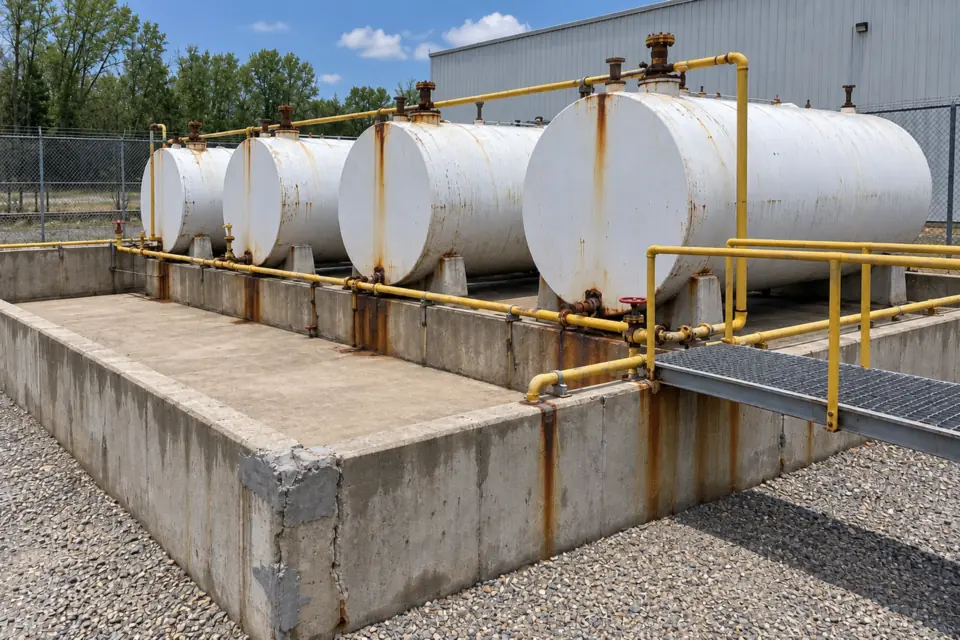
Not all UST inspection work happens underground. The physical inspection covers spill buckets, overfill prevention equipment, fill caps, vent pipes, dispenser pans, and containment sumps. These are the components you can see and touch without digging.
Spill buckets catch the fuel that drips during delivery. They need to be liquid-tight. A cracked spill bucket that lets a few ounces of fuel seep into the soil at every delivery adds up over years. Overfill prevention valves shut off or slow the flow when a tank reaches 90% to 95% capacity. If the valve is stuck, rusted, or disconnected, a delivery driver can overfill the tank and send product up through the vent pipe onto the ground. The three-year test calendar shows when the spill bucket, sump and overfill checks fall due.
The EPA's 2015 rule update made walkthrough inspections mandatory every 30 days for most UST facilities. That monthly check covers spill prevention equipment, release detection, and corrosion protection. Before 2015, many of these checks were recommended but not required. Facilities that were in compliance before the update may not be compliant under current rules.
A monthly walkthrough by trained staff is not the same as a professional UST inspection. The walkthrough catches obvious problems: standing liquid in a spill bucket, a missing fill cap, an alarm light on a tank monitoring panel. The professional inspection includes testing, measurement, and documentation that satisfies regulatory requirements for compliance records.
How Much a Full Underground Storage Tank Inspection Costs
A basic commercial UST inspection covering visual checks and tank tightness testing runs $500 to $2,000. A comprehensive inspection that adds line testing, cathodic protection testing, and detailed reporting pushes the range to $2,000 to $5,000. Residential oil tank inspections, typically ordered during real estate transactions, fall between $400 and $1,500.
Those numbers cover the inspection itself. They do not include follow-up work.
If the tank fails a tightness test, you're looking at closure costs: $3,000 to $15,000 for removal, plus soil sampling at $400 to $2,000, plus potential remediation that can reach six figures. If cathodic protection fails, anode replacement or system repair typically runs $1,000 to $3,000. These are separate projects from the inspection, billed separately.
Solo UST inspectors with specialized testing equipment often charge less than large environmental firms for routine inspections. They carry lower overhead and can schedule faster. For a standard compliance inspection on a single tank system, an independent inspector is usually the better value. For a complex multi-tank commercial facility where you need engineering analysis and a formal compliance report, a larger firm may be worth the premium.
| Inspection type | Typical cost |
|---|---|
| Tank tightness test | $500 to $2,000 |
| Line tightness test | $300 to $1,000 per line |
| Basic commercial inspection (visual checks plus tightness test) | $500 to $2,000 |
| Comprehensive inspection (adds line and cathodic protection testing) | $2,000 to $5,000 |
| Residential oil tank inspection | $400 to $1,500 |
The Overtesting Trap: When a Contractor Recommends More Than You Need
Not every inspection requires every test.
A property buyer who needs to confirm a residential heating oil tank isn't leaking needs a tightness test and possibly soil sampling. They do not need cathodic protection testing, line testing, or a full compliance audit. A gas station owner due for a 3-year cathodic protection check needs that specific test, not a complete facility reinspection if the annual compliance inspection was recent.
Some contractors package every available test into a single proposal because it maximizes the invoice. Others do it because they genuinely don't know which tests your state requires for your specific situation. Either way, you end up overpaying.
Before signing a proposal, ask the contractor to identify which tests are required by your state agency and which are recommended. There's a meaningful difference. Required tests keep you in compliance. Recommended tests provide additional data that might be useful but aren't legally mandated.
State Inspection Requirements Go Beyond the Federal Minimum
The flip side is equally real: underinspecting to save money and then discovering a problem six months later that an additional $500 test would have caught. The right answer depends on the tank's age, material, last inspection date, and what triggered the inspection in the first place. A property transaction inspection has different stakes than a routine 3-year compliance check.
The EPA sets a federal baseline for UST testing under 40 CFR Part 280, but states can and do impose stricter requirements. Washington state's Department of Ecology inspects tank systems at least every three years, and state rules require UST services to be performed or directly supervised by a certified service provider. Oregon's DEQ runs a similar program with mandatory facility inspections on a fixed cycle and requires both company licensing and individual operator certification before anyone can perform the work.
Know your state's rules before assuming the federal 3-year cycle is all you need to follow. A contractor local to your state should be able to tell you exactly which tests are due and when. If they can't, that's a sign they work primarily in a different state or a different part of the environmental industry.
The penalty for a missed inspection varies. Some states issue warnings for first offenses. Others assess fines starting at several hundred dollars per day of noncompliance. Texas, with the largest UST population in the country, can assess penalties up to $25,000 per day per violation through the TCEQ. The inspection cost is always cheaper than the fine.
Scheduling an Inspection and What to Have Ready
Before the inspector arrives, pull together your tank records: installation date, tank material and capacity, last inspection report, cathodic protection test results, release detection records, and any state correspondence. If you inherited the facility and have no records, say so upfront. The inspector will document what exists and what's missing. Missing records are not unusual for older facilities, but they change the scope of work because the inspector has to establish baseline data from scratch. Our guide on UST Compliance Deadlines by State covers this in depth.
Clear access to all tank components. Fill ports buried under inventory, spill buckets hidden under pallets, and monitoring wells covered by parked vehicles all slow the inspection and can result in incomplete testing. If the inspector can't physically reach a component, it doesn't get tested, and "unable to access" on an inspection report is not a passing grade.
Inspections don't fix problems. They find them. Budget for the possibility that the inspection reveals a failed test or a compliance gap that requires follow-up work. The inspection report gives you a clear picture of where your tanks stand. What you do with that picture is the next conversation.
You can find UST inspection contractors in your state through our directory, or submit a quote request for tank inspection and testing work in your area. Know which tests you need before you call. It saves both of you time. Put the tank count, the tank and piping material, and the date of the last test in the request, so every quote prices the same scope.