Oil tank replacement costs $2,500 to $6,000 for most homes in 2026. Aboveground steel and double-wall tanks fall in the lower half of that range, while buried tank conversions or contamination discoveries push costs above $8,000. Federal rules at 40 CFR 280 exclude tanks storing heating oil for use on the premises, whatever their size, leaving state codes and NFPA 31 as the binding requirements for most homeowners replacing a fuel oil tank.
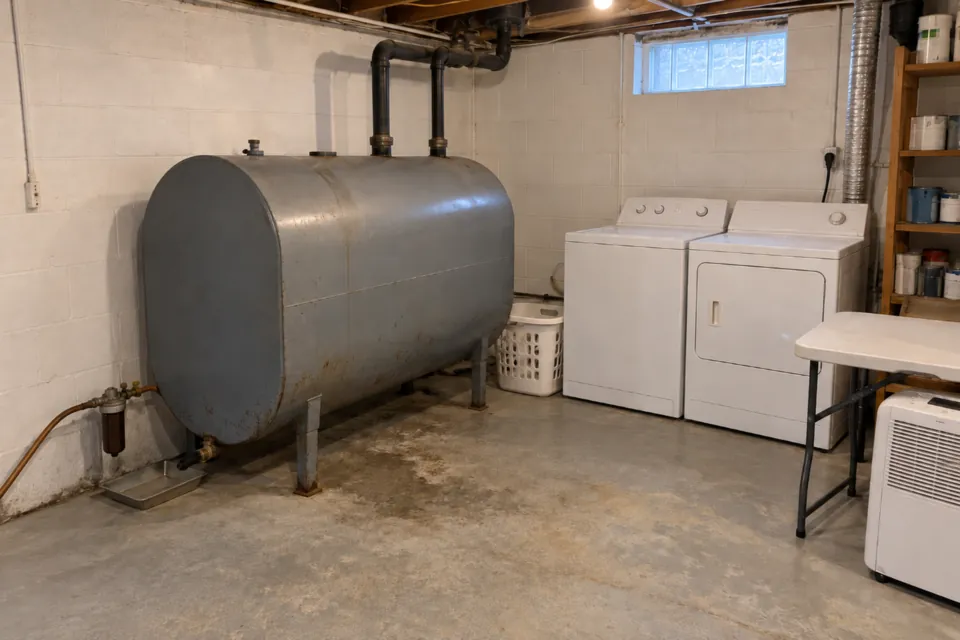
Replacement becomes urgent when a tank shows corrosion, weeping seams, or persistent fuel oil odor in a basement. A failed tank can leak slowly for months before anyone notices, and a single 275 gallon discharge into soil can trigger cleanup bills of $15,000 to $80,000 depending on the state reporting threshold. The economics favor proactive replacement at 25 to 30 years, well before catastrophic failure forces an emergency call. If the tank has already let go and there is oil on the floor, the first hour of a heating oil release matters more than the replacement decision.
Homeowners face a one-time decision with long-term consequences. The same crew that delivers a new tank can also remove the old one, sample soil if a buried tank was in service, and file a closure record with the local fire marshal or state environmental agency. Skipping any of those steps creates a paper-trail problem that usually surfaces years later during a real estate transaction, when a buyer asks for documentation that no one ever generated. Owners weighing a new tank against dropping oil altogether should price it against an oil to gas conversion, where the old tank still has to be closed either way.
This guide covers when replacement becomes necessary, how to size a tank for your home, brand comparisons across Roth and Granby, oil tank replacement cost in 2026, the installation process, and how to hire a qualified contractor. Use it, along with our oil tank removal guide, to set realistic expectations before requesting prices through our oil tank removal cost guide or browsing the installer roster.
When Oil Tank Replacement Becomes Necessary
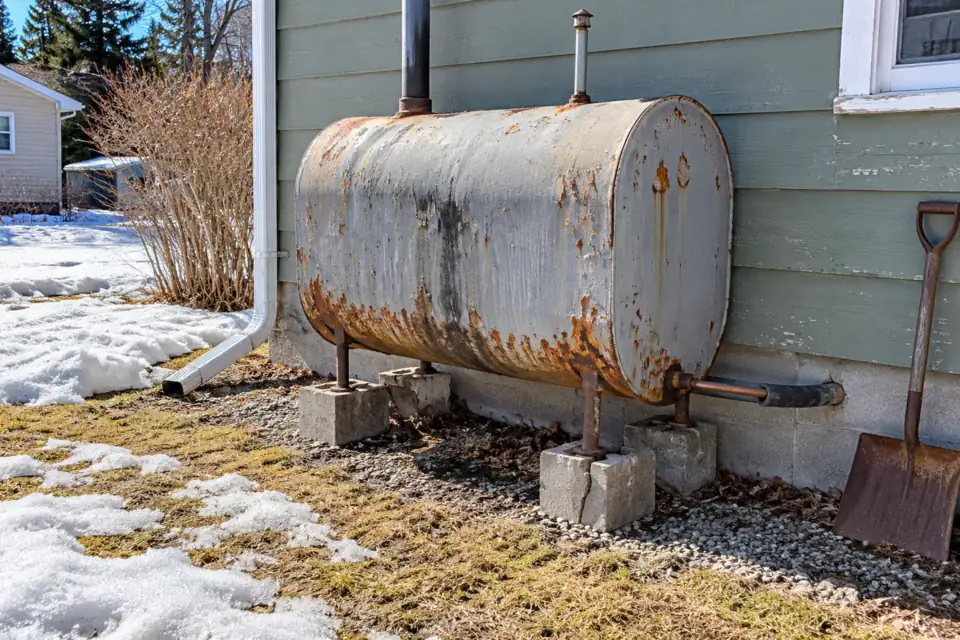
Most residential heating oil tanks last 15 to 30 years, with single-wall steel tanks averaging the lower end and double-wall fiberglass or Roth-style designs averaging the upper end. The clock starts at the date of manufacture, not the date of installation, because steel begins corroding from the inside once any moisture or sulfur compound enters the tank. By year 20, a typical 275 gallon home heating oil tank shows pinhole pitting at one or more weld seams, even if the exterior still looks clean.
Several signs point to imminent failure. Damp spots or rust streaks at the bottom of an aging tank often mean the steel wall has thinned past safe service. A persistent fuel oil smell in a finished basement, gauge readings that drop when no heat has run, and visible weeping around bottom welds all reinforce that diagnosis. A homeowner who waits past these warnings typically faces a leak event during the next cold snap, when delivery volumes peak and burner cycles climb to their seasonal high.
State law sometimes forces the decision regardless of tank condition. Maine, for one, requires a buried oil tank out of service for more than a year to be closed, normally by removal, under 38 M.R.S. 566-A. Massachusetts does not: MassDEP says state law does not require removing a residential underground tank that is not leaking, and firms working there are listed in our Massachusetts directory. New Jersey exempts home heating oil tanks from its UST rules but requires DEP certified contractors to close them, and New York's Petroleum Bulk Storage rules at 6 NYCRR Part 613 leave out home heating tanks under 1,100 gallons. Each state code creates a different threshold for replacement versus continued use.
Insurance changes the math. Most homeowner policies stopped covering legacy buried oil tanks around 2010, and even aboveground tank coverage now caps cleanup payouts at $10,000 to $25,000. Replacing a tank that is over 25 years old often unlocks a lower premium and removes a coverage exclusion that would otherwise leave a homeowner exposed to the full cost of a contamination event. The signs of underground oil tank trouble described in our signs guide overlap heavily with the conditions insurance carriers cite when denying claims.
Sizing a Residential Tank: 275, 500, and 1,000 Gallon Options
The 275 gallon oil tank dominates the residential market because it stores enough fuel for a typical New England or mid-Atlantic heating season and fits through a standard basement bulkhead. A 275 gallon tank holds about 250 gallons of usable fuel after accounting for fill limits and sediment clearance, which translates to roughly two months of heat for a 2,000 square foot home in a cold climate. Vertical and horizontal orientations both fit the 275 gallon footprint, and most installers stock both formats on the truck.
Larger lots and higher heat loads change the calculation. A 500 gallon oil tank suits homes above 3,500 square feet, properties without paved driveway access for winter delivery, or owners who want to lock in a summer pre-buy price for the full heating season. The 1000 gallon oil tank is rare indoors but common as an outdoor oil tank for farms, large estates, and dual-use heating and hot water systems that consume fuel year-round. Above 1,100 gallons, a residential tank crosses into commercial regulatory territory and may trigger registration under state petroleum bulk storage programs.
Indoor placement remains the most common configuration in the Northeast. A basement oil tank stays warmer than the outdoor air, which prevents the fuel viscosity problems that can clog a No. 2 fuel oil line at temperatures below 10 degrees Fahrenheit. The downside is footprint: a 275 gallon vertical tank needs about 11 square feet of floor space (27 by 60 inches) and 5 feet of vertical clearance, while a horizontal model needs a 4 by 5 foot footprint. Older basements with low ceilings sometimes require an outdoor relocation simply because no indoor placement clears the venting and fill requirements.
Outdoor installation needs more planning. A code-compliant outdoor oil tank requires a concrete pad rated for the filled weight, which runs about 1,900 pounds on a 275 gallon size and 3,400 pounds on a 500 gallon size. Add 36 inches of clearance from any building opening per NFPA 31, and a frost-resistant fuel line back to the burner. Owners in flood zones must elevate or anchor against buoyancy, since a buoyant tank can shift off its pad during a flood event and rupture the supply line. Properly installed outdoor tanks last as long as indoor ones if the foundation drains and the unit stays painted.
Comparing Roth, Granby, and Other Oil Tank Brands
Brand selection comes down to wall construction, warranty terms, and what your local installer regularly stocks. The Roth oil tank is a double-wall steel design with a polyethylene inner shell and a galvanized outer jacket, sold in 275, 400, and 620 gallon sizes. Roth backs that hardware with a 30-year limited warranty that includes property damage liability up to $2 million. The Granby Ecogard line is double-bottom steel, offered in 275 and 500 gallon residential formats, with a 25-year warranty that covers tank failure but not all secondary cleanup costs.
Installer familiarity matters more than spec sheet comparison. A crew that installs the Roth oil tank 20 times a year completes the job faster, recognizes the venting and gauge fittings on sight, and submits warranty paperwork through the manufacturer certified network without delay. The same crew may need an extra hour, a parts run, and a return trip if asked to install a brand they handle once a month. Ask candidate contractors which brand they install most often before specifying a particular model.
Single-wall steel tanks like the Bock 73 series and Granby Standard cost about $400 to $700 less than the equivalent double-wall model. The trade-off is a shorter warranty (10 to 15 years versus 25 to 30) and the exclusion of any property damage coverage when the tank leaks. Single-wall residential installation is restricted or banned by code in roughly a dozen states for new service, so verify with the local fire marshal before specifying a single-wall tank, especially in any state east of the Mississippi. Most installers default to a double-wall recommendation for that reason.
Fiberglass options exist for buried installations only. Polyethylene-lined fiberglass tanks resist soil corrosion and meet the Underground Storage Tank performance standards at 40 CFR 280.20 even though residential heating oil is exempt from federal jurisdiction. Most homeowners replacing a buried tank choose to switch to aboveground service instead because permitting, insurance, and resale all simplify dramatically once no tank sits below the soil line. The decision between aboveground replacement and like-for-like buried replacement is one of the biggest cost levers in the entire project.
Oil Tank Replacement Cost in 2026
Oil tank replacement cost in 2026 runs $2,500 to $6,000 for a straightforward aboveground swap and $5,000 to $12,000 if the project includes removing a buried tank as part of the work. Pricing breaks roughly into 60 percent labor and 40 percent materials for a single-wall tank, and 50 percent each for a double-wall installation where the tank itself is the largest line item. Regional pricing variation runs $500 to $1,500 across the Northeast, with the highest rates in coastal Massachusetts, Connecticut, and Long Island.
Several factors move pricing within those ranges. A new oil tank cost of $1,200 to $2,200 covers the tank and standard fittings, depending on brand and size. Add $400 to $800 for permits, copper supply line, vent and fill piping, and a new oil filter. Labor for a basement to basement swap takes about six to ten hours, while a basement to outdoor conversion runs 12 to 16 hours because the contractor has to run new piping through the foundation and pour a pad.
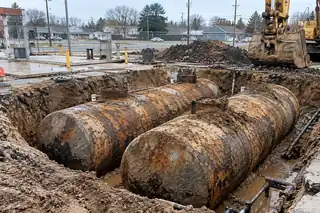
Disposal of the old tank adds $200 to $500 if the unit is aboveground and accessible. Buried tank removal jumps that figure to $1,500 to $3,500 before any contamination testing, because the contractor needs an excavator, soil sampling kits, and a state licensed waste hauler for petroleum contaminated steel. State sales tax and permit fees vary, but typical add-ons run 6 to 10 percent of the total project cost, and a few states require a separate environmental fee earmarked for cleanup funds.
Contamination discovery changes everything. If soil samples around the old buried tank come back above the state action level (commonly 100 milligrams per kilogram of total petroleum hydrocarbons), the project becomes a regulated cleanup. Cleanup costs typically run $8,000 to $40,000 for a tank that leaked recently, and the bill climbs above $100,000 if groundwater contamination is present. See our UST removal cost guide for a fuller breakdown of contamination scenarios and how state cleanup funds offset the cost.
The Replacement Process: Removal, Site Prep, and Installation
A standard oil tank replacement runs one to two days for an aboveground swap and three to five days when buried tank removal is part of the project. The contractor begins by pumping any remaining fuel from the old tank into a transfer tote, disconnecting the supply line and vent piping, and capping the line at the burner. The old tank is then drained of sludge, cut down if needed to clear the basement door, and hauled to a licensed scrap metal facility along with the closure paperwork.
Site preparation depends on placement. An indoor installation requires clearing 36 inches of access in front of the tank location, confirming floor flatness, and verifying that the basement entry point can pass the tank dimensions without disassembly. An outdoor pour needs a four-inch reinforced concrete pad sized to the tank footprint and graded for drainage, plus a containment dike if the local code requires secondary spill protection. Skipping the pad on an outdoor install voids most manufacturer warranties.
Installation itself follows NFPA 31 Section 7 for tank placement, supply piping, and venting. Copper supply lines must be Type L or K with flared fittings, vent piping must extend above the highest fill point by at least two feet, and a tank gauge or whistle alarm must be installed at the fill cap. A licensed plumber or oil burner technician completes the connections, primes the burner, and confirms operation across one full firing cycle before considering the job complete and ready for the homeowner to sign off.
Final paperwork closes the job. The contractor files a tank closure record with the local fire marshal or state environmental agency, then registers the new install under any applicable state program. The New York PBS program at 6 NYCRR Part 613 is one example, and a directory of New York contractors shows who handles that filing. The homeowner receives the manufacturer warranty registration plus a paid in full installation certificate, which insurance carriers often request within 30 days to bind the updated coverage.
Hiring an Oil Tank Replacement Contractor
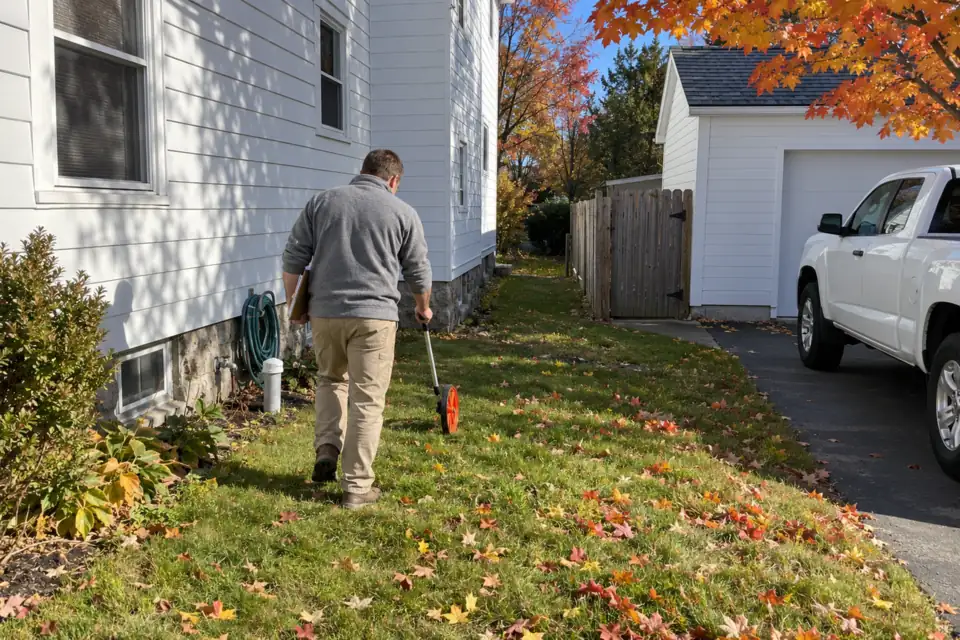
Three credentials separate a qualified oil tank replacement contractor from a general handyman. The first is a state oil burner technician license or a UST contractor certification in states that license tank work (New York, Connecticut, Maine, and Massachusetts all require it for buried tank work). The second is a manufacturer authorized installer designation from Roth, Granby, or whatever brand the homeowner has chosen for the project. The third is current pollution liability insurance with at least $1 million per occurrence.
References, not Google reviews, predict job quality. Ask each candidate contractor for three completed jobs within the past 12 months in the same town. Call those references with two questions: did the contractor finish on the day promised, and did the final invoice match the original quote within 5 percent. A clean answer on both is a stronger signal than any star rating online. Our how to choose a UST contractor guide walks through a vetting checklist that works on replacement and removal jobs alike.
Get three written quotes before signing. A bid that comes in 20 percent below the others usually omits a line item: the permit, disposal of the existing tank, or the soil sampling that triggers if the old install was buried. Match each quote line by line, and ask each contractor to explain any gap in scope before committing. Pay 20 to 30 percent at signing, no more, and hold the final payment until the closure paperwork is filed with the state and the homeowner has the registration certificate in hand.
Once the bids are in, move quickly. Permit windows often run two to three weeks, and parts availability tightens during the September through November pre-heating-season rush. Connect with installers through our contractor directory or request a quote to start the process. The faster the replacement is scheduled, the smaller the risk that an aging unit fails in the middle of a January cold snap when no installer is available for an emergency call.