A buried oil tank not removed always costs more than dealing with it.
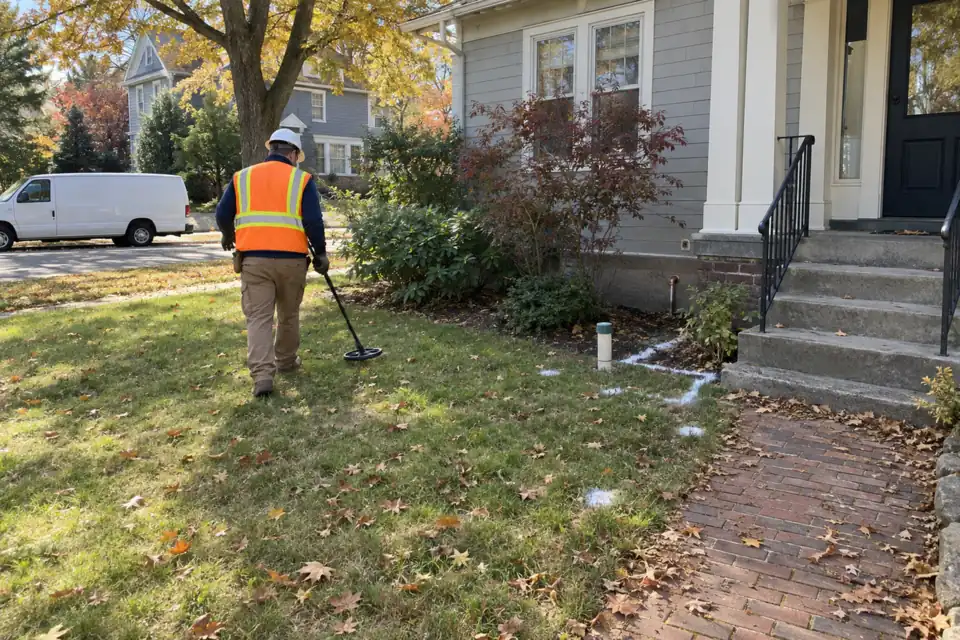
Most homeowners who discover a buried heating oil tank ask the same question: can I just leave it there? The answer is technically yes in most states. No law in New Jersey or Pennsylvania forces you to remove a tank that is not actively leaking. But the gap between legal and smart widens every year that tank sits in the ground, and the financial consequences of waiting compound in ways most people do not expect.
The risks are financial, not hypothetical. Lenders, insurers, and buyers all treat an oil tank left in ground as a liability whether it has leaked or not. The "do nothing" option carries a real price tag even when the soil is still clean.
Steel corrodes underground. A typical residential heating oil tank has a functional life of 15 to 20 years before the walls thin enough to fail. Most tanks still buried across the Northeast were installed between the 1950s and 1970s, which puts them decades past their expected service life. The question is not whether an old tank will corrode. It is whether yours already has.
What Happens to a Buried Oil Tank Over Time
The failure pattern is predictable. Small pinholes develop along the bottom of the tank where moisture collects against the steel. Residual fuel oil or sludge seeps into the surrounding soil at a rate too slow to detect from the surface. By the time you smell heating oil in the basement or notice a sheen on groundwater, oil tank contamination has been spreading underground for years.
Not every abandoned oil tank leaks. Tanks in dry, well drained sandy soil can outlast tanks buried in clay or near a high water table by a decade or more. But you will not know which category yours falls into without pulling soil samples. The visual condition of your yard tells you nothing about what is happening six feet underground. Assuming the best without testing is the most expensive gamble a homeowner can make.
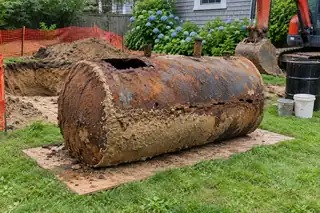
Underground oil tank removal for a residential property in the Northeast typically runs $1,500 to $3,500. That number feels manageable. The number that should scare you is what follows if the soil underneath is contaminated.
Soil contamination from an oil tank leak triggers remediation, and remediation is where costs leave the manageable range. In New Jersey, a homeowner who finds a leak must call the NJDEP Hotline right away under N.J.A.C. 7:26F and hire a Certified Subsurface Evaluator or a Licensed Site Remediation Professional to run the cleanup. NJDEP does not set or control prices, so the bill depends on how far the oil spread.
The Real Cost When Soil Contamination Enters the Picture
Pennsylvania's USTIF covers regulated tanks and leaves out typical home heating oil tanks. Owners of tanks it does cover must notify it within 60 days after a release is confirmed under 25 Pa. Code 977.34. Homeowners turn instead to DEP's Underground Heating Oil Tank Cleanup Reimbursement Program, which covers cleanup after a leak from a buried tank of 3,000 gallons or less. The owner pays the first $1,000 and can get back up to $4,000, while funding lasts through December 31, 2027. Removing a tank that has not leaked is not covered.
When contamination is confirmed, cleanup follows a phased process. The initial site assessment identifies the extent of the plume. If oil has reached groundwater, monitoring wells go in.
Contaminated soil gets excavated and hauled to a licensed disposal facility, or treated on site with bioremediation if the volume is large enough to make excavation impractical. Each phase requires state review and approval before the next begins. A straightforward residential cleanup with no groundwater impact might wrap in six to eight months. One that reaches the water table can stretch past two years and push costs past the six figure mark.
Delay is the most expensive option on the table. Every year the tank sits means a wider contamination plume, more affected soil volume, and a steeper remediation price. A $2,000 removal today can become a $40,000 cleanup in four years if the tank wall gives out. The math only moves in one direction, and nobody has ever saved money by waiting longer to address a corroding steel tank underground.
Why Your Insurance Will Not Cover an Oil Tank Leak
Standard homeowners insurance policies contain a pollution exclusion clause, and most commercial general liability policies carry the same language. A gradual oil tank leak that contaminates your soil, your neighbor's well, or the local water table is not a covered event. The exclusion applies to slow, ongoing releases, which is exactly what a corroding buried tank produces.
Some insurers offer environmental liability riders, but they come with conditions that make them difficult to obtain for older tanks. The tank typically needs a recent inspection and a current tightness test before the insurer will write the rider. An old tank with no documentation and no test history is essentially uninsurable. The full oil tank removal cost and any remediation expense falls entirely on the property owner.
A leaking buried tank is uninsurable after the fact. People assume their oil tank insurance or homeowners policy will backstop the worst case, but the pollution exclusion exists specifically to carve out gradual contamination events. A corroding underground tank releasing petroleum over months or years is the textbook scenario that exclusion was written to deny. By the time you file the claim, the insurer has already written the clause that rejects it.
Lenders do not fund mortgages on properties with known buried oil tanks unless the tank has been properly closed or removed with documentation. A buyer's mortgage company will require either proof of removal with clean soil results or a documented closure in place before they release funds. No documentation, no loan.
Property Value Drops Before a Buried Oil Tank Even Leaks
The impact on property value from an oil tank goes beyond the mortgage. Appraisers in New Jersey, Pennsylvania, and across the Northeast routinely discount properties with known abandoned oil tanks by $10,000 to $20,000 or more. The size of the discount depends on whether soil testing has confirmed or ruled out contamination. When testing reveals a problem, the discount can exceed the actual remediation cost because buyers price in uncertainty and risk on top of the known expense. Removal costs and contractors are on the pages for oil tank removal in New Jersey and oil tank removal in Pennsylvania.
Hope is not a negotiation strategy. Sellers who wait until a buyer's home inspection discovers the tank lose every bit of leverage. The buyer knows you are trapped, and the seller ends up paying for remediation at the buyer's price, not their own. If you plan to sell within the next decade, get the tank addressed before you list. The property value hit from a known, unresolved oil tank problem is almost always larger than the cost of just dealing with it.
Silence about a known buried tank is a legal liability, not a strategy.
Disclosure rules vary by state, and New Jersey's are specific. A 2024 state law makes the Seller's Property Condition Disclosure Statement mandatory for residential sellers. The form asks whether the seller knows of any tanks on the property, above or underground, used to store fuel, and whether a tank no longer in use has a closure certificate. Knowing a tank exists and hiding it during a property transfer invites fraud claims after closing. In practice, the buyer discovers contamination months after closing, hires an environmental attorney, and sues for remediation costs, diminished property value, and legal fees. Those claims turn on what the seller knew, so once you know about the tank, put it in writing.
Disclosure Laws Turn Silence Into a Legal Problem
The exception is inherited property where you genuinely have no knowledge of the tank. If a home inspector or Phase 1 ESA turns up the tank during due diligence, that becomes a negotiation point between buyer and seller. It is not a fraud case. But once you learn about the tank, the disclosure obligation attaches. You cannot unknow it, and pretending otherwise creates legal exposure that far outweighs the cost of tank decommissioning.
Not every buried tank needs to come out of the ground. Closure in place is a legitimate decommissioning method where the tank is pumped dry, cleaned, filled with inert material like sand or concrete slurry, and left in place. For a residential tank this typically costs $800 to $1,500, compared to $1,500 to $3,500 for full removal.
Closure in place works best when the tank sits under a driveway, patio, or structure where excavation would destroy more than the tank is worth removing. It also works when soil testing confirms no contamination. The catch is that many lenders and some buyers still prefer full removal. A tank shell left in the ground, even properly filled, makes some underwriters nervous. Not every state treats closure in place as equivalent to removal for real estate disclosure purposes.
If you choose closure in place, get the paperwork that proves it. Depending on the state, that is a closure report, a local permit sign-off, or a No Further Action letter from the state environmental agency. In New Jersey, a clean closure of a home tank ends with the town's approval of the demolition permit, and NJDEP issues an NFA letter only after a leak has been cleaned up. Without that paperwork, the next buyer's lender may reject the closure and require full removal anyway. The paperwork is the product. Everything else is process.
When Closure in Place Makes More Sense Than Removal
Start with a soil test. A qualified environmental contractor can pull soil samples around the tank for $400 to $2,000 depending on your region and the number of sample points. The soil test tells you whether the tank has leaked, and that single piece of information defines everything that follows. The exception: if you are in early showings on a property you may not even bid on, spending $500 on soil testing before you are serious about buying is premature. Related reading: Do You Need to Remove an Oil Tank Before Selling Your House.
Get quotes for both removal and closure in place. Ask the contractor which option fits your property, what permits are required, and what documentation you will receive when the project closes. Request a copy of the contractor's tank closure credentials and, where applicable, their state environmental contractor license number before signing anything. The documents that matter are the closure report, the soil sample lab results, and, where your state requires it, the NFA letter. A contractor who cannot tell you exactly which deliverables come with the job is probably not the right contractor for this kind of work.
Do not wait for a real estate transaction to force your hand. Homeowners who address a buried tank proactively spend less, retain more options, and control the timeline. You choose the contractor, you schedule the work around your calendar, and you negotiate cleanup costs before urgency removes your bargaining position.
Those who wait until a buyer's inspection uncovers the problem pay a premium and negotiate from weakness. The buyer's inspector picks the scope, the buyer's attorney sets the terms, and the seller writes the check. Use a UST contractor directory to find contractors in your state, get the soil tested, and make a decision while you still have one to make.