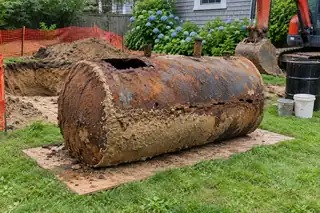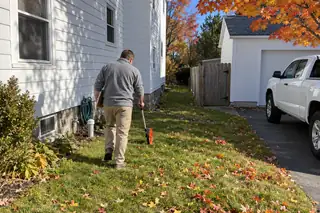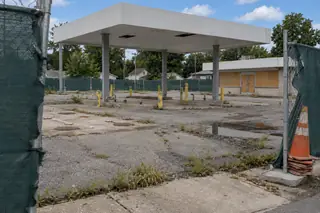
You should remove your oil tank before selling your house.
No state legally requires you to pull a buried tank before closing. But the financial math, the buyer psychology, and the lending reality all point the same direction. Sellers who handle underground oil tank removal before listing walk away with more money and fewer complications than sellers who try to negotiate around a known problem. To see what the job involves, read how oil tank removal works.
This is a strategy question, not a legal one. Whether you can sell a house with a buried oil tank has a clear legal answer: yes, in every state. The better question is whether you should, and what it costs you if you do not.
The exception: if you genuinely do not know whether a tank exists on your property, you have no obligation to go looking for one in most states. But if you know it is there, or if a home inspector is going to find it anyway, the decision tree below will save you money and months of stress. Sellers advised to convert before listing should know that an oil to gas conversion does not close the tank on its own, and the unclosed tank is the part buyers ask about.
Why Removing the Tank Before Listing Almost Always Pays Off
A buried heating oil tank creates a specific problem for buyers: uncertainty. They do not know whether the tank has leaked, what soil remediation might cost, or how long cleanup could delay their move-in date. That uncertainty gets priced into their offer. The discount buyers apply is almost always larger than what the removal would have cost the seller.
A clean NFA letter from the state environmental agency tells the buyer the tank is gone, the soil tested clean, and there is no environmental liability attached to the property. That single document changes the entire negotiation dynamic. Buyers pay more for certainty, and lenders approve loans faster when the environmental file is closed.
Removing the tank also eliminates the risk of a deal collapsing at the oil tank inspection stage. Home inspectors in the Northeast routinely flag buried tanks, and once that flag is in the report, the buyer's lender gets involved. That is where things go sideways for the seller.
The one scenario where pre-listing removal does not pay off: if your local market is so hot that buyers are waiving inspections and paying cash above asking price. In that market, spending $3,000 on removal before listing is money you did not need to spend. Those conditions are rare in 2026, but they exist in pockets of the country.
What Happens When You Disclose Instead of Remove
Disclosure without removal is a gamble that sometimes works. If the buyer is paying cash, has experience with oil tank properties, and is willing to assume the seller oil tank responsibility, you can negotiate a credit at closing and move on. This path works best in competitive markets where buyers are less likely to walk away from a property over a known issue.
The more common outcome: the buyer asks for a credit equal to the worst-case remediation estimate, not the actual oil tank removal cost. A $2,500 removal becomes a $15,000 credit request because the buyer's agent tells them to plan for contamination. You lose negotiating leverage the moment that underground oil tank shows up in the real estate transaction paperwork.
The discount is always bigger than the bill.
Selling a house with a buried oil tank also shrinks your buyer pool dramatically. Cash buyers and experienced investors will negotiate a discount and proceed. First-time homebuyers with FHA financing will walk away entirely. That smaller pool means fewer offers, longer days on market, and a weaker final sale price. The property value impact of a known oil tank is measurable even when the tank itself has never leaked a drop.
The Real Cost of Removing an Oil Tank Before Selling
Residential heating oil tank removal typically runs $1,500 to $3,500 nationally, and most buried tanks sit beneath older homes in the Northeast. Basement tank removal costs more, typically $2,000 to $5,000, because confined access and demolition work add labor hours and disposal fees.
Soil testing adds $500 to $2,000 depending on the number of samples your state requires. If the soil comes back clean, you get your NFA letter and list the property with a closed environmental file. If contamination is found, remediation starts at $5,000 for minor petroleum impact and can exceed $50,000 for serious plumes that reach groundwater. That is a real number, and pretending it does not exist does not make it smaller.
The contamination risk exists whether you remove the tank now or the buyer discovers it during their inspection. The difference is control. A seller who finds contamination before listing can shop remediation quotes, choose the most cost-effective approach, and factor the total into their listing price. A seller who finds contamination after an accepted offer has no leverage, no time, and a buyer who is already reconsidering.
The math that matters: a clean removal with no contamination costs roughly $2,000 to $4,000 total including soil testing. The average price reduction buyers demand when a buried tank is disclosed runs $10,000 to $20,000 according to real estate agents who sell in tank-heavy markets. Oil tank removal before listing is 60 to 80 percent cheaper than the negotiating table alternative.

State Disclosure Laws That Change the Equation
New Jersey has some of the strictest oil tank disclosure requirements in the country. Sellers must disclose known underground tanks, and home heating oil tanks are exempt from the state's UST rules under N.J.A.C. 7:14B-1.4, though closure work on a buried home tank must still be done by DEP certified individuals and firms. In practice, most New Jersey real estate transactions involving buried tanks require removal, plus an NJDEP No Further Action letter if the tank leaked, before the buyer's lender will fund the oil tank mortgage.
Pennsylvania takes a different approach through its seller disclosure form, which asks about underground storage tanks directly. The state's USTIF covers regulated storage tanks, not a typical home heating oil tank. If a buried home tank of 3,000 gallons or less has leaked, PADEP's Underground Heating Oil Tank Cleanup Reimbursement Program repays eligible cleanup costs up to $4,000 per tank after a $1,000 deductible. A Pennsylvania seller still pays most of a large cleanup.
Ohio runs UST oversight through the State Fire Marshal, with some local fire departments issuing tank permits, and its PUSTRCB fund can help offset cleanup costs for qualifying sites. Connecticut, Massachusetts, and Maine all have disclosure requirements tied to their property transfer processes. Maine, which has the highest per-capita heating oil usage in the country, requires a 10-day DEP notice before any tank closure. Each state's process adds a different timeline pressure to the seller's decision.
A handful of states follow a caveat emptor model where the seller has minimal disclosure obligations. In those markets, you can technically sell without disclosing a tank you did not know about. If you knew and stayed quiet, you are exposed to environmental liability that follows the property's chain of title indefinitely. An attorney who specializes in real estate environmental issues is worth the $300 consultation fee in caveat emptor states, because the liability exposure dwarfs the legal bill.
The Lender Problem Most Sellers Overlook
Lenders do not write mortgages on contaminated property. If the buyer's home inspection or Phase 1 ESA reveals a buried tank with no closure documentation, the lender will require either removal with a clean soil report or a substantial escrow holdback before funding the loan. FHA and VA loans are particularly strict on environmental conditions, and conventional lenders are not far behind.
This is the gotcha that kills deals three weeks before closing. The seller and buyer agree on a price, the buyer's inspector finds the tank, and the lender refuses to close until the tank is addressed. Now the seller is removing the tank under pressure, on the buyer's timeline, with zero leverage on price or contractor selection. The removal still costs the same $2,000 to $4,000 it would have cost before listing, but the seller has also lost weeks of market time.
Lenders do not care about your timeline.
The exception involves conventional loans with low loan-to-value ratios. If the buyer is putting 30 or 40 percent down and the property appraises well above the loan amount, some lenders will accept a tank decommissioning with clean soil results instead of full removal. But a tank that is still in the ground with no soil testing and no closure paperwork? No mainstream lender will fund that loan. The buyer who wanted your house cannot buy it.
When Leaving the Tank Actually Makes Sense
Not every seller needs to remove the tank before listing. If you are selling to a cash buyer who plans to redevelop the property, the tank is their problem and they know it. Investors buying tear-downs or major renovation projects price tanks into their acquisition model and do not flinch at a buried tank the way a first-time buyer does. Removing a tank from a property that is about to be demolished is wasted money.
Tank decommissioning in place is another option. Closure in place means the tank stays in the ground, gets pumped clean, and is filled with inert material like sand or concrete slurry. It costs $800 to $1,500 for residential sites and satisfies most state closure requirements. The tradeoff: some buyers and lenders still prefer full removal, and closure in place does not include soil testing beneath the tank, which means you cannot guarantee the ground is clean.
If you are selling in a market where buried tanks are common and buyers expect them, removal before listing has less impact on your sale price. In parts of New Jersey, Connecticut, and Maine, so many homes have or had oil tanks that buyers barely flinch at the disclosure. The calculation is very different in a suburb of Raleigh or Denver where a buried tank is unusual, alarming, and grounds for walking away.
Closure in place also makes sense when excavation is physically impractical. If the tank sits directly beneath a patio, addition, or driveway that you are not willing to tear up, abandonment in place with proper documentation and soil sampling around the perimeter may be your most realistic path forward.
Your Move: What to Do This Week
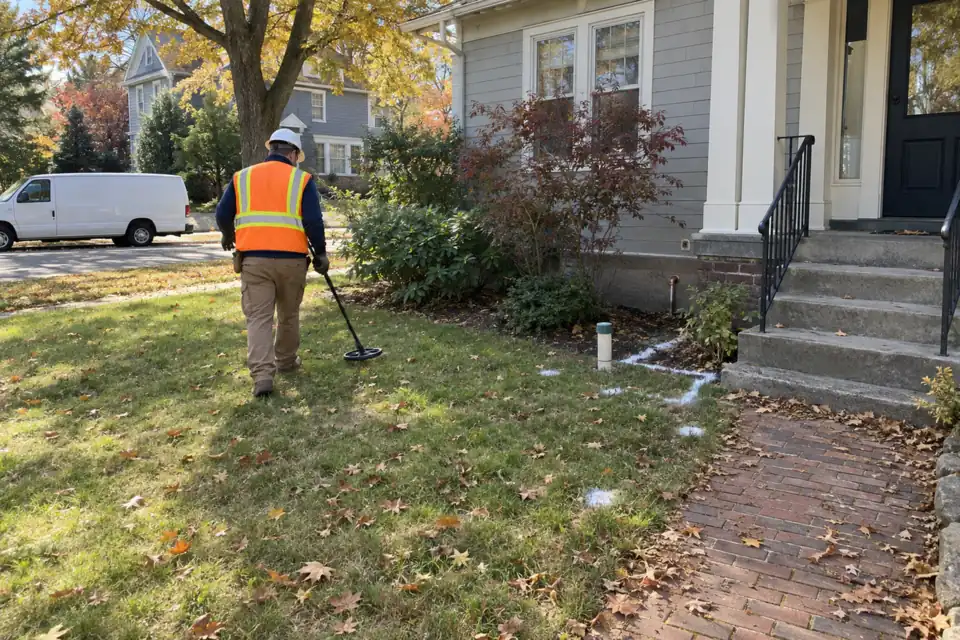
Get an oil tank inspection first. A basic residential inspection runs $400 to $1,500 and confirms the tank's size, condition, and exact location. Do not skip this step and guess at the scope of work. The exception: if you already have documentation from when the tank was installed or a previous inspection report with measurements, start directly with removal quotes instead of paying for a second inspection.
Get two or three quotes from UST contractors in your state who specialize in underground tank removal. Ask each one whether they handle the soil testing and state closure paperwork, because many experienced firms bundle the entire process. You can also request a quote directly. You want a single contractor who can pull the tank, test the soil, and deliver your NFA letter without you managing subcontractors or chasing permits yourself.
Talk to your real estate agent with the quotes in hand. Show them the oil tank removal cost versus the likely price impact of disclosing a buried tank to buyers. In most cases, the removal pays for itself through a higher sale price and a faster, cleaner closing. If your agent thinks disclosure and negotiation is the smarter play for your specific market, make sure they can point to recent comparable sales where that strategy actually worked. To get local pricing, compare quotes from tank removal companies in California.
The sellers who come out ahead are the ones who treat the tank as a closing cost, not a crisis. Budget for it, handle it before the sign goes in the yard, and list the property clean. The buyers, lenders, and inspectors will never know there was a problem, and your net proceeds will reflect that peace of mind. When the work goes out for bids, start with tank inspection and testing contractors.