Find Pennsylvania contractors for oil tank removal, UST decommissioning, heating oil tank closure, basement tank excavation, soil contamination testing, and environmental remediation. Serving Philadelphia, Pittsburgh, Allentown, Bethlehem, Scranton, Wilkes-Barre, Harrisburg, Lancaster, and communities statewide.
How Pennsylvania Oversees Oil Tank Closure and Cleanup Claims
Pennsylvania oil tank removal falls under the PADEP Storage Tank and Spill Prevention Program. The program enforces Act 32 of 1989 and related rules at 25 Pa. Code Chapter 245. Regulated commercial UST work at gas stations, fleet yards, and industrial sites must be performed by a PADEP-certified company with a qualified installer or remover on site. Heating oil tanks that heat the home are not regulated storage tanks under Act 32, so closing one does not require state certification, though PADEP still recommends a certified environmental contractor for soil screening and closure documentation. PA OneCall 811 notification is mandatory at least three business days before any excavation.
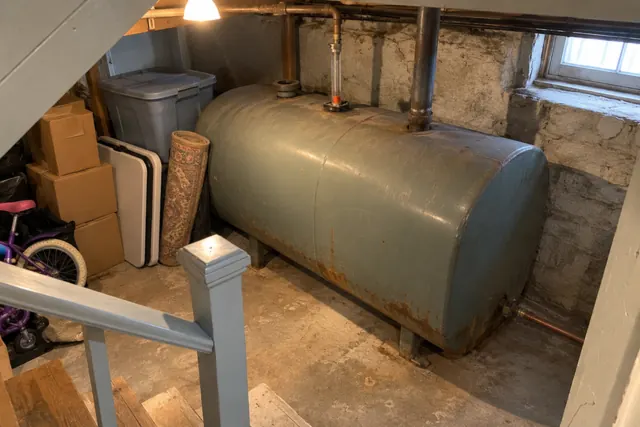
Residential basement oil tanks define the removal market in eastern Pennsylvania. Philadelphia rowhomes, Main Line estates, and older Doylestown single-families often have 275-gallon tanks beneath basement slabs or in side yards. Allentown, Bethlehem, and Easton share this pattern across the Lehigh Valley, and Scranton and Wilkes-Barre carry the same legacy in the northeast coal corridor. Pittsburgh and Allegheny County see fewer buried residential tanks due to early gas-line penetration, but commercial UST work stays active along the Mon Valley and I-376. Central Pennsylvania firms work across Harrisburg, Lancaster, York, and State College, where farmhouse heating tanks and agricultural fuel systems remain common in home inspection sweeps.
Residential oil tank removal in Pennsylvania typically runs $1,200 to $3,000 for a standard buried 275-gallon tank, with basement jobs at $2,000 to $4,000. If soil sampling exceeds PADEP Act 2 cleanup standards, site remediation can add $5,000 to $25,000 or more depending on plume size. If a buried home heating oil tank of 3,000 gallons or less leaks, PADEP's Underground Heating Oil Tank Cleanup Reimbursement Program repays eligible cleanup costs up to $4,000 per tank after a $1,000 deductible. The program is funded through USTIF, and basement and other aboveground tanks are not eligible. Commercial UST closure at Pennsylvania gas stations runs $6,000 to $15,000 per tank before remediation, and our removal cost breakdown covers pricing by tank size and access.
A typical Pennsylvania job starts with a PA OneCall 811 ticket, followed by pumping, degassing, excavation, visual inspection, and soil sampling at the tank bed and piping trench. A clean closure wraps up in one day for residential jobs and two to five days for commercial tanks. Remediation stretches weeks to months when Act 2 cleanup review triggers soil or groundwater sampling. Before signing, verify the contractor holds active PADEP Storage Tanks certification for regulated UST work and carries pollution liability insurance. For residential jobs, have the contractor file a closure report with the municipality and retain lab soil results with the property records for resale. If the tank has already leaked, our heating oil tank leak report compares Pennsylvania's homeowner cleanup reimbursement with 11 other oil-heat states. Property owners often view Pennsylvania contractors or submit a quote request to scope a project.
Do I need a licensed contractor to remove an oil tank in Pennsylvania?
For regulated commercial UST work, Pennsylvania requires a PADEP-certified company with a qualified installer or remover on site. Removing a heating oil tank that heats the home does not require state certification, because Act 32 does not treat those tanks as regulated storage tanks at any size. Most homeowners still hire a licensed environmental contractor for soil screening, closure documentation, and, if the tank leaked, the paperwork for PADEP's heating oil tank cleanup reimbursement. PA OneCall 811 notification is mandatory at least three business days before excavation on any property. Cities like Philadelphia, Pittsburgh, and Allentown also apply local permit requirements on top of state rules.
How much does oil tank removal cost in Pennsylvania?
Residential removal in Pennsylvania typically runs $1,200 to $3,000 for a standard buried tank and $2,000 to $4,000 for basement jobs. If soil contamination is discovered, environmental remediation can add $5,000 to $25,000 or more, depending on plume extent and cleanup standard. If a buried home tank of 3,000 gallons or less has leaked, PADEP's Underground Heating Oil Tank Cleanup Reimbursement Program, funded through USTIF, can repay up to $4,000 of eligible cleanup costs after a $1,000 deductible. Aboveground tanks are not eligible. Commercial UST closure at gas stations and fleet sites runs $6,000 to $15,000 per tank before remediation. See our cost guide for tank-size and access-condition breakdowns.
How long does oil tank removal take in Pennsylvania?
Most residential jobs in Pennsylvania finish excavation, tank pumping, degassing, and closure in a single workday. Basement removals sometimes stretch to two days because of access and dust-control work. Commercial tank closure at gas stations or fleet sites usually takes two to five days on site, depending on how many tanks and lines are involved. If soil contamination triggers PADEP cleanup review, the paperwork track can run 6 to 16 weeks before a release letter issues. Laboratory soil results from Pennsylvania labs typically come back in 5 to 10 business days.
Does Pennsylvania's USTIF fund cover residential heating oil tank cleanup?
Not directly. Pennsylvania's USTIF covers regulated storage tanks, and state law does not treat a home heating oil tank as one; the fund's own voluntary heating oil program only takes buried tanks of 3,000 gallons or more whose owners opted in. Homeowners use PADEP's Underground Heating Oil Tank Cleanup Reimbursement Program, which is funded through USTIF. It covers cleanup after a leak from a buried heating oil tank of 3,000 gallons or less: the owner pays a $1,000 deductible and PADEP repays eligible costs up to $4,000 per tank. Basement and other aboveground tanks are not eligible, and the program does not pay to remove a tank that has not leaked.
Can I sell my Pennsylvania home with an underground oil tank still buried?
Pennsylvania law does not prohibit the sale. Buyers in the Philadelphia suburbs, Main Line, Lehigh Valley, and Pittsburgh metro commonly require tank removal or tank decommissioning before closing. Oil tank sweeps during home inspection are now standard practice in Delaware Valley and Lehigh Valley real estate transactions. A scope of work or closure report from a licensed contractor materially improves the sale path. Documented soil results and a PADEP-aligned closure report from the tank remover travel with the deed and answer most buyer questions.