

What to Know About UST Remediation in Delaware
Delaware environmental remediation contractors run UST releases through DNREC from initial notification through site closure. The Department of Natural Resources and Environmental Control oversees corrective action under 7 Del. C. Chapter 74 and the Delaware Regulations Governing Underground Storage Tank Systems, layered on federal 40 CFR 280 rules. The DNREC Tank Management Section reviews release notifications, corrective action plans, and closure reports for petroleum sites statewide. Most contractors enter a project after a Phase I ESA flags historical UST use during a property transaction or refinance. From there, DNREC requires a tiered investigation that scales with contamination depth, plume size, and proximity to drinking water wells across the state's three counties.
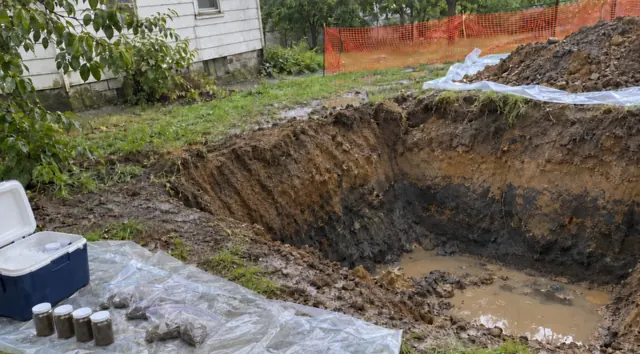
Demand for Delaware site cleanup concentrates around the I-95 corridor and the state's three county seats. New Castle County drives the volume, with Wilmington's port and refinery legacy producing layered petroleum and industrial contamination, while Newark sees steady residential heating oil tank work tied to home sales near the University of Delaware. Dover and Middletown handle a mix of former gas stations and government fleet sites, including state and federal facilities along US-13. Georgetown and Seaford in Sussex County face a different profile, where sandy coastal-plain soils and shallow groundwater move contamination quickly toward private wells and surface water. Heating oil tank closures remain common across all three counties because Delaware was a late holdout for residential underground oil heat; see cleanup methods compared for non-state-specific drivers like contaminant type and treatment selection.
Cleanup costs in Delaware track contamination depth, soil type, and distance to potable wells, with soil sampling typically running $400 to $1,200 per location and a four-corner pit characterization landing between $1,500 and $4,500. Limited residential heating oil tank closures with light soil impact usually fall between $6,000 and $20,000 once disposal is included. Commercial UST cleanup at a former gas station commonly runs $25,000 to $120,000, with larger Wilmington or Newark plumes reaching $250,000 or more when groundwater treatment is required. Corrective action is overseen by DNREC Tank Management under 7 DE Admin Code 1351. DNREC publishes its tank financing options. Its Heating Fuel UST Closure Assistance Program has contractors hired by the state remove or close eligible buried home heating fuel tanks of eleven hundred gallons or less while limited funds last. Its Storage Tank Assistance Fund is used for closure and cleanup only in limited cases, such as when the owner cannot be identified, has abandoned the property or cannot pay. The closure program is not a reimbursement program, so confirm with DNREC Tank Management what applies to your site before assuming any cost is recoverable. Sandy Sussex County soils sometimes lower excavation costs but raise long-term groundwater monitoring expense.
The Delaware cleanup workflow starts with release notification to DNREC within 24 hours under 7 Del. C. Chapter 74, followed by initial site characterization and a corrective action plan. Soil excavation and disposal typically takes one to two weeks for a small site, while groundwater monitoring runs four to eight quarters depending on initial concentrations and the affected aquifer. Closure reports submitted to the DNREC Tank Management Section typically yield a No Further Action determination six to eighteen months after final clean results, with longer windows on Sussex County sites where shallow water tables slow rebound monitoring. Field crews handling petroleum-impacted soil need HAZWOPER training under federal 29 CFR 1910.120 hazardous waste rules, so confirm any contractor's certification before mobilization. Before signing a quote, ask Delaware contractors to itemize disposal separately from excavation, name the analytical lab, and confirm whether they handle DNREC paperwork on your behalf.