

Installing Underground Storage Tanks in North Dakota
Fuel tank installation activity in North Dakota concentrates in two distinct corridors. Single-tank projects in either corridor run $60,000 to $160,000. The western oil patch centered on Williston, Dickinson, and Watford City drives demand from truck stops, fleet fueling depots, and oilfield service yards that consume diesel at industrial scale. Eastern population centers including Fargo, Grand Forks, and Bismarck see steadier demand from convenience store chains, municipal fleet facilities, and agricultural cooperatives replacing aging fuel systems. Minot serves as a hub for north-central agricultural fueling infrastructure. The Bakken region's boom-and-bust cycles mean installation demand spikes when oil prices rise, then cools sharply during downturns, which limits the number of experienced UST installers who maintain a permanent presence in the state.
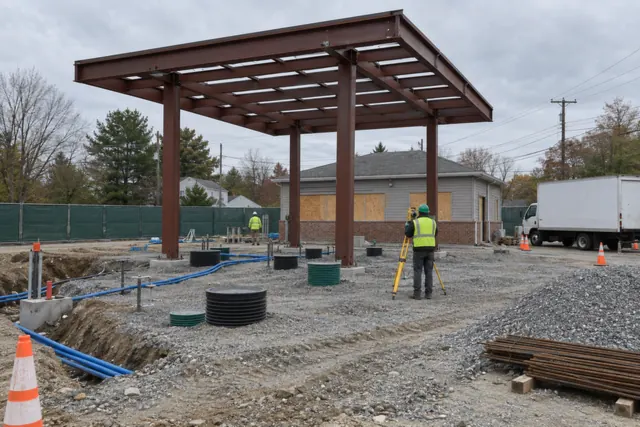
Single underground storage tank installation in North Dakota typically costs $60,000 to $160,000, reflecting higher labor and mobilization costs than most lower-48 states. Multi-tank gas station build-outs with dispensers, piping, and canopy structures range from $275,000 to $550,000. Monitoring equipment adds $5,000 to $15,000 per system. Remote western sites often carry a 15 to 25 percent premium over Fargo or Bismarck projects because contractors must mobilize equipment across long distances. Frozen ground from November through March limits the construction window, and projects that miss the fall deadline typically wait until spring thaw. North Dakota's Petroleum Tank Release Compensation Fund reimburses eligible tank owners for most cleanup costs above a deductible. Owners replacing old tanks should still budget for their share of potential remediation if soil sampling reveals contamination beneath the existing tank footprint.
North Dakota's Bakken oil boom reshaped fuel tank installation demand across the state. The state environmental quality program oversees UST permitting and compliance under federal EPA technical requirements, though North Dakota does not issue a separate UST-specific contractor license. General contractors performing underground storage tank installation must still meet state permitting requirements and follow EPA installation standards for leak detection, corrosion protection, and spill prevention. Facilities operating without proper permits face enforcement actions that can shut down fueling operations entirely.
A typical installation project begins with site engineering and permit submissions, which run four to six weeks in North Dakota. Excavation, tank setting, piping, and dispenser work take three to eight weeks depending on project size and weather conditions. After physical installation, federal requirements mandate tank tightness testing, leak detection commissioning, and cathodic protection verification before fueling operations can begin. North Dakota's short construction season means scheduling matters more here than in most states; contractors who start excavation in September risk hitting frozen ground before completing backfill. Request bids from multiple contractors, and confirm each bid covers permitting, excavation, backfill, testing, soil sampling around any removed tank, and all state documentation.