Environmental Remediation Companies in North Dakota
Find contractors in North Dakota for environmental remediation, soil cleanup, groundwater treatment, and site closure. Serving Fargo, Bismarck, Grand Forks, Williston, and communities statewide.
What to Know About UST Remediation in North Dakota
North Dakota environmental remediation contractors operate under the NDDEQ UST cleanup framework. The North Dakota DEQ UST Program, housed in the Tanks and Spills section, requires release reporting within 24 hours and oversees corrective action plans on confirmed petroleum releases. The state's Petroleum Tank Release Compensation Fund may reimburse eligible cleanup costs for tank owners who maintain compliance with NDDEQ rules. Owners typically commission a Phase I ESA before purchase or sale, with a Phase II investigation triggered when records or interviews flag historical tank use. Facilities most likely to need cleanup work in North Dakota include Bakken-era fueling depots, agricultural cooperatives, abandoned rail-side bulk plants, and former service stations along Highway 2 and I-94. NDDEQ does not run a separate residential heating-oil tank program, so most active remediation work is commercial.
Demand concentrates around the Bakken oil patch and the Red River Valley. Williston, Dickinson, and Watford City sit at the heart of a western corridor that expanded during the 2008-2014 oil boom, and many tank systems there are now reaching closure age. Fargo, Bismarck, and Grand Forks anchor the eastern half, where work skews toward older downtown service-station closures and grain-elevator contamination. Contractors here specialize in commercial tank closures, soil excavation in glacial-till geology, and groundwater work in slow-recharging aquifers, since North Dakota carries almost no residential heating-oil legacy. Read remediation methods explained for general process detail.
North Dakota site cleanup costs vary by contamination depth and the season the work happens. Soil excavation and disposal typically runs $10,000 to $50,000 at a standard service-station footprint, $5,000 to $15,000 at small ag fueling sites, and $500 to $2,000 per soil sample location. Groundwater treatment in shallow aquifer settings adds $25,000 to $80,000 over the monitoring period, and Bakken-era multi-tank facilities with deeper contamination can pass $150,000. Winter work commands a 15 to 30 percent premium because contractors must rent thaw equipment or schedule around frozen ground from late November through March. The Petroleum Tank Release Compensation Fund may cover eligible cleanup costs for compliant tank owners, but reimbursement timing typically lags the spend by 12 to 18 months.
The typical North Dakota cleanup sequence starts with a release notification to NDDEQ within 24 hours, followed by a site characterization that maps soil and groundwater impact. Contractors then submit a corrective action plan, complete excavation or in-situ treatment, and finish with a closure report and request for No Further Action. Timelines run six to eighteen months for limited soil cases and stretch past two years for Bakken groundwater work. Before signing a contract, North Dakota property owners should confirm NDDEQ project experience, pollution legal liability coverage, and crew HAZWOPER training per OSHA 1910.120. Get the impacted-soil disposal contingency in writing with a per-ton rate, since that single line item drives most cost overruns on small commercial closures.
North Dakota contractors for environmental remediation
Do contractors need a state license to do environmental remediation in North Dakota?
North Dakota does not issue a single environmental remediation license, but contractors must register with NDDEQ before submitting corrective action plans. Field crews need current 40-hour OSHA HAZWOPER training under federal rule 1910.120, plus annual 8-hour refreshers. Project managers typically hold a professional engineer or professional geologist credential, especially for groundwater work that requires a sealed corrective action plan. Property owners should ask for the NDDEQ project list and current HAZWOPER cards from every crew member on site.
How much does environmental remediation cost in North Dakota?
Soil excavation and disposal at a service-station footprint typically falls between $10,000 and $50,000, depending on impacted-material volume and haul distance. Groundwater treatment in shallow Bakken-area aquifers commonly runs $25,000 to $80,000, and multi-tank sites with deeper contamination can clear $150,000. Winter projects add a 15 to 30 percent premium for frozen ground and thaw rentals. Soil sampling at $500 to $2,000 per location is the smallest variable but determines the rest of the budget. When you compare quotes from soil remediation companies in North Dakota, make sure each one covers excavation, soil disposal, backfill, and the confirmation sampling needed to close the case.
How long does a UST cleanup take in North Dakota?
A clean closure typically wraps up in two to four weeks of field work, plus six to eight weeks for state report review. When soil impacts are confirmed, the corrective action phase usually runs six to twelve months through No Further Action. Groundwater cases stretch longer because monitoring wells must show stable or declining contaminant trends across at least four quarterly sampling rounds. Bakken-era multi-tank sites with deeper plumes routinely take two to three years before NDDEQ issues the closure letter.
Why do remediation projects in North Dakota cost more in winter?
Frozen ground in North Dakota commonly extends four to six feet deep from late November through March, well past the typical UST excavation depth. Contractors either rent ground-thaw equipment that runs heated pipes through the soil before excavation, or they schedule work for the May through October window. Both options carry a cost penalty: thaw rentals add to the bill per pad, while delayed scheduling can push a closure into the next federal compliance reporting cycle. Bakken operators with active production schedules sometimes pay the winter premium to keep facility downtime predictable.
What does the cleanup process involve after a tank is removed?
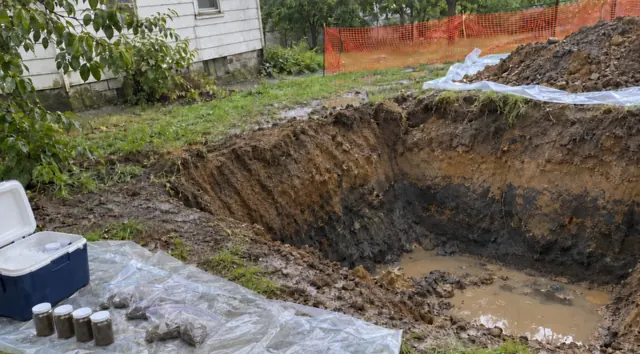
Once the tank is out, the contractor takes soil samples from the pit floor and sidewalls and sends them to a state-accredited lab for petroleum hydrocarbon analysis. If a sample exceeds North Dakota DEQ closure thresholds adopted from 40 CFR 280, the contractor proposes a corrective action plan covering over-excavation, in-situ treatment, or monitoring wells. The plan goes to NDDEQ for review before fieldwork resumes, and a closure report documents every disposal manifest, lab result, and remedial step taken. The owner receives a No Further Action letter only after NDDEQ confirms post-cleanup data meets the petroleum cleanup standards.