

What to Know About Tank Decommissioning & Closure in Alaska
The Alaska Department of Environmental Conservation (ADEC) regulates underground storage tanks through its Division of Spill Prevention and Response, from a UST office in Anchorage. State law in AS 46.03.450 defines a UST as a petroleum tank with 10 percent or more of its volume underground, and it leaves out several kinds of tanks. A tank storing heating oil for consumptive use on the premises is excluded at any size, at a home or a business. So are farm or residential tanks of 1,100 gallons or less holding motor fuel that is not for resale, and tanks of 110 gallons or less. ADEC's January 2003 heating oil guide states that a tank used only to store heating oil consumed on the premises is not regulated by ADEC.
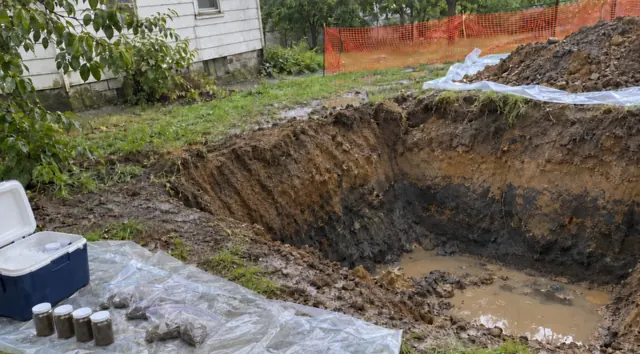
Tank closure for a regulated UST follows 18 AAC 78.080 to 78.090. The owner notifies ADEC in writing, on the department's form, at least 15 days but not more than 60 days before closure begins. If closure does not happen within 60 days of the date given, a new notice is required, and a changed date must be reported to the Anchorage office at least three days ahead. A UST must be removed from the ground unless ADEC lets it remain, with a professional engineer's signed statement that removal would endanger existing structures. A qualified environmental professional conducts or supervises the site assessment, and a tank removal needs at least two soil samples from the pit.
Alaska has no state fund that helps owners pay for tank closure. The legislature repealed the tank upgrading and closure program in AS 46.03.430 in 2002, and the related financial assistance rules in 18 AAC 78.500 to 78.560 are marked deleted or repealed. EPA's UST state contacts page lists ADEC's Response Fund Administration and states that the fund does not finance all UST cleanups or meet the federal financial responsibility requirement. Budget a closure as an owner expense. Our guide to closure in place versus UST removal explains what changes the scope of a closure job.
After a regulated UST closure, the owner submits a post-closure notice within 30 days and a site assessment report within 60 days. The rules also require the tank tags to be returned within 30 days and the site assessment results kept for at least three years. Petroleum found during the work must be reported to ADEC within 24 hours of discovery. Closure work itself requires a worker certified for closure, including removal, who must be at the job site while that work is performed. The Department of Commerce, Community, and Economic Development, not ADEC, runs that certification program. Alaska's program does not hold EPA state program approval, and EPA's state program page says the federal regulations, 40 CFR Part 280, also apply in states like it. For a regulated UST, ask for the on-site worker's Alaska UST closure certification before hiring any contractor on this page.