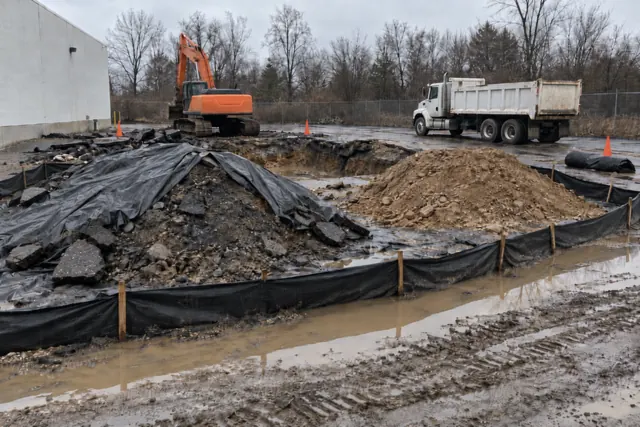
Find Alaska contractors for environmental cleanup, soil and groundwater treatment, contaminated site closure, and UST corrective action. Serving Anchorage, Fairbanks, Juneau, and Wasilla.
What to Know About UST Remediation in Alaska
Alaska environmental remediation contractors clean former tank sites under tight ADEC rules. The Alaska Department of Environmental Conservation administers the Contaminated Sites Program under 18 AAC 75 and oversees UST closure work under 18 AAC 78. Anchorage and Fairbanks property owners ordering an environmental evaluation before purchase trigger this program if soil staining or a fill pipe shows on the report. ADEC requires a written corrective action plan for any release exceeding method two cleanup levels, and tracks each open site in its public Contaminated Sites Database. Service stations, bulk fuel facilities, and remote village tank farms all fall under the same permit chain.
Demand for cleanup work concentrates in Anchorage, Fairbanks, Juneau, and the Mat-Su Valley around Wasilla, where commercial fuel histories trace back to pipeline-era construction. Anchorage carries port-related diesel and aviation fuel plumes near the Ship Creek industrial corridor and the Port of Alaska bulk yards. Fairbanks faces frozen ground that traps petroleum until summer thaw releases it into shallow groundwater under residential blocks. Juneau and the southeast panhandle deal with high rainfall that pushes contamination toward salmon-bearing streams ADEC closely guards. Bulk fuel terminals in Bethel, Nome, and Kotzebue carry persistent legacy releases tied to barge-delivered heating fuel and aging single-wall steel.
Alaska remediation costs run higher than the Lower 48 because of fuel prices, mobilization distance, and a brief summer work window. Soil excavation and offsite disposal on the road system typically falls between $15,000 and $45,000 for a small tank pit. Sites reachable only by barge or air can push past $80,000 once equipment ferry charges land in the bid. Groundwater treatment using sparge or bioremediation often runs $40,000 to $150,000 across a two to four year monitoring window. Review the site cleanup methods reference for phased budgets, since ADEC does not operate a cleanup trust fund similar to USTIF or PUSTRCB.
The typical Alaska cleanup sequence starts with an ADEC Site Characterization, followed by a corrective action plan submitted before any soil moves. Approval timelines run six to twelve weeks during the winter queue and faster in spring once field crews compete for slots. Property owners should ask each bidder to confirm current HAZWOPER training for every worker stepping into the excavation zone, since ADEC inspectors check personnel records during site visits. Verify the contractor has hauled across the road system before, holds an active state business license, and carries pollution liability covering the specific release category. Get the closure report submitted the same season the excavation closes, before backfill data ages out of the file and forces a rework.
Do Alaska remediation contractors need a state license?
Alaska does not issue a separate UST remediation license, but contractors performing tank work must register with ADEC and follow the 18 AAC 78 worker training rules. Field crews typically hold 40-hour HAZWOPER cards plus 8-hour annual refreshers, and supervisors carry the 8-hour supervisor add-on. Contractors handling cleanup at federally regulated sites also need EPA-approved release detection installer or tester credentials when those tasks fall in scope. Verify the company has filed an Alaska business license with the Department of Commerce before signing any contract.
How much does soil cleanup cost at an Alaska tank site?
Small road-system excavations with limited contamination usually fall between $15,000 and $45,000 once disposal at a regulated landfill is included. Sites with deeper plumes or groundwater impact often run $80,000 to $200,000 across a multi-year monitoring schedule. Off-road and rural village sites carry mobilization premiums that can add $20,000 to $60,000 to any project. The single largest cost driver remains contaminated soil tonnage, since ADEC requires offsite treatment or disposal for anything above method two levels. When you compare quotes from soil remediation companies in Alaska, make sure each one covers excavation, soil disposal, backfill, and the confirmation sampling needed to close the case.
How long does an Alaska remediation project take?
Most road-system soil excavations finish field work in two to four weeks during summer, but the closure paperwork can extend the project by six months or more. ADEC review of corrective action plans typically takes six to twelve weeks, with longer queues from late September through April. Groundwater monitoring requirements stretch the official close out to two or four years of quarterly sampling for sites with plume migration. The short construction season means crews often plan winter standby and resume excavation when frozen ground thaws.
Does Alaska have a state cleanup fund for UST contamination?
Alaska does not operate an active reimbursement fund equivalent to Pennsylvania's USTIF or Ohio's PUSTRCB, so owners typically rely on pollution insurance or out of pocket payment. The state did run a legacy financial responsibility program that closed to new claimants, leaving residual obligations only for older cases. ADEC may pursue cost recovery from responsible parties under 18 AAC 75 if the agency steps in to lead the response. New tank owners should secure pollution legal liability coverage before fueling operations begin, since standard CGL policies exclude pollution releases.
What happens during a typical UST remediation in Alaska?
After ADEC accepts a Site Characterization, the contractor opens the excavation, removes the tank if still in place, and pulls confirmation samples from the pit floor and sidewalls. Lab turnaround for hydrocarbon results runs about ten business days, longer if shipped from rural sites. Clean results lead to backfill, surface restoration, and a closure report submitted to ADEC for No Further Action. Elevated readings move the project into a corrective action plan that may require thermal treatment, biosparge, or hauling soil to a permitted facility.