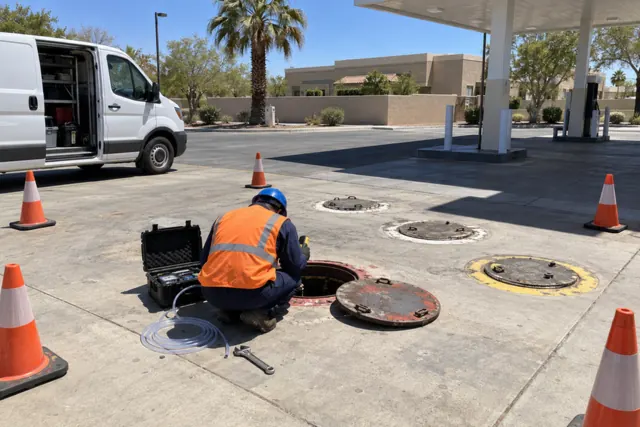
Oil Tank Inspection & Testing Companies in Alabama
Find licensed contractors in Alabama for oil tank inspection, underground storage tank testing, tank tightness testing, leak detection, and UST compliance assessments. Serving Birmingham, Mobile, Huntsville, Montgomery, Tuscaloosa, Dothan, and communities statewide.
What to Know About Oil Tank Inspection & Testing in Alabama
Alabama requires training requirements for contractors performing underground storage tank inspection, testing, and
related UST work at regulated commercial and industrial sites. Contractors must hold valid credentials issued
through the state environmental program before conducting oil tank inspection, tightness testing, or leak
detection on regulated underground storage tanks. A single-tank tightness test here usually falls between $500 and $1,200. Regular inspection matters more in Alabama than in drier states
because the warm, humid climate and high water tables accelerate corrosion on older steel tanks. A small pinhole
leak that might take years to cause problems in arid soil can reach groundwater in Alabama within months, making
routine oil tank inspection the most cost-effective way to prevent a major environmental cleanup.
Most oil tank inspection and testing demand in Alabama is concentrated around Birmingham, Mobile, and Huntsville,
where the highest density of commercial fueling infrastructure exists. Gas stations, fleet fueling facilities, and
truck stops along I-65 and I-20 all require periodic underground storage tank inspection and tank tightness
testing to maintain regulatory compliance. Mobile's port and petrochemical corridor generates additional demand
for fuel tank inspection at bulk storage and distribution facilities. Alabama has virtually no residential heating
oil market, so nearly all underground oil tank inspection work in the state serves commercial and industrial
property owners. Many of the same contractors who perform oil tank inspection also handle oil tank removal, tank
closure, and environmental remediation when problems are discovered during testing.
Oil tank inspection cost in Alabama typically ranges from $500 to $2,500 depending on the number of tanks, tank
size, and testing methods required. Tank tightness testing for a single underground storage tank usually falls
between $500 and $1,200. Costs increase when multiple tanks need simultaneous testing or when initial results
suggest possible soil contamination requiring further assessment. The real expense comes when problems go
undetected. A leaking underground storage tank discovered late can trigger environmental remediation costs of
$10,000 to $50,000 or more, particularly when petroleum has migrated toward groundwater. Alabama's Underground and
Aboveground Storage Tank Trust Fund may reimburse eligible property owners for certain cleanup costs, but early
detection through regular oil tank inspection and testing is the most reliable way to keep total costs manageable.
Commercial underground storage tank inspection in Alabama must comply with both state and EPA regulations covering
leak detection, corrosion protection assessment, and containment system verification. Under federal rules, most
underground storage tank systems require a formal compliance inspection every three years, but that minimum does
not mean facility owners can ignore their tanks between visits. Monthly automatic tank gauge readings, annual line
leak detector checks, and ongoing cathodic protection monitoring all factor into a complete UST compliance
program. Facility managers at gas stations, truck stops, and industrial fueling sites who let inspection records
lapse are the ones who end up paying for problems that routine underground oil tank inspection would have caught
for a fraction of the cost. A state-certified environmental remediation contractor who handles both inspection and
oil tank removal can manage the entire process if testing reveals a problem that requires corrective action.
Alabama contractors for tank inspection and testing
Do I need a certified contractor for oil tank inspection in Alabama?
Yes. Alabama requires state certification for contractors performing underground storage tank inspection,
testing, and related UST work at regulated commercial and industrial sites. Contractors must hold valid
credentials before conducting oil tank inspection, tank tightness testing, or leak detection on regulated
underground storage tanks. This applies to all commercial fuel tank inspection at gas stations, fleet fueling
facilities, truck stops, and industrial petroleum storage sites. Working with a state-certified contractor
ensures that your inspection results are valid for UST compliance purposes and will be accepted by state
regulators if questions arise.
How much does oil tank inspection and testing cost in Alabama?
Oil tank inspection cost in Alabama typically ranges from $500 to $2,500 depending on the number of tanks,
testing methods, and site accessibility. Tank tightness testing for a single underground storage tank usually
costs between $500 and $1,200. Multi-tank facilities like gas stations with three or four underground storage
tanks should expect higher costs for comprehensive inspection. The real risk is skipping inspections entirely. A
leaking underground storage tank that goes undetected can lead to environmental remediation costs of $10,000 to
$50,000 or more, which dwarfs the cost of routine oil tank inspection and testing. Think of regular inspection
as an insurance policy against a cleanup bill that could threaten the entire property value.
How often do underground storage tanks need to be inspected in Alabama?
Under federal EPA regulations, most underground storage tank systems must undergo a formal compliance inspection
every three years. Between those inspections, facility owners are required to maintain continuous leak detection
monitoring and keep all testing records current. Alabama follows the federal schedule, and the state
environmental program may require additional inspections for tanks with a history of compliance issues or those
located near sensitive groundwater areas. Monthly monitoring of automatic tank gauging systems and annual line
leak detector testing are also part of ongoing UST compliance. A state-certified contractor can help establish
an inspection and testing schedule that keeps your facility in compliance without paying for unnecessary
testing.
What happens if a tank fails inspection in Alabama?
When an underground storage tank fails tightness testing or inspection in Alabama, the facility owner must take
the tank out of service until the problem is resolved. If the failed test indicates a petroleum release or soil
contamination, the owner must report it to the state environmental program and begin environmental remediation.
The timeline and cost depend entirely on what the inspection found. A minor piping leak caught early might
require a straightforward repair and follow-up fuel tank inspection. A major release that has reached
groundwater can mean months of remediation work. Alabama's Underground and Aboveground Storage Tank Trust Fund
may cover eligible cleanup costs, but prompt reporting and proper documentation from the initial oil tank
inspection are essential for qualifying. Delaying action after a failed inspection only makes the problem more
expensive.
What types of tank testing are available?
Tank tightness testing is the most common method. It measures whether a tank is losing product by monitoring
fuel levels under controlled conditions over a set period. Line tightness testing checks the pressurized piping
that connects underground storage tanks to dispensers. Cathodic protection testing verifies that the corrosion
prevention system on steel tanks and metal piping is still working as designed. For sites where there is reason
to suspect a petroleum release, soil vapor monitoring and groundwater sampling provide a more complete picture
of what is happening below ground. Most commercial facilities need some combination of these methods during a
comprehensive underground oil tank inspection. A state-certified environmental remediation contractor can
recommend the right testing based on the age, construction type, and compliance history of your specific
underground storage tank system.