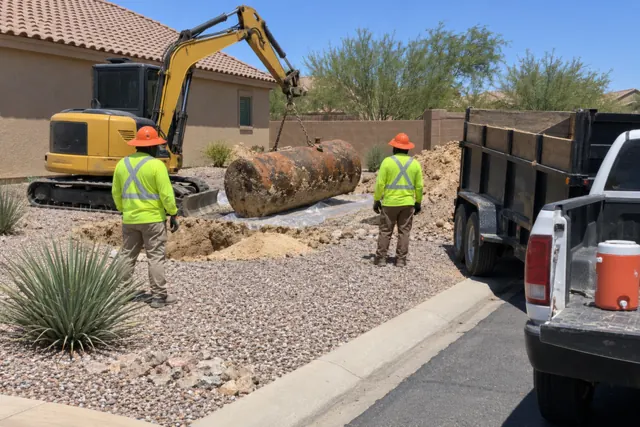
Find licensed Oklahoma contractors for oil tank removal, UST decommissioning, petroleum tank closure, fuel tank testing, soil contamination sampling, and environmental remediation. Serving Oklahoma City, Tulsa, Norman, Broken Arrow, Lawton, Edmond, and communities statewide.
What to Know About Oil Tank Removal in Oklahoma
Oklahoma was built on petroleum, which means the state carries an outsized inventory of aging underground tanks relative to its population. The Oklahoma Corporation Commission Petroleum Storage Tank Division licenses UST contractors and regulates installation, closure, and release reporting under OAC 165:26, and also oversees corrective action after a confirmed release. OCC requires a 30-day advance notice before permanent closure and mandates that a licensed Class C UST contractor perform the excavation, pull soil samples, and file the closure package.
Commercial UST turnover concentrates across the Oklahoma City and Tulsa metros, where gas stations and truck stops have cycled through upgrades since the 1990s federal UST deadlines. Refinery-legacy towns like Ponca City, Bartlesville, Cushing, and Drumright carry a deeper inventory of industrial tanks tied to early-20th-century drilling and pipeline operations. Norman, Edmond, Broken Arrow, and Owasso add suburban fleet yards, and Lawton's Fort Sill corridor generates a steady flow of military and civilian fuel system closures. Red-bed clay soils across most of central Oklahoma retain hydrocarbons differently than sandy aquifer regions, which shapes how contractors plan excavation and sampling.
Residential pricing across the OKC and Tulsa metros runs $1,200 to $2,800 for a standard buried tank with clean soil and machine access. Tight urban lots and basement-adjacent heating oil tanks in older Nichols Hills, Mesta Park, and Tulsa's Maple Ridge neighborhoods climb to $2,500 to $4,500 because crews work with smaller equipment. Commercial UST closure at Oklahoma gas stations starts around $4,500 per tank and climbs with piping and pit size. If contamination surfaces during excavation, remediation work adds $10,000 to $50,000 or more. Oklahoma's Petroleum Storage Tank Indemnity Fund reimburses eligible commercial tank owners after a deductible keyed to compliance status. Our oil [tank removal cost](/oil-tank-removal-cost/) guide breaks down what drives the final invoice.
A clean Oklahoma residential job wraps in one day on site, with soil laboratory results returning in five to ten business days. Commercial multi-tank closures at OKC and Tulsa gas stations run three to five days on site, with additional days for state review. Spring and fall are the practical working windows: summer heat above 100 degrees and winter red-bed frost both slow excavation schedules. If contamination surfaces, the project enters corrective action under OCC PSTD oversight, pushing timelines from weeks to many months. Before signing a contract, ask for the contractor's OCC PST license class, a recent closure report, and written pricing for both clean-soil and contaminated outcomes. To compare estimates from tank contractors in Oklahoma, get a free quote.
Do I need a licensed contractor to remove a UST in Oklahoma?
Yes. OAC 165:26 requires any regulated UST closure to be performed by a contractor licensed through the Oklahoma Corporation Commission Petroleum Storage Tank Division, with a 30-day advance notice filed before excavation. Residential heating oil tanks sit outside the formal license requirement but still trigger release-reporting obligations if contamination is found. Unlicensed work on a regulated tank blocks Petroleum Storage Tank Indemnity Fund eligibility, creates personal liability for future cleanup, and often derails commercial property sales and lender closings.
How much does oil tank removal cost in Oklahoma?
A standard residential tank closure in the OKC and Tulsa metros runs $1,200 to $2,800 with clean soil and accessible ground. Basement-adjacent tanks in older Nichols Hills and Maple Ridge homes climb to $2,500 to $4,500. Commercial UST closure at Oklahoma gas stations starts near $4,500 per tank and climbs with piping and pit size. Contamination extends every bracket, sometimes by tens of thousands. Oklahoma's Petroleum Storage Tank Indemnity Fund may offset a portion for eligible regulated sites after the applicable deductible. Our pricing guide breaks out each variable.
What does Oklahoma's Petroleum Storage Tank Indemnity Fund cover?
The Petroleum Storage Tank Indemnity Fund reimburses eligible commercial tank owners for a large share of corrective action costs on petroleum releases from regulated USTs. Residential heating oil tanks are not covered. Eligibility requires the tank to be properly registered with OCC, the release to be reported within state timeframes, and all closure and cleanup work to be performed by licensed contractors. Fund processing runs many months and requires detailed invoices, so Tulsa and OKC contractors experienced in Indemnity Fund claims move the paperwork noticeably faster than first-time applicants.
Is soil testing required after a tank closure in Oklahoma?
Yes. OAC 165:26 requires soil sampling at regulated UST closures, with the sampling pattern dictated by tank size and orientation. Contractors typically screen vapor with a PID meter during excavation and collect confirmatory laboratory samples from the excavation walls and floor. If petroleum is detected above state action levels, the release must be reported to OCC PSTD within 24 hours and the site enters corrective action. Testing produces the clean closure report that Oklahoma buyers, lenders, and redevelopment teams expect before a site changes hands.
Do I need to remove a buried tank before selling an Oklahoma home?
No Oklahoma statute forces removal. Buyers, agents, and lenders in Nichols Hills, Heritage Hills, Edmond, Broken Arrow, and the Tulsa Maple Ridge and Midtown corridors routinely treat a buried heating oil tank as a reason to renegotiate or require escrow. Most sellers in competitive OKC and Tulsa markets complete a tank closure, pass soil sampling, and hand buyers a clean closure report before listing. Waiting for a buyer's oil tank sweep to surface an unknown tank usually forces a rushed job, a price concession, or a lost sale.