Find Illinois contractors for UST site remediation, soil cleanup, groundwater treatment, contamination assessment, and tank closure work. Serving Chicago, Aurora, Rockford, Springfield, Peoria, and communities across the state.
What to Know About UST Remediation in Illinois
Illinois UST remediation contractors run cleanup files through the Illinois EPA (IEPA) Leaking Underground Storage Tank Section. The IEPA Bureau of Land administers 35 Ill. Adm. Code Parts 731 and 734, the rules that implement federal UST corrective action requirements at 40 CFR Part 280 for petroleum releases statewide. Tank owners must report a confirmed release to the Illinois EPA UST Program immediately and submit a 20-day report and 45-day site characterization. The figure comes from the state's own rule. Corrective action plans must be prepared by a Licensed Professional Engineer or Licensed Professional Geologist and follow the Tiered Approach to Corrective Action Objectives (TACO) under 35 Ill. Adm. Code Part 742. Most projects open with a Phase I ESA before any invasive sampling, particularly on Chicago infill parcels where adjacent properties complicate plume delineation.
Demand for soil cleanup work clusters along Illinois fuel corridors and the largest metros. Chicago and the broader Chicagoland metro generate the highest volume, with legacy gas stations along Ashland Avenue, fleet yards in the industrial belt south of the Stevenson Expressway, and former service stations in Pilsen and Logan Square driving steady caseload. Aurora and Joliet add ongoing work tied to I-80 and I-88 freight depots and aging commercial fueling sites in Will and Kane counties. Rockford generates mid-sized projects from former manufacturing fueling depots and shuttered service stations along East State Street and Riverside. Secondary corridors include Springfield's I-55 truckstops, Peoria's Caterpillar-adjacent industrial parcels, Quad Cities river-freight terminals along the Mississippi, Champaign-Urbana college-town infill, and Decatur sites where shallow groundwater in the Sangamon basin can spread petroleum plumes well beyond the original tank pit.
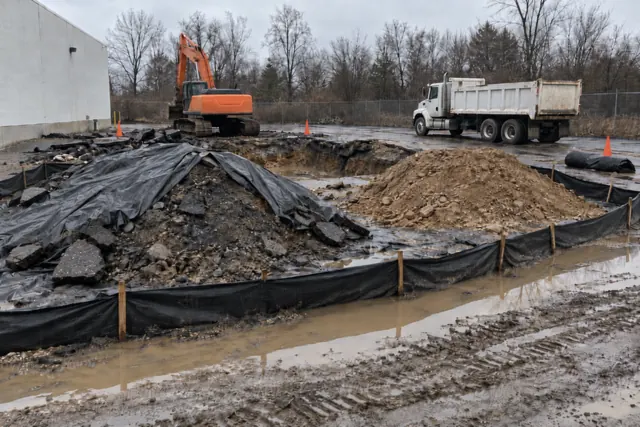
Illinois remediation costs span a wide range based on plume size, soil type, and depth to groundwater. Confirmation soil sampling runs $400 to $1,200 per location, while a Phase II contamination assessment on an Illinois UST site typically costs $4,000 to $14,000. Excavation and disposal of petroleum-impacted soil falls between $15,000 and $85,000 for moderate releases. Groundwater treatment systems for larger Chicago-area or collar county plumes can run $55,000 to $200,000 over the multi-year cleanup window, with in-situ vs ex-situ treatment options driving most of the cost variance on Illinois plumes. The Illinois Underground Storage Tank Fund, administered by the IEPA and the Office of the State Fire Marshal (OSFM), may reimburse eligible cleanup costs for registered, compliant facilities subject to deductibles tied to tank installation date and compliance history.
The typical Illinois corrective action file moves through release notification, site characterization, remedy selection, and Illinois EPA No Further Remediation determination. Initial 24-hour notification and 45-day site characterization come first, followed by a corrective action plan negotiated with LUST Section reviewers in Springfield. Most petroleum-only sites reach closure in 18 to 36 months, though plumes that reach the Sangamon, Mahomet, or shallow Cambrian-Ordovician aquifers can stretch beyond five years. Before signing, ask Illinois contractors for current LUST Section references, written proof that field crews carry 40-hour HAZWOPER training, and pollution liability coverage that names Illinois job sites. Verify the Licensed Professional Engineer or Licensed Professional Geologist signing your corrective action plan and request a written scope that separates excavation, manifested disposal, and TACO closure reporting as line items so you can compare bids accurately.
Illinois contractors for environmental remediation
Does Illinois require a special license to perform UST remediation?
Illinois does not license environmental remediation contractors as a separate trade, but the state does regulate the professionals who sign corrective action documents. The Illinois EPA (IEPA) requires site characterization reports, corrective action plans, and No Further Remediation submittals to be prepared and sealed by a Licensed Professional Engineer or Licensed Professional Geologist registered with the Illinois Department of Financial and Professional Regulation. Property owners should ask prospective firms for examples of recent No Further Remediation letters issued on comparable Illinois LUST files. Illinois places more responsibility on tank owners to vet experience than the licensed-contractor models used in some Northeast states. Verify pollution liability insurance and request references from completed Illinois EPA cleanups before signing any contract.
How much does environmental remediation cost on an Illinois UST site?
Costs in Illinois vary widely based on plume depth, soil type, and proximity to drinking-water receptors or surface water. A clean tank closure with minor sampling typically runs $7,000 to $20,000 total. Soil excavation projects fall between $20,000 and $85,000, and groundwater treatment work in the Chicago metro or along the Mahomet aquifer can exceed $150,000. Sites flagged as free-product recovery or off-site migration cases push final figures significantly higher. The Illinois UST Fund reimburses eligible costs above a deductible for compliant facilities, which lowers out-of-pocket exposure on registered tanks but rarely covers the full project on complex urban plumes. When you compare quotes from soil remediation companies in Illinois, make sure each one covers excavation, soil disposal, backfill, and the confirmation sampling needed to close the case.
How long does an Illinois UST cleanup project take from start to closure?
Most petroleum cleanup files in Illinois reach closure within 18 to 36 months. Initial release notification, the 20-day report, and the 45-day site characterization happen in the first two months. Corrective action plan negotiation with the Illinois EPA LUST Section reviewers in Springfield typically takes another 4 to 8 months. Active remedy implementation runs from a single excavation week on simple sites to multi-year groundwater monitoring at deeper plumes near the Mahomet aquifer or fractured Cambrian-Ordovician bedrock. The Illinois EPA No Further Remediation letter is usually issued within 120 to 180 days of closure report submittal once TACO objectives are met.
What does the Illinois UST Fund cover for remediation?
The Illinois Underground Storage Tank Fund reimburses eligible site investigation, soil treatment, and groundwater monitoring costs for tanks registered with the Office of the State Fire Marshal (OSFM). Coverage requires the tank owner to be in compliance with registration, equipment upgrade, and release-reporting rules at the time the release is discovered. Reimbursement applications run through the Illinois EPA Bureau of Land, and the fund pays after work is completed and invoiced rather than upfront. Tank owners typically pay contractors directly and wait several months for reimbursement to land. Deductibles range based on tank installation date and historical compliance, and abandoned or unregistered tanks are excluded from coverage entirely.
What happens during a typical Illinois UST corrective action?
Work begins with release confirmation through soil and groundwater sampling at the tank pit followed by a 20-day report to the Illinois EPA (IEPA). The Licensed Professional Engineer or Licensed Professional Geologist submits a site characterization report that scores the site by receptor proximity, contaminant type, and plume mobility. Illinois EPA responds with corrective action plan comments specifying cleanup targets under the TACO framework. Most sites involve excavation of impacted soil, manifested off-site disposal at an Illinois-permitted Subtitle D landfill, and quarterly groundwater monitoring until TACO objectives are met. The file closes with an Illinois EPA-issued No Further Remediation letter accepting the site as remediated.