Find contractors in Rhode Island for underground storage tank installation, fuel system installation, tank replacement, dispenser installation, and piping installation. Serving Providence, Warwick, Cranston, Pawtucket, and communities statewide.
Rhode Island UST Installation: Permits, Costs, and Site Conditions
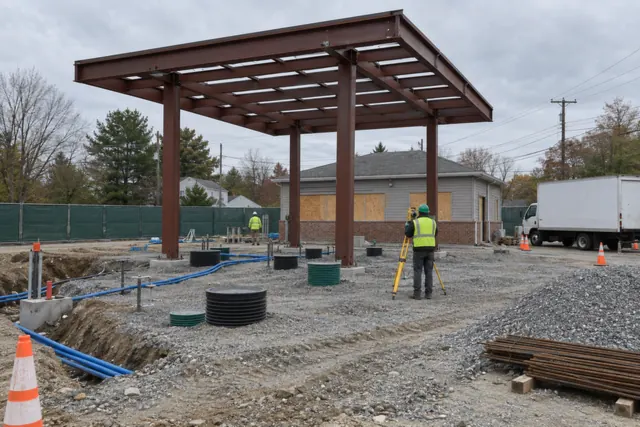
Rhode Island's high water tables and coastal density make tank installation harder than most states. Contractors working near Narragansett Bay or the southern shoreline routinely hit groundwater within three to five feet of grade, forcing continuous dewatering and engineered backfill on most jobs. Saturated soils also require concrete anchoring to prevent tank flotation after the system goes live. These site conditions push excavation costs above national averages and add time to every phase of the project.
Providence and the surrounding metro area generate most of Rhode Island's UST installation demand. Gas stations along I-95 and Route 1 account for the majority of new tank work, whether replacing aging single-wall systems or building fueling sites for convenience store chains. Warwick, Cranston, and East Providence see steady commercial fueling activity tied to T.F. Green Airport, distribution warehouses, and municipal fleet yards. Newport and the coastal communities south of Providence add a smaller but consistent stream of marina fueling installations and backup generator tank projects. Because Rhode Island is the smallest state by area, most contractors based anywhere in the state can service the entire market without significant travel costs.
A single underground storage tank installation in Rhode Island typically costs $50,000 to $150,000 depending on tank size, site conditions, and whether existing infrastructure needs demolition first. Multi-tank gas station build-outs with dispensers, canopy, and monitoring systems run $250,000 to $500,000 or more. Monitoring equipment alone adds $5,000 to $15,000. Removing an old tank before installing the replacement adds another $5,000 to $15,000 to the project. Get line-item quotes that separate excavation, tank supply, piping, electrical, and monitoring so you can compare bids accurately.
The state environmental management agency runs Rhode Island's UST program and enforces federal EPA technical requirements alongside state-specific rules for tank design, secondary containment, and release detection. All new installations must use double-wall tanks with interstitial monitoring, spill buckets, and overfill prevention equipment. The owner must submit registration forms and a site plan stamped by a professional engineer, and get RIDEM's written approval, before installation starts under 250-RICR-140-25-1. A state inspector typically witnesses the tank test and backfill. The full process from permit to operational status runs six to twelve weeks for a straightforward single-tank project. If your project involves coastal zones or high water tables, budget an extra two to four weeks for dewatering logistics and additional inspections.
Does Rhode Island require a specific license for UST installation?
Rhode Island's UST rule requires installers to be licensed by the Department of Labor and Training, Division of Professional Regulation, and certified by the tank, piping or component manufacturer. License applications go through the Department of Labor and Training, not RIDEM. Hiring an unlicensed installer can result in fines and project delays. You should verify the license is active before signing any contract.
How much does it cost to install an underground storage tank in Rhode Island?
A single-tank installation in Rhode Island typically runs $50,000 to $150,000 for a standard commercial setup including tank, piping, and monitoring equipment. Multi-tank gas station projects with dispensers and canopy work range from $250,000 to $500,000 or higher. Coastal sites with high water tables cost more because dewatering and shoring add $10,000 to $30,000 to excavation alone. Sites that require old tank removal before the new install should budget an extra $5,000 to $15,000 for that portion. These figures do not include dispensers or canopy structures if those are part of a full station build-out.
How long does a tank installation project take in Rhode Island?
A straightforward single-tank installation in Rhode Island takes six to twelve weeks from permit application to operational status. The permitting phase alone runs two to four weeks depending on local fire marshal response times and state review workload. Excavation and installation typically need five to ten working days on site for a single tank. Add time if the water table forces dewatering or if old infrastructure needs removal first. Multi-tank gas station projects can stretch to four or five months when you factor in electrical work, dispenser installation, and final inspections.
Why does Rhode Island's coastal geography affect tank installation costs?
Rhode Island has the second-longest coastline relative to its land area of any state, and groundwater sits close to the surface across much of the coastal plain. Near the coast or in low-lying areas, contractors often hit water at three to five feet below grade. That means continuous dewatering pumps running throughout excavation and backfill. Saturated soils also require engineered backfill and sometimes concrete anchoring to prevent tank flotation after installation. These conditions add $10,000 to $30,000 to a project compared to an inland site with dry, stable soil.
What monitoring equipment is required on new UST installations in Rhode Island?
All new underground storage tanks in Rhode Island must be double-walled with continuous interstitial monitoring, and new pressurized piping needs a line leak detector, under 250-RICR-140-25-1. Spill buckets at fill ports and overfill prevention valves are also mandatory under both federal and state rules. The monitoring system must be tested and certified operational before the state will approve the installation for use. Budget $5,000 to $15,000 for monitoring equipment and installation, separate from the tank and piping costs. Owners who plan to self-monitor should factor in training time and the record-keeping requirements that come with monthly inspections.