
Oil Tank Removal Contractors in Rhode Island

Find Rhode Island contractors for oil tank removal, UST closure, tank decommissioning, heating oil tank removal, basement tank excavation, petroleum tank removal, coastal site work, and environmental remediation. Serving Providence, Warwick, Cranston, Newport, Pawtucket, East Providence, Woonsocket, and communities statewide.

Browse Rhode Island Contractors →

What to Know About Oil Tank Removal in Rhode Island

Rhode Island runs one of the densest residential oil tank removal markets per square mile in the country. Most of the state's buried heating oil tanks date to the 1950s and 1960s, installed long before natural gas conversions became common in Providence and Warwick neighborhoods. Home inspectors routinely flag fill pipes during pre-sale inspections, pushing sellers to arrange removal before their closing date. Providence, Warwick, and Cranston see the highest volume of residential removals, while commercial UST closures concentrate along older industrial corridors in Pawtucket and East Providence. Newport and coastal South County add summer-season residential work tied to second-home sales and high water-table complications.
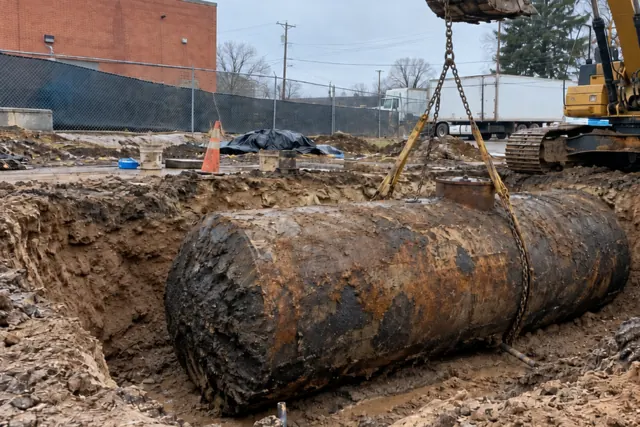
Rhode Island DEM regulates underground storage tank closure through its UST program, requiring advance notification and post-removal soil sampling on every regulated project. Commercial UST work must follow federal 40 CFR 280 standards and RIDEM-specific closure procedures. Residential heating oil tanks below the federal regulated threshold still require notification and soil testing at the tank bed under state rules. Soil sampling at the excavation pit is mandatory regardless of the tank's visible condition, and contamination discovered during removal triggers a separate RIDEM-supervised cleanup process. Failing to notify RIDEM or file post-closure documentation typically means repeating work at the owner's expense.

Residential oil tank removal in Rhode Island typically costs $1,500 to $3,500 for yard burials and $2,500 to $5,000 for basement tanks with confined access. Commercial UST removal at gas stations or fleet facilities ranges from $5,000 to $30,000 depending on tank count, size, and site conditions. If soil testing reveals petroleum contamination, environmental remediation adds $10,000 to $50,000 or more, with coastal South County and Narragansett Bay sites running higher because of shallow groundwater. Rhode Island operates the UST Financial Responsibility Fund through RIDEM for qualifying regulated-tank owners. Our cost guide breaks down pricing scenarios in detail.

A typical Rhode Island residential removal runs one to three days from excavation to backfill, with the contractor notifying RIDEM, pulling the tank, and collecting soil samples. Soil lab results return in one to three weeks, and a clean result leads to a state closure filing with RIDEM. Providence and Warwick schedules are tightest April through October when ground conditions favor excavation, while coastal Newport and South County projects often add dewatering labor regardless of season. Before hiring, confirm pollution liability insurance, verify the quote covers soil testing and closure-report fees, and ask for recent Providence or Newport project references. Contractors active in your area are listed under the Rhode Island UST contractor directory, and you can start a quote for direct pricing.

Oil Tank Removal Contractors in Rhode Island

Browse contractors, see contact details, and request free quotes.

Browse Rhode Island Contractors →

Frequently Asked Questions

Do I need a licensed contractor to remove an underground tank in Rhode Island?

RIDEM requires UST removal to be performed by contractors meeting state environmental and safety standards, including advance notification to the state. General excavation contractors can dig, but they often lack training in petroleum soil handling, sample collection, and state closure paperwork. Hiring an unqualified contractor can result in incomplete documentation that the state rejects, leaving you without a valid closure letter. Verify that any contractor you hire has completed recent Rhode Island UST closures and can provide references.

How much does oil tank removal cost in Rhode Island?

Residential oil tank removal in Rhode Island typically runs $1,500 to $3,500 for a yard burial with clean soil. Basement tanks cost $2,500 to $5,000 due to confined workspace and extra labor. Commercial UST removals range from $5,000 to $30,000 based on tank size and complexity. If contamination is discovered, remediation costs add $10,000 to $50,000 or more. Our cost guide breaks down pricing by tank type, coastal versus inland conditions, and Providence-area drivers.

How long does a tank closure take in Rhode Island?

The physical removal of a residential tank takes one to three days, including excavation, extraction, backfill, and surface restoration. Commercial UST removals with larger tanks or multiple units can run three to seven days on site. Soil sample lab results return in one to three weeks after collection. RIDEM review of closure documentation can add several months before a No Further Action letter is issued, so plan for a three to six month total timeline on clean sites.

Does Rhode Island's coastal water table affect tank removal projects?

Rhode Island's proximity to the coast and shallow water table significantly influence tank removal outcomes statewide. Groundwater can sit just a few feet below the surface in coastal and low-lying areas near Providence, Warwick, and the Narragansett Bay shoreline. When an old tank has leaked, petroleum in shallow groundwater spreads faster and farther than it would in drier inland soils. This means contamination plumes in coastal Rhode Island tend to be larger and more expensive to remediate. Groundwater contamination triggers more extensive testing and potentially years of quarterly monitoring before RIDEM issues a closure letter.

Does Rhode Island have a cleanup fund for underground tank releases?

Rhode Island operates the UST Financial Responsibility Fund through RIDEM, funded by tank registration fees and motor fuel surcharges. The fund reimburses eligible owners for corrective-action costs on qualifying regulated-UST releases, aligned with federal financial responsibility rules. Residential heating oil tanks generally fall outside program eligibility. Owners should file program paperwork before starting cleanup because pre-authorization affects reimbursement outcomes.

Looking for a contractor in Rhode Island?

Browse contractors, see contact details, and request free quotes.

Browse Rhode Island Contractors →

For Rhode Island UST regulations, visit the RIDEM Underground Storage Tank Program. Federal requirements are available from the EPA UST Program.

Related Services in Rhode Island

Find Rhode Island ContractorsRequest a Free Quote
Free Quotes