

What to Know About Tank Decommissioning in Kansas
The Kansas Department of Health and Environment (KDHE) regulates underground storage tanks through the Storage Tank Section of its Bureau of Environmental Remediation in Topeka. The Kansas exclusion for heating oil is narrower than the federal one. K.S.A. 65-34,103 exempts tanks storing heating oil for consumptive use on a single family residential premise, while the federal rule exempts heating oil used on any premises. The same statute exempts farm or residential tanks of 1,100 gallons or less storing motor fuel for noncommercial purposes. Owners of a heating oil tank at an apartment building, school or business should ask KDHE how its rules apply. Gas station, fleet and other regulated USTs go through the full tank closure process described below.
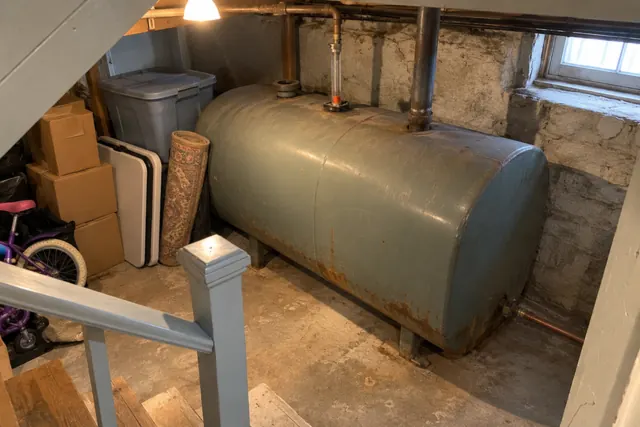
Kansas adopts the federal closure rule, 40 CFR 280.71, with changes: K.A.R. 28-44-26 deletes the federal option for a shorter notice period, so the KDHE district office must be notified at least 30 days before a tank removal. The rules set no closure fee. Each person removing a UST must hold a Kansas license, and under K.S.A. 65-34,110 a licensed installer must be present at the job site at least 75% of the time. KDHE's corrective action manual says district staff take the closure samples at no cost when they are on site. Within 15 days of the closure, the contractor must submit the tank abandonment form to KDHE. Tank abandonment in place needs written approval, and KDHE treats it as a last resort.
The Kansas storage tank trust fund pays for cleanup after a release, not for tank removal. KDHE's trust fund page says repair, removal, replacement or disposal of tanks is not covered, though removal and disposal of contaminated native soil can be reimbursed with an approved application. Owners of small farm tanks and heating oil tanks at single family homes may qualify. Under K.S.A. 65-34,119 the deductible is $3,000 plus $500 for each tank, capped at $100,000. The UST Property Redevelopment Fund can pay 90% of approved closure costs, up to $25,000 per facility, to property owners who never used an abandoned tank whose owner cannot be found or is unable or unwilling to act. Our guide to closure in place versus UST removal explains what changes the scope of a job.
A release from a regulated UST must be reported to KDHE within 24 hours; owners approved for trust fund help are fined $2,500 per release if they reported late. A leak found at a home heating oil tank still falls under the state spill rule, which requires immediate reporting of discharges that could pollute soil or water. Closure records must be kept at least three years, and KDHE's owner manual says it prefers five. Local governments may set stricter rules for tank removal than the state does. KDHE's licensed contractor search lists installer, remover and tester licenses. Before hiring any contractor on this page for a regulated UST, confirm the firm appears there with a license status of In Effect.