Phase 1 Environmental Site Assessment Companies in Alaska
Find contractors in Alaska for environmental site assessment, Phase I ESA, Phase II ESA, soil testing, and contamination investigation. Serving Anchorage, Fairbanks, Juneau, Wasilla, and communities statewide.
What to Know About Site Assessment in Alaska
Suspected or confirmed UST contamination in Alaska triggers a mandatory property assessment. The Alaska Department of Environmental Conservation oversees underground storage tank programs through its Spill Prevention and Response division. Any property with a known or suspected petroleum release must undergo investigation by a qualified environmental professional. That first investigation step typically lands between $2,500 and $5,000 in Anchorage or Fairbanks. State regulations require facility owners to report releases and conduct site characterization before closure approval is granted. Both active fueling operations and former tank sites on properties changing hands fall under these requirements, and the state tracks contaminated sites through a publicly accessible database.
Anchorage accounts for the largest share of site assessment activity in Alaska, with hundreds of current and former fueling facilities spread across the municipality. Fairbanks sees steady demand from military installations, fuel distribution yards, and aging commercial properties along the Richardson and Parks Highway corridors. Juneau, Kenai, and Wasilla each have concentrations of former gas stations and heating fuel storage that generate Phase I and Phase II work tied to property sales and refinancing. Rural communities and remote villages across the state present a different challenge entirely. Fuel storage is scattered across vast distances with limited road access, and mobilizing drilling equipment to bush locations can double or triple standard project timelines. The state's dependence on heating fuel and diesel generation means underground and aboveground storage tanks exist in places most Lower 48 contractors have never worked.
Site assessment costs in Alaska run well above national averages because of high labor rates, expensive mobilization, and the logistical difficulty of working in remote areas. A Phase I ESA in Anchorage or Fairbanks typically costs $2,500 to $5,000, compared to $1,500 to $4,000 in most other states. Phase II ESAs with soil borings and groundwater wells run $5,000 to $15,000 at road-accessible sites, but costs can exceed $25,000 when air transport is required. Soil sampling runs $800 to $2,500 per boring location, with lab shipping adding cost since most analytical work goes to labs in Anchorage or the Lower 48. Alaska does not operate a traditional state cleanup reimbursement fund for private tank owners, so property owners bear investigation and remediation costs directly unless they carry pollution liability insurance.
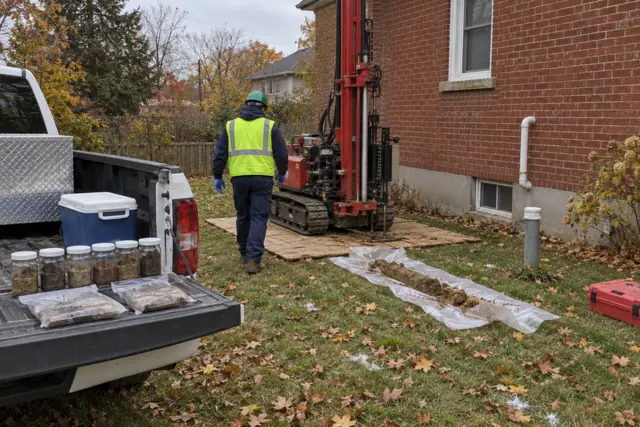
A Phase I ESA starts with a records review covering historical aerial photos, regulatory databases, and prior environmental reports filed with the state. The site visit follows, which in Alaska may require coordination around weather windows since frozen ground limits drilling access from roughly November through April. If the Phase I identifies recognized environmental conditions, the Phase II involves soil borings, possible monitoring well installation, and laboratory analysis that takes one to three weeks for results. The full Phase II report is typically delivered six to ten weeks after field work begins. Before hiring, confirm the contractor has Alaska regulatory experience and ask about mobilization to your site, because quotes differ sharply between Anchorage, Bethel, and Kenai Peninsula projects.
Do I need a certified professional for a site assessment in Alaska?
Alaska does not issue a state-specific environmental site assessment license, but the Department of Environmental Conservation expects investigations to be conducted by qualified professionals with relevant credentials. A Phase I ESA used for CERCLA liability protection must meet the all appropriate inquiries rule at 40 CFR 312, and most follow ASTM E1527-21, which that rule accepts. It is prepared by an environmental professional as that rule defines one. Phase II ESAs involving drilling require licensed well drillers and professionals experienced with petroleum contamination investigations. Hiring an unqualified firm risks producing a report the state rejects, which means paying for the work twice.
How much does an environmental site assessment cost in Alaska?
A Phase I ESA in urban areas like Anchorage or Fairbanks typically costs $2,500 to $5,000. Phase II ESAs with soil borings and groundwater sampling run $5,000 to $15,000 for road-accessible properties, but remote locations requiring air transport of drill rigs can push costs above $25,000. Individual soil boring locations cost $800 to $2,500 each, plus lab analysis fees of $200 to $600 per sample. Alaska's high cost of living, limited contractor availability, and equipment mobilization expenses all push prices significantly above Lower 48 averages.
How long does a site assessment take from start to finish in Alaska?
A Phase I ESA takes two to four weeks to complete, including the records review, site inspection, and report preparation. Phase II field work typically takes one to five days depending on the number of borings, but scheduling around Alaska's weather and ground conditions can add weeks to the start date. Lab results arrive one to three weeks after samples ship, and the final Phase II report is usually delivered six to ten weeks after drilling. State review of submitted reports can take an additional two to six months before you receive direction on next steps.
How does Alaska's frozen ground and remote geography affect site assessments?
Permafrost and seasonal frost penetration limit drilling access across much of Alaska from November through April, which compresses the field season into roughly six months. In permafrost zones, drilling techniques differ from standard methods used in the Lower 48 because the frozen soil matrix behaves differently during sampling and can complicate groundwater investigation. Remote sites accessible only by air or barge require mobilization planning that adds $5,000 to $20,000 in transport costs alone. Contractors experienced in Alaska plan around these constraints, but property owners should expect longer timelines and higher budgets than comparable projects in temperate states. Starting the process in early spring gives the best chance of completing field work before the ground freezes again.
What happens if contamination is found during a Phase II ESA in Alaska?
If soil or groundwater sampling confirms petroleum contamination above state cleanup levels, the Department of Environmental Conservation requires a site characterization report that defines the extent of the contamination plume. This often means additional rounds of drilling and sampling beyond the initial Phase II scope. The state assigns the site to its contaminated sites program and issues a cleanup determination that outlines required remediation actions. Remediation costs vary widely but commonly range from $20,000 to over $100,000 depending on plume size and proximity to water sources. Property owners cannot receive a No Further Action determination until the state confirms cleanup standards have been met, and that review process alone can take six to twelve months after final sampling.