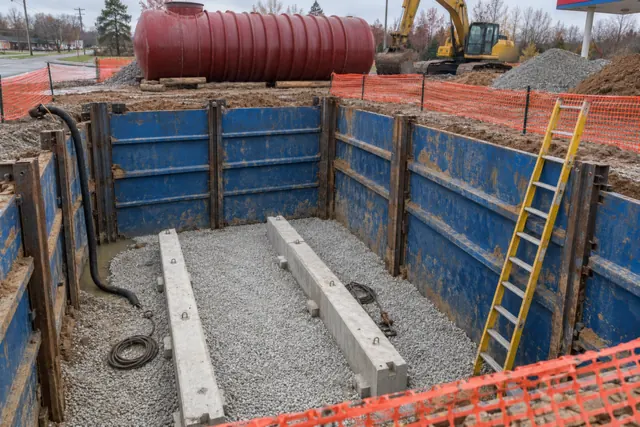
Tank Installation Contractors in Alaska

Find contractors in Alaska for underground storage tank installation, fuel system installation, dispenser installation, piping installation, and monitoring equipment setup. Serving Anchorage, Fairbanks, Juneau, Wasilla, Kenai, and communities statewide.

Browse Alaska Contractors →

What to Know About Tank Installation in Alaska

Alaska's UST installation requirements rank among the strictest in the country, and the state's environmental agency requires ADEC training requirements before any underground storage tank work begins. All new installations must meet both federal EPA technical standards and Alaska-specific design requirements for seismic zones and cold-climate operation. Every new UST system needs double-wall construction with interstitial monitoring, leak detection equipment, and cathodic protection or fiberglass construction to prevent corrosion. Operators must also demonstrate financial responsibility before receiving installation permits, and facilities storing motor fuel, aviation fuel, or heating oil in tanks over 1,100 gallons all fall under these regulations.

Demand for new UST installations in Alaska centers on fuel distribution networks that serve communities spread across a geography larger than Texas, California, and Montana combined. Anchorage and Fairbanks account for the largest share of commercial tank installations, primarily at gas stations, fleet fueling depots, and military-adjacent facilities. Juneau, Wasilla, and the Kenai Peninsula see steady installation work tied to fishing operations and tourism, while rural communities off the road system present a different challenge entirely. Villages like Bethel, Nome, and Barrow depend on bulk fuel storage delivered by barge during a narrow summer window. Aviation fueling facilities at remote airstrips drive additional installation work that most lower-48 contractors never encounter.

Tank installation costs in Alaska run significantly higher than national averages. A single underground storage tank installation in the Anchorage or Fairbanks area typically costs $75,000 to $200,000, compared to $50,000 to $150,000 in the lower 48. Multi-tank gas station build-outs with dispensers, piping, and monitoring systems can reach $400,000 to $700,000 or more. The cost premium reflects materials shipped north by barge or truck, permafrost requiring engineered bedding, and a compressed May-through-September construction season that increases labor rates. Monitoring equipment alone adds $8,000 to $20,000, and while facilities that qualify for state programs may offset some compliance costs, installation itself is not reimbursable through cleanup funds.

The installation process in Alaska follows a predictable sequence, but the timeline stretches longer than most facility owners expect. Engineering and permitting typically take 60 to 120 days before any ground is broken. Excavation requires soil analysis for permafrost stability and frost heave protection, followed by piping connections, dispenser installation, and leak detection setup before a final state inspection. The full process from permit application to operational status runs six to twelve months for a standard commercial installation. Before hiring a contractor, verify their ADEC certification is current and ask for references on Alaska-specific installations. Request a detailed scope that separates tank, piping, dispensers, monitoring, and permitting into individual line items so you can compare bids accurately.

Tank Installation Contractors in Alaska

Browse contractors, see contact details, and request free quotes.

Browse Alaska Contractors →

Frequently Asked Questions

What certification do contractors need for UST installation in Alaska?

Alaska requires contractors to hold ADEC certification before performing any underground storage tank installation work. This certification covers tank handling, piping installation, leak detection setup, and compliance with state environmental regulations. Contractors must also carry appropriate insurance, including pollution liability coverage. Hiring an uncertified contractor can void your installation permits and create compliance problems that delay your project by months.

How much does it cost to install an underground storage tank in Alaska?

A single UST installation in urban areas like Anchorage or Fairbanks typically runs $75,000 to $200,000. Multi-tank systems with dispensers and full piping for a gas station build-out range from $400,000 to $700,000 or more. Remote locations off the road system cost even more because materials must arrive by barge or air freight. Monitoring equipment adds $8,000 to $20,000 on top of the base installation. These figures are 30% to 50% higher than comparable projects in the lower 48 due to shipping, short construction seasons, and permafrost engineering requirements.

How long does a UST installation project take in Alaska?

From permit application to an operational tank, most Alaska installations take six to twelve months. Engineering, soil analysis, and state permitting consume the first 60 to 120 days. Physical installation work runs two to six weeks depending on the number of tanks and site conditions. Final inspection and regulatory sign-off can add another 30 to 60 days. Projects in remote areas often span two construction seasons because barge-delivered materials may not arrive until midsummer, leaving insufficient time to complete the work before freeze-up.

How does permafrost affect underground storage tank installation in Alaska?

Permafrost creates unique engineering challenges that do not exist in the lower 48. Excavating into frozen ground requires specialized equipment, and disturbing the permafrost layer can cause ground settling that shifts tank positioning over time. Contractors must install engineered bedding material that insulates the surrounding permafrost from heat generated by stored fuel. Frost heave can push improperly bedded tanks upward, damaging piping connections and creating leak risks. In areas with discontinuous permafrost, soil conditions can change within the same excavation site, requiring real-time engineering adjustments during installation.

What monitoring equipment is required for new UST installations in Alaska?

All new UST installations in Alaska must include automatic tank gauging, interstitial monitoring for double-wall tanks, and line leak detectors on pressurized piping. Electronic monitoring systems that provide continuous leak detection are standard for commercial installations. The state requires monthly monitoring records and annual system testing to verify equipment is functioning correctly. Facility owners should budget $8,000 to $20,000 for monitoring equipment and factor in ongoing maintenance costs of $500 to $1,500 per year for calibration and system checks.

Looking for a contractor in Alaska?

Browse contractors, see contact details, and request free quotes.

Browse Alaska Contractors →

For Alaska UST regulations, visit the Alaska Department of Environmental Conservation. Federal requirements are available from the EPA UST Program.

Related Services in Alaska

Find Alaska ContractorsRequest a Free Quote
Free Quotes