

What to Know About Tank Decommissioning in Nevada
This page covers tank closure and tank decommissioning for an underground storage tank (UST) at a Nevada business or home. The Nevada Division of Environmental Protection (NDEP) runs the state UST program, which EPA approved to operate in lieu of the federal program under 40 CFR 282.78. Nevada's rules in NAC 459 adopt the federal UST rules in 40 CFR Part 280, including their definition of an underground storage tank. That definition leaves out any tank storing heating oil burned on the premises, at a home or a business. It also leaves out farm or residential tanks of 1,100 gallons or less that hold motor fuel for noncommercial use.
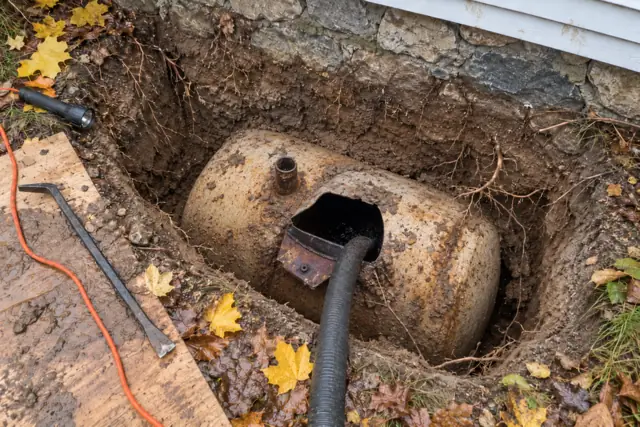
Closing a regulated UST starts with written notice at least 30 days ahead, under 40 CFR 280.71, to the agency named on NDEP's tank closure page. That is Southern Nevada Health District in Clark County, Northern Nevada Public Health (covering Reno, Sparks and Washoe County), or NDEP elsewhere. NDEP issues no closure permit, but the two health districts must approve the work and may require permits and fees, as may local building and fire departments. Under NAC 459.9719, any paid closure or UST removal must be directed by a tank handler certified by NDEP. Federal rules allow removal, inert fill or agency-approved closure in place. Under NAC 459.9972, an NDEP-approved lab must test two native soil samples from less than 2 feet below the excavation bottom, plus one under each dispenser, before closure. NDEP asks for the closure documentation within 30 days after the work. A substandard tank left in temporary closure for more than 12 months must be closed unless the agency grants an extension.
The Nevada Petroleum Fund, formally the Fund for Cleaning Up Discharges of Petroleum, pays cleanup after a release, not the cost of closing a tank. NDEP's Petroleum Fund FAQ says the Fund does not cover tank and piping removal, replacement or repair. Under NRS 445C.380, once cleanup of a release from an enrolled regulated tank exceeds $5,000, the Fund pays most of the first $1,000,000 and most operators pay 10 percent. A small business pays 5 percent instead, and its total cleanup share is capped at $50,000. Coverage requires a $100 registration fee per tank each year under NAC 445C.240, and the Fund pays nothing for a release found while that fee is delinquent. An application for coverage must be submitted within 12 months after discovery, and reimbursement usually requires a Certified Environmental Manager. The guide to closure in place versus UST removal explains how the method changes a tank decommissioning job.
For a home heating oil tank, NDEP's heating oil tank page says no federal or state UST rule requires removal or testing. NDEP sets no rule on who may remove, test or abandon one, and a homeowner may do the work or hire a contractor, subject to local codes. The local fire jurisdiction may oversee tank removal or tank abandonment in place. A site assessment is optional, but closing the tank without one forfeits Fund reimbursement if contamination is found later. Under NRS 445C.370, for a tank of 1,100 gallons or less holding heating oil burned on the same premises, the owner pays a $250 deductible before the Fund pays. The Fund then pays up to the next $250,000 when needed to protect the environment or public health. For a regulated tank, check the firm's handler on the list linked from NDEP's certified tank handler page before hiring.