Find Iowa contractors for oil tank removal, UST closure, UST decommissioning, heating oil tank closure, basement tank excavation, petroleum tank removal, farm fuel system closure, and environmental remediation. Serving Des Moines, Cedar Rapids, Davenport, Iowa City, Sioux City, Waterloo, Dubuque, Council Bluffs, and communities statewide.
How Iowa Regulates UST Closure and IUSTF Fund Claims
Iowa oil tank removal falls under the Iowa DNR Underground Storage Tank Section. The UST Section handles tank registration, closure notifications, contractor certifications, and release response under federal 40 CFR 280 rules. Iowa Administrative Code 567 Chapter 135 adds state-specific closure and corrective-action procedures. Commercial UST closure at gas stations, co-op fuel facilities, and industrial sites must be performed by a state-certified UST professional. Residential heating oil tank closure below the regulated threshold does not require state certification, though soil sampling and tank disposal records still apply.
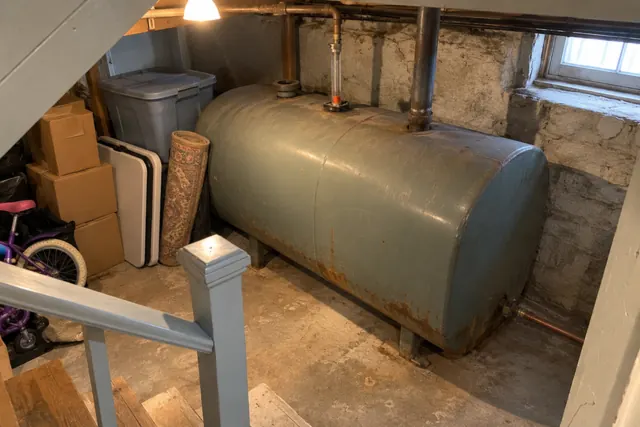
Iowa tank removal work concentrates on Des Moines and central Iowa, Cedar Rapids and the Corridor, Davenport and the Quad Cities, Iowa City, and Sioux City. Commercial UST turnover runs heavy at gas stations across the Iowa DOT highway system and at agricultural co-op fuel facilities statewide. Agricultural fuel tank work is the distinctive Iowa segment: farm diesel, ethanol, and above-ground fuel storage at grain elevators and hog operations. Older Des Moines, Dubuque, Council Bluffs, and Waterloo neighborhoods turn up basement and yard heating oil tanks during property sales and heating system conversions. Floodplain sites along the major rivers add complexity when groundwater runs high.
Residential oil tank removal in Iowa typically runs $1,500 to $3,500 for a standard buried tank, with Des Moines and Cedar Rapids basement jobs at $2,500 to $4,500 due to access constraints. Commercial petroleum tank removal at Quad Cities gas stations and co-op fuel facilities runs $5,000 to $15,000 per tank before remediation. If soil sampling exceeds Iowa DNR cleanup standards, environmental remediation adds $5,000 to $35,000 or more depending on plume extent and groundwater proximity. Iowa DNR now refers to the Iowa Comprehensive Petroleum Underground Storage Tank Fund as the former fund, following 2024 legislation, Senate File 2414, and directs activity to the DNR UST Section's Storage Tank Management Account Financing Program. Budget a release found today as an owner-funded cost and confirm what the successor program covers with DNR before assuming otherwise. Our underground tank removal cost guide breaks down pricing by tank size, soil condition, and site access.
A typical Iowa job starts with Iowa One Call (811) utility locates, then tank pumping, degassing, excavation, visual inspection, and soil sampling at the tank bed. A clean residential closure in Des Moines or Iowa City wraps in one day; commercial multi-tank sites in the Quad Cities stretch to three to five days. Remediation extends weeks to months when a release triggers Iowa DNR corrective-action review. Before signing, verify the contractor holds active Iowa DNR UST certification, carries pollution liability insurance, and can show past similar closures in Cedar Rapids or Waterloo. For residential jobs, keep lab soil results and a closure report with the property records for resale and due diligence. tank contractors in Iowa are listed in our directory, or get a free quote to gather pricing.
Do I need a licensed contractor to remove an oil tank in Iowa?
For regulated commercial UST work, Iowa requires a state-certified UST professional registered with the Iowa DNR UST Section under federal 40 CFR 280 rules. Residential heating oil tank closure below the regulated threshold does not require state certification by law. Most Iowa homeowners still hire a licensed environmental contractor because soil sampling, closure documentation, and disposal logistics need field experience. Iowa One Call (811) locates are mandatory before any excavation; floodplain cities like Davenport and Cedar Rapids may require additional permits.
How much does oil tank removal cost in Iowa?
Residential removal in Iowa typically runs $1,500 to $3,500 for a standard buried tank and $2,500 to $4,500 for basement jobs. Commercial petroleum tank removal at gas stations and co-op fuel sites runs $5,000 to $15,000 per tank before remediation. If soil contamination is discovered, environmental remediation can add $5,000 to $35,000 or more, particularly at sites with high groundwater. Iowa DNR now refers to the Iowa Comprehensive Petroleum Underground Storage Tank Fund as the former fund after 2024 legislation, so plan the cleanup as an owner-funded cost rather than assuming reimbursement. See our cost guide for pricing by tank size, soil condition, and site access.
How long does oil tank removal take in Iowa?
A straightforward residential tank closure in Iowa typically takes one day for field work, including excavation, tank pumping, and initial soil sampling. Commercial closure at gas stations or co-op fuel facilities runs three to five days depending on tank count and site complexity. If soil sampling triggers DNR cleanup review under federal 40 CFR 280, paperwork adds 6 to 14 weeks before closure. Laboratory soil results from Des Moines, Cedar Rapids, and Iowa City labs typically return in 7 to 14 business days.
Does Iowa have a state cleanup fund for underground storage tank releases?
Not in the form most sources still describe. Iowa DNR refers to the Iowa Comprehensive Petroleum Underground Storage Tank Fund as the former fund and points to 2024 legislation, Senate File 2414. Activity has moved to the DNR UST Section's Storage Tank Management Account Financing Program. Deductible and per-release cap figures still circulating online describe the old program and should not be used to plan a budget. Ask the DNR program coordinator what the successor program covers for your situation before you commit to a cleanup scope. Separately, residential heating oil tanks are not regulated by Iowa DNR and are not required to be registered, which is a different question from whether any assistance is available.
What does the tank removal process look like on an Iowa farm or co-op site?
Farm and co-op site work starts with Iowa One Call (811) utility locates and a pre-closure site walk to identify above-ground and underground fuel inventory. Tank pumping, line purging, and excavation follow, with soil sampling at each tank bed and suspected release zone. Disposal logistics matter on farm sites because remote roads and limited access can drive cost. Agricultural USTs at grain elevators and hog operations may have shared lines to multiple dispensers that require separate verification. Request a contractor who has worked Iowa ag sites and coordinates with Iowa DNR on notifications and closure reports.