Soil and groundwater cleanup contractors serving Des Moines, Cedar Rapids, Davenport, and Iowa City for petroleum spill response, LUST site closure, and risk-based corrective action.
What to Know About UST Remediation in Iowa
Environmental remediation in Iowa demands fast action when underground tanks leak petroleum into soil. The Iowa DNR Underground Storage Tanks Section oversees cleanup at thousands of sites under Iowa Administrative Code Chapter 567-135, and owners who discover contamination during a tank pull, real estate transaction, or compliance check trigger a 24-hour reporting clock. Most projects start with a thorough property assessment to map historical tank use before any subsurface investigation begins. Iowa's mix of glacial till, alluvial soils, and karst aquifers in the northeast adds complexity that out-of-state contractors often underestimate, so a remediation firm familiar with local geology and Iowa DNR project managers can shorten your timeline by months.
Cleanup work happens across every region of the state, from former gas stations in Des Moines and Cedar Rapids to legacy industrial sites in Davenport and Sioux City. Iowa City and Waterloo see steady activity tied to redevelopment of older fuel retail corridors near university and downtown districts. Council Bluffs and Dubuque have ongoing groundwater plumes from pre-1990s steel tanks that ruptured before upgrade requirements took effect. Smaller communities like Ottumwa, Fort Dodge, and Burlington often face higher per-site costs because qualified contractors must travel from the I-80 corridor. The Iowa DNR maintains a public registry of contaminated sites that any prospective buyer should pull before closing, and a licensed contractor will tell you within a site walk whether the geology favors excavation or in-situ treatment.
Pricing for UST remediation in Iowa varies widely based on contamination depth, plume size, and chosen treatment method. Simple tank pulls with light soil contamination typically run $15,000 to $45,000 for excavation, transport, and disposal at an approved landfill. Mid-range sites with groundwater impact in the Quad Cities corridor or Loess Hills often land between $75,000 and $175,000 once monitoring wells, quarterly sampling, and risk-based closure paperwork are factored in. Complex projects with off-site plumes, sensitive receptors, or karst hydrogeology can exceed $400,000 and span three to seven years. Iowa DNR refers to the Iowa Comprehensive Petroleum Underground Storage Tank Fund as the former fund, following 2024 legislation, Senate File 2414, and directs activity to the DNR UST Section's Storage Tank Management Account Financing Program. Deductible and per-occurrence cap figures published for the old fund are historical and should not be used for budgeting. Confirm what the successor program covers with the DNR program coordinator before treating any of this cost as recoverable.
Crew qualifications matter as much as equipment choice on these jobs, since Iowa DNR requires a certified groundwater professional to sign off on most corrective action submittals. Field crews handling contaminated soil must hold current HAZWOPER training under OSHA 29 CFR 1910.120. Some Iowa firms also carry pollution legal liability coverage and Iowa DNR-approved closure contractor status, which matters more now that the state fund older guidance cites has been superseded. Ask any bidder for proof of these credentials, recent Iowa project references, and a sample corrective action report submitted to the Iowa DNR. Before signing a contract, request itemized quotes from at least three contractors familiar with the specific Iowa DNR field office covering your county and compare scope, contingency budget, and projected closure timeline rather than headline price alone.
How long does UST remediation typically take in Iowa?
Most Iowa cleanups span one to three years from spill report to a no further action letter, though simple soil-only sites can close within nine months. The timeline depends on whether contamination has reached groundwater, the proximity of receptors like wells or basements, and how quickly the Iowa DNR field office covering Cedar Rapids or Des Moines reviews each submittal. Sites in Tier 2 or Tier 3 risk classification generally require quarterly groundwater monitoring for at least eighteen months. Karst settings in northeast Iowa often add a year or more because plumes move unpredictably through fractured bedrock. Plan your real estate or refinancing schedule around the closure letter, not the excavation date.
Does the Iowa Tank Fund cover my cleanup costs?
Not the way older guidance suggests. Iowa DNR now refers to the Iowa Comprehensive Petroleum Underground Storage Tank Fund as the former fund and points to 2024 legislation, Senate File 2414. Activity has moved to the DNR UST Section's Storage Tank Management Account Financing Program. Deductible and per-release cap figures still circulating for the old fund are historical and should not be used to plan a budget. Ask the DNR program coordinator what the successor program covers before you sign anything, and assume for planning purposes that you are paying for the work. When you compare quotes from soil remediation companies in Iowa, make sure each one covers excavation, soil disposal, backfill, and the confirmation sampling needed to close the case.
When is excavation better than in-situ treatment?
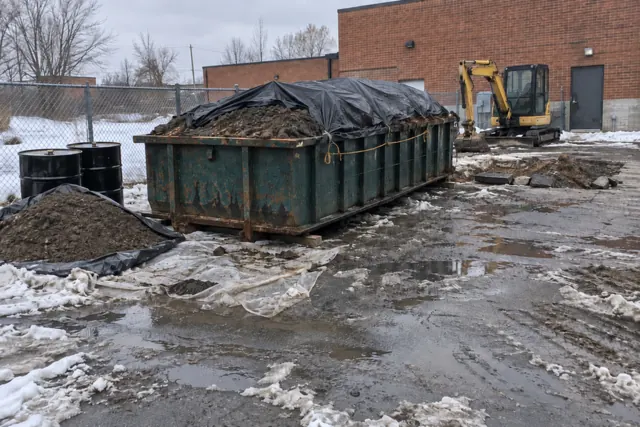
Excavation usually wins for shallow, well-defined plumes under fifteen feet where soil can be hauled to an approved landfill within one or two weeks. In-situ approaches like air sparging, soil vapor extraction, or chemical oxidation make sense when contamination sits below structures, deep in the water table, or spread across a large footprint. Iowa's clay-rich glacial till across the Corn Belt slows in-situ treatment in many counties, so contractors model both options before recommending an approach. Hybrid projects that combine a source-area dig with downgradient in-situ polishing are common at former gas stations in Davenport and Sioux City. Your contractor's site characterization report should explain the choice with cost and time tradeoffs.
What contractor credentials should I verify in Iowa?
Look for a Certified Groundwater Professional license recognized by the Iowa DNR, current general liability and pollution legal liability insurance, and HAZWOPER-trained field crews. Tank closure work requires Iowa DNR-approved closure contractor status, which is a separate registration. Ask how many active Iowa LUST projects they manage today and how they handle cost recovery now that the state fund most older guidance cites has been superseded. References from prior Iowa property owners, especially within your Iowa DNR field office region near Des Moines or Iowa City, carry more weight than national project counts. Verify all licenses through the Iowa DNR public lookup before signing any contract.
Can I sell a property in Iowa during active remediation?
Yes, but disclosure requirements and lender expectations make these transactions complex. The seller must disclose the active LUST case to any prospective buyer, and most commercial lenders will not close until a no further action letter is issued or a strict environmental indemnity is in place. Some buyers accept assignment of the corrective action plan if the deal price reflects the remaining cleanup risk. An environmental attorney and a contractor experienced with Iowa transfers in Davenport, Iowa City, or Waterloo should review the purchase agreement before signing. Closing too early without protective language can leave the seller liable for decades of post-closure obligations.