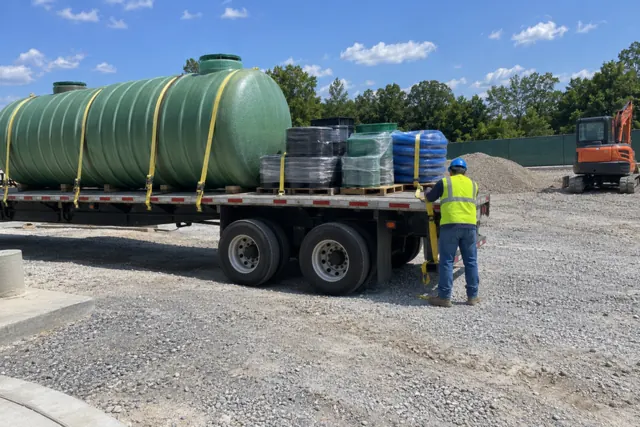
Find contractors in Louisiana for underground storage tank installation, fuel system build-outs, dispenser installation, piping, and monitoring equipment. Serving New Orleans, Baton Rouge, Shreveport, Lafayette, Lake Charles, and communities statewide.
What to Know About Tank Installation in Louisiana
Louisiana requires a state-certified worker to be present and in supervisory control at each critical step of a tank installation. The state regulates UST work through an individual worker certification model, so other crew members may work under that certified worker's supervision. This applies to gas station owners, fuel distributors, fleet operators, and convenience store chains putting in new underground storage tanks. All of these operations must also meet federal double-wall containment and leak detection standards before the system can accept fuel. Facilities along the I-10 petrochemical corridor face additional scrutiny because of the density of petroleum infrastructure in that region.
Demand for new tank installation concentrates along Louisiana's major transportation and industrial corridors. New Orleans and the surrounding metro area account for a large share of fuel retail and fleet fueling projects. Baton Rouge sees steady activity from both commercial fueling stations and industrial facilities tied to the refining sector. Lafayette, Lake Charles, and Shreveport each support regional fuel distribution networks that generate new installation projects, particularly as older single-wall systems reach end of life and require full replacement. The Gulf Coast's concentration of petrochemical operations creates a secondary market for specialized fuel storage at port facilities, manufacturing plants, and pipeline terminals.
A single underground storage tank installation in Louisiana typically costs $50,000 to $150,000, depending on tank size, material, and site conditions. Multi-tank gas station build-outs with dispensers, canopies, and monitoring systems run $250,000 to $500,000 or more. Louisiana's high water table drives costs higher than inland states because excavation requires dewatering. Tanks also need additional anchoring to prevent flotation in saturated soils. Concrete hold-down slabs or strapping systems are standard in most parishes south of Interstate 10. The state's cleanup reimbursement fund does not cover installation costs directly, but it protects owners from remediation expenses if a release occurs after the system goes live.
The installation process starts with written notice to LDEQ at least thirty days before work begins, followed by site engineering, excavation, tank placement, piping connections, dispenser setup, and leak detection system commissioning. Expect the full process to take 8 to 16 weeks from that notice to first fuel delivery, though weather delays are common in hurricane season. Before hiring a contractor, ask for the name and LDEQ certification of the worker who will supervise each critical step of the installation, not just the company owner. Ask for references from installations completed in the last two years, and confirm the contractor handles both the state notification paperwork and the initial compliance testing. Choosing a contractor who manages state notification, installation, and post-install testing as a single scope of work reduces handoff errors and keeps your project on schedule.
Does Louisiana require certification for tank installation contractors?
Louisiana uses an individual worker certification model for UST installation. A certified worker must be present and hold supervisory control at each critical step, such as setting the tank and piping, and other crew members may work under that person. This means you should ask your contractor for the certified worker's name and certificate number. Companies from out of state can work in Louisiana, but their workers still need to meet the state's individual certification requirements. Verify credentials before work starts, because critical steps done without a certified worker present can cause compliance problems and delays.
How much does it cost to install an underground storage tank in Louisiana?
A single tank installation in Louisiana typically runs $50,000 to $150,000 depending on tank capacity, material, and site conditions. Full gas station build-outs with multiple tanks, dispensers, and monitoring equipment range from $250,000 to $500,000 or more. Louisiana's high water table adds cost because most sites south of I-10 require dewatering during excavation and concrete anchoring systems to prevent tank flotation. Monitoring equipment adds another $5,000 to $15,000 regardless of project size. Always request itemized bids so you can compare line items across contractors rather than lump-sum totals.
How long does a tank installation project take in Louisiana?
Most commercial fuel tank installations in Louisiana take 8 to 16 weeks from the state notice to the first fuel delivery. The owner must give LDEQ written notice at least thirty days before installation begins, and the regional office gets seven days notice before work starts. Excavation and tank placement usually take 1 to 2 weeks for a single-tank project, with an additional 2 to 4 weeks for piping, electrical, dispenser installation, and system testing. Hurricane season from June through November can cause weather delays that push timelines further. Plan your project start date accordingly if you need the system operational before a specific deadline.
How does Louisiana's high water table affect tank installation?
Louisiana's water table sits close to the surface across much of the state, particularly in southern parishes and coastal areas. This creates two problems during installation: excavation pits fill with water that must be continuously pumped out, and empty tanks can float upward if not properly anchored. Contractors address this with dewatering pumps during excavation and concrete hold-down slabs or steel strapping systems after tank placement. These measures add roughly 10% to 20% to the base installation cost compared to sites with deeper water tables. Fiberglass tanks are common in Louisiana specifically because they resist the corrosion that high-moisture conditions accelerate in steel.
What monitoring equipment is required for new tank installations in Louisiana?
Federal regulations at 40 CFR 280.41 require new UST installations to use interstitial monitoring, and pressurized piping also needs an automatic line leak detector; an automatic tank gauge is common but not required. Louisiana enforces these requirements and expects monitoring systems to be operational before the facility accepts its first fuel delivery. The automatic tank gauge tracks inventory and flags potential losses, while interstitial sensors detect leaks between the inner and outer walls of the tank. Budget $5,000 to $15,000 for monitoring equipment depending on system complexity and the number of tanks. Your contractor should commission and test all monitoring equipment as part of the installation scope, with documentation submitted to the state.